
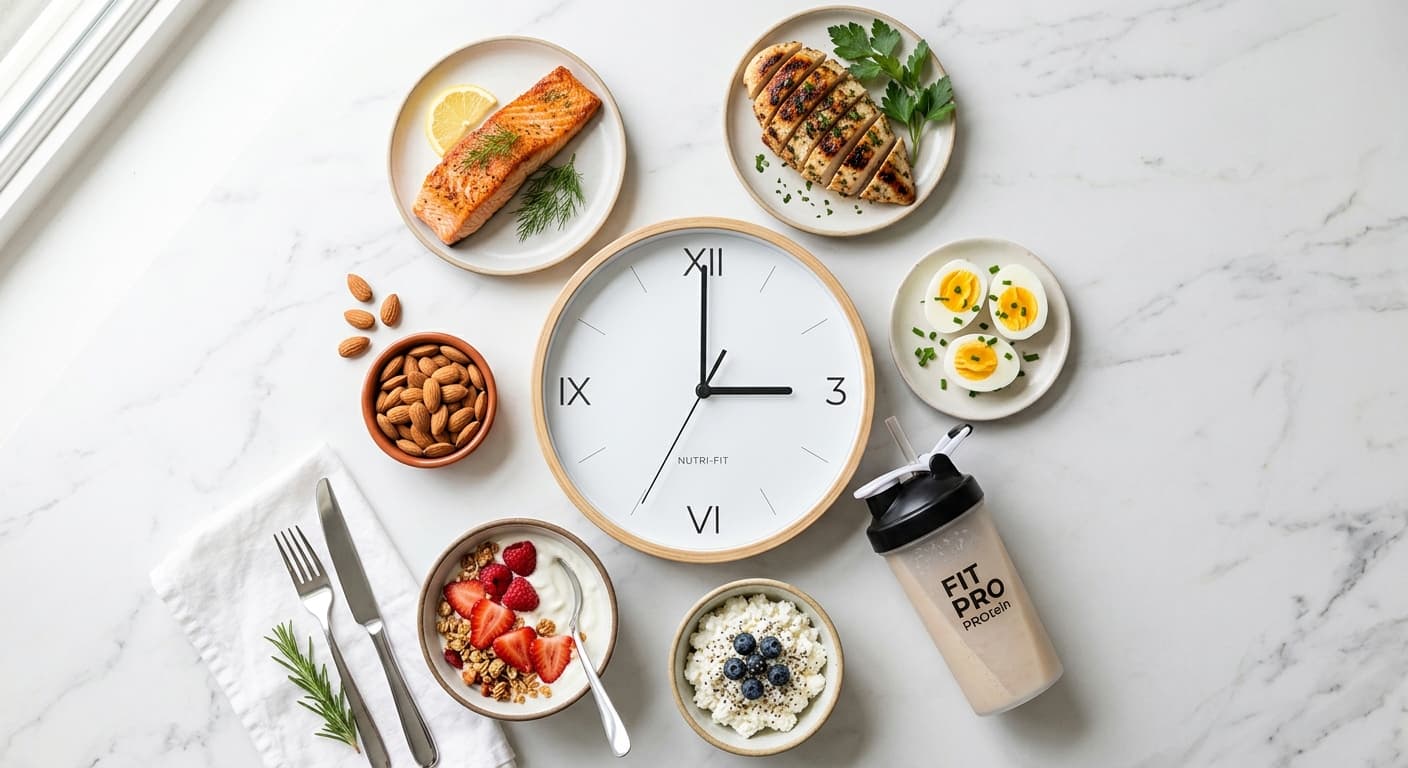
You already know protein matters. You've probably read that you need somewhere around 0.7-1.0g per lb of body weight per day. Cool. But here's what nobody tells you: when you eat that protein matters almost as much as how much you eat.
If you're cramming all your protein into two big meals, you're leaving gains on the table. Literally.
For skinny guys trying to build muscle, this is one of the easiest optimizations you can make. No extra food, no extra cost — just spreading what you already eat across the day in a smarter way.
- Distribute protein evenly across 4-5 meals for maximum muscle protein synthesis
- Eat 30-50g of protein per meal depending on your body weight
- Hit protein within 2 hours after training — the "anabolic window" is real, just not as tiny as bro-science claims
- A pre-sleep protein dose of 30-40g casein boosts overnight recovery
- Pre-workout protein matters more than most people think
- Total daily intake still trumps timing — nail the basics first
Why Protein Timing Actually Matters
Every time you eat protein, your body goes through a process called muscle protein synthesis (MPS). Think of it as your body's muscle-building switch getting flipped on.
Here's the key: that switch doesn't stay on forever. MPS peaks about 1.5-2 hours after a protein-rich meal and returns to baseline within 3-5 hours. After that, your body is basically waiting for the next signal.
This is called the "muscle full" effect. Your muscles can only use so much protein at once to build new tissue. Research from the University of Texas shows that eating 1 oz of protein stimulates MPS just as effectively as eating 3 oz in a single sitting — at least in terms of the acute muscle-building response.
So if you're a 154 lb guy eating 5 oz of protein per day but slamming 2.5 oz at lunch and 2.5 oz at dinner? You're triggering MPS only twice. Spread that across 4-5 meals, and you trigger it 4-5 times. Over weeks and months, that difference adds up.
The Optimal Protein Distribution
Research consistently shows that evenly distributing protein across meals beats a skewed pattern. Here's what that looks like in practice:
For a 150 lb guy eating 5.3 oz protein/day
| Meal | Time | Protein Target |
|---|---|---|
| Breakfast | 7:00 AM | 30-35g |
| Lunch | 12:00 PM | 35-40g |
| Snack | 3:30 PM | 25-30g |
| Dinner | 7:00 PM | 35-40g |
| Pre-bed | 10:00 PM | 25-30g |
For an 180 lb guy eating 6.3 oz protein/day
| Meal | Time | Protein Target |
|---|---|---|
| Breakfast | 7:00 AM | 35-40g |
| Lunch | 12:00 PM | 40-45g |
| Pre-workout | 3:30 PM | 30-35g |
| Post-workout | 6:00 PM | 40-45g |
| Pre-bed | 10:00 PM | 30-35g |
The exact times don't matter much. What matters is spacing meals roughly 3-4 hours apart and keeping protein portions relatively even. No meal should be a protein wasteland, and no meal needs to be a protein mountain.
If you're eating only 3 meals a day, adding just one protein-rich snack between meals gives you a measurable advantage. A high-calorie shake is the easiest way to add that extra feeding.
The Post-Workout Anabolic Window
Let's clear this up. The "anabolic window" — that supposedly magical 30-minute window after training — has been both overhyped and overcorrected.
What the science actually says
The post-workout period is important, but it's not a 30-minute panic zone. Here's the nuance:
If you trained fasted (no food for 4+ hours before): Get protein in within 1 hour after training. Your body is primed for nutrient uptake, and MPS is elevated. Don't waste it.
If you had a meal 2-3 hours before: You have a wider window — up to 2-3 hours post-workout. The amino acids from your pre-workout meal are still circulating.
If you ate right before training (within 1 hour): You're already covered. The post-workout meal can wait until your next scheduled meal.
What to eat post-workout
Your post-workout meal should include:
- 30-50g protein (fast-digesting is slightly better but not critical)
- Carbs — this is when your body uses them most efficiently
- Low fat is slightly preferred here since fat slows digestion, but honestly, the difference is minimal
| Post-Workout Option | Protein | Calories |
|---|---|---|
| Whey shake + banana + oats | 35g | 450 |
| 7 oz chicken breast + rice | 46g | 520 |
| 3 whole eggs + 2 slices toast + fruit | 28g | 480 |
| Greek yogurt + granola + berries | 30g | 420 |
For skinny guys, the post-workout window matters less than just eating enough total food. If you're struggling to gain weight, focus on hitting your daily calorie target first. Timing is an optimization on top of the fundamentals. Check out our guide on how to gain weight fast if you're still working on the basics.
Pre-Workout Protein: The Underrated Window
Everyone obsesses over post-workout nutrition. But pre-workout protein might actually be more impactful — and almost nobody talks about it.
A 2012 study published in the Journal of the International Society of Sports Nutrition found that consuming protein before exercise elevated MPS more than consuming it immediately after. Why? Because amino acids are already available in your bloodstream during the workout, right when your muscles need them.
The ideal pre-workout meal
Eat 1.5-3 hours before training. This gives your body time to digest while ensuring amino acids are peaking during your session.
- 30-40g protein — from a complete source
- Moderate carbs — for energy during training
- Moderate fat — enough for satisfaction, not so much it makes you sluggish
Quick pre-workout options
- 7 oz chicken + 7 oz rice (eat 2 hours before)
- Protein shake + banana + peanut butter (eat 1-1.5 hours before)
- 4 whole eggs + 2 slices sourdough (eat 2 hours before)
- Greek yogurt + oats + honey (eat 1.5 hours before)
For more ideas, check out our complete pre-workout meal guide.
If you train early morning, a fast-digesting protein shake 30-45 minutes before is better than training completely fasted. Even 20g of whey makes a noticeable difference.
Pre-Sleep Protein: Your Secret Overnight Weapon
This is one of the most underused timing strategies. While you sleep, your body goes through 7-9 hours without food. That's a long time without any amino acid supply — especially for a skinny guy whose body already burns through fuel fast.
What the research shows
A landmark 2012 study from Maastricht University had participants consume 1.4 oz of casein protein before bed. The results: overnight muscle protein synthesis increased by 22% compared to the placebo group.
Follow-up research over 12 weeks showed that the pre-sleep protein group gained significantly more muscle mass and strength than the group that didn't.
Why casein is king at night
Casein protein clots in your stomach, forming a gel that releases amino acids slowly over 6-8 hours. It's like a time-release capsule for your muscles while you sleep.
Best pre-sleep options:
| Food | Protein | Why It Works |
|---|---|---|
| Casein shake (1.5 scoops) | 38g | Slow-digesting, designed for this |
| 10.5 oz cottage cheese | 34g | Natural casein source, cheap |
| 10.5 oz Greek yogurt + nuts | 30g | Casein + healthy fats slow digestion further |
| 1 cup whole milk + casein scoop | 33g | The old-school bodybuilder approach |
Can't afford casein powder? Cottage cheese is 80% casein protein and costs a fraction of the price. Mix in some honey and berries if the taste bothers you — it's one of the best dairy products for bulking.
Won't eating before bed make me fat?
No. Multiple studies confirm that pre-sleep protein does not increase fat gain when it's within your total daily calorie target. Your body doesn't have a magic cutoff time. It's the total intake that matters, not the clock.
For hardgainers, a pre-bed meal is actually one of the easiest ways to sneak in an extra 300-400 calories. If you're struggling to eat enough during the day, this is free real estate.
How Much Protein Can Your Body Use at Once?
This is where bro-science goes completely off the rails. You've probably heard that your body can only "absorb" 30g of protein at a time. That's a myth — but there's a grain of truth hiding under it.
Absorption vs. utilization
Your body can absorb virtually unlimited protein. If you eat a 14 oz steak with 2.8 oz of protein, your gut will absorb all of it. Nothing gets "wasted."
But muscle protein synthesis — the actual muscle-building process — has a ceiling per meal. Research suggests it maxes out around 0.4-0.55g per kg of body weight per meal.
For a 165 lb guy, that's roughly 30-40g per meal for maximizing MPS. Eating more won't harm you, but the muscle-building benefit plateaus.
Practical takeaway
| Body Weight | Optimal Per-Meal Protein | Meals Per Day | Daily Total |
|---|---|---|---|
| 132 lb | 25-33g | 4-5 | 120-150g |
| 154 lb | 28-38g | 4-5 | 140-175g |
| 176 lb | 32-44g | 4-5 | 160-200g |
| 198 lb | 36-50g | 4-5 | 180-225g |
Don't stress over these numbers to the gram. They're guidelines. If one meal has 50g and another has 25g, you're still doing great. The goal is roughly even distribution, not laboratory precision.
Protein Timing Around Cardio
If you're doing cardio while bulking (and you should — check out our cardio while bulking guide), here's how to handle protein:
Before cardio
If your cardio session is moderate (20-30 minutes), you don't need a specific pre-cardio protein dose. Your previous meal covers it.
For longer sessions (45+ minutes), have at least 20g protein 1-2 hours before to prevent excessive muscle breakdown.
After cardio
Treat it like a lighter version of post-workout nutrition. A protein-rich snack with 20-30g protein within an hour is smart, especially if you're doing intense cardio like HIIT or uphill sprints.
A glass of chocolate milk post-cardio hits protein, carbs, and hydration in one shot. It's been studied extensively and performs as well as commercial recovery drinks.
The Best Protein Sources for Each Timing Window
Not all protein sources are created equal when it comes to timing. Here's a quick cheat sheet:
Fast-digesting (best post-workout or morning)
- Whey protein isolate
- Egg whites
- White fish (tilapia, cod)
- Fat-free Greek yogurt
Medium-digesting (best for main meals)
- Chicken breast
- Lean beef
- Whole eggs
- Turkey
- Salmon
Slow-digesting (best pre-sleep)
- Casein protein
- Cottage cheese
- Greek yogurt (full-fat)
- Cheese
- Meat + fiber-rich sides
Mixed sources (good anytime)
- Whole milk
- Protein bars
- Peanut butter + whey shake
- Meat-based stews or chili
For a deeper dive on protein sources, check out our best protein sources for bulking.
A Full Day of Optimized Protein Timing
Here's what a perfectly timed protein day looks like for a 160 lb guy targeting 5.6 oz of protein and 3,000 calories:
7:00 AM — Breakfast (35g protein)
- 3 whole eggs scrambled
- 2 slices whole wheat toast
- 7 oz Greek yogurt
10:30 AM — Mid-morning snack (25g protein)
- Protein shake with whole milk and banana
- Handful of almonds
1:00 PM — Lunch (40g protein)
- 7 oz chicken thighs
- 9 oz rice
- Mixed vegetables
- Drizzle of olive oil
4:00 PM — Pre-workout (30g protein)
- Turkey sandwich on sourdough
- Apple
- Small handful of trail mix
6:30 PM — Post-workout dinner (40g protein)
- 7 oz lean ground beef in a pasta dish
- Side salad
10:00 PM — Pre-bed (30g protein)
- 9 oz cottage cheese with honey and berries
- ¾ cup whole milk
Daily totals: ~3,000 calories, ~200g protein, distributed across 6 feedings.
Notice how no single meal is carrying all the protein weight. The distribution is roughly even, MPS is being triggered 6 times throughout the day, and there's a slow-digesting source before bed.
Common Protein Timing Mistakes
Here are the biggest mistakes skinny guys make with protein timing — and they're all easy to fix:
1. Skipping breakfast protein
"I'm not hungry in the morning" is the hardgainer anthem. But after 8+ hours of fasting overnight, your body is running on fumes. Even a quick shake gets those amino acids flowing. If appetite is the issue, we've got strategies for eating more when you're not hungry.
2. The protein desert between lunch and dinner
For most people, lunch is at noon and dinner is at 7pm. That's 7 hours — way too long. One snack in between fixes this completely.
3. Massive dinner, tiny everything else
The classic pattern: coffee for breakfast, a sandwich for lunch, then a 10.5 oz steak for dinner. You end up with 70% of your protein in one meal. Redistribute, don't just add.
4. Ignoring pre-sleep nutrition
Going to bed on an empty stomach when you're trying to gain weight is a missed opportunity. Those 8 hours of sleep could be 8 hours of muscle building with a simple pre-bed snack.
5. Overthinking timing while under-eating
If you're eating 0.55g per lb of protein, perfect timing won't save you. Hit your daily total first. Then optimize the distribution.
Does Protein Timing Really Matter? The Honest Answer
Let's rank what matters most for building muscle, from most to least important:
- Total daily protein intake — this is king. Nothing else matters if you're not eating enough.
- Total daily calories — you can't build a house without bricks. Eat in a surplus.
- Consistent training — progressive overload, week after week.
- Protein distribution — spreading protein across 4-5 meals.
- Specific timing (pre/post workout, pre-sleep) — the cherry on top.
If you've nailed items 1-3 but your timing is random, you're still going to build muscle. If your timing is perfect but you're eating 2.1 oz of protein a day, nothing happens.
That said, once you've got the basics dialed in, protein timing can give you an extra 10-15% boost in muscle growth. For skinny guys fighting for every ounce of muscle, that's significant.
Let FuelTheGains Handle the Math
Tracking protein timing across 5 meals while hitting your calorie target sounds like a full-time job. That's exactly why we built .
Tell us your stats, your schedule, and your goals — and we generate a personalized meal plan that distributes your protein optimally throughout the day. Every meal is timed, every macro is calculated, and every recipe is designed for guys who'd rather lift than live in the kitchen.
No more guessing. No more spreadsheets. Just eat what the plan says, when it says.
The Bottom Line
Protein timing isn't magic, but it's not meaningless either. For skinny guys who are already eating enough protein and training hard, optimizing when you eat can be the difference between average results and impressive ones.
The formula is simple: eat protein every 3-4 hours, don't skip breakfast, fuel your workouts on both sides, and give your muscles something to work with overnight.
Start with one change this week. Add a pre-bed snack or move some of your dinner protein to a mid-afternoon meal. Small shifts, big results over time.