
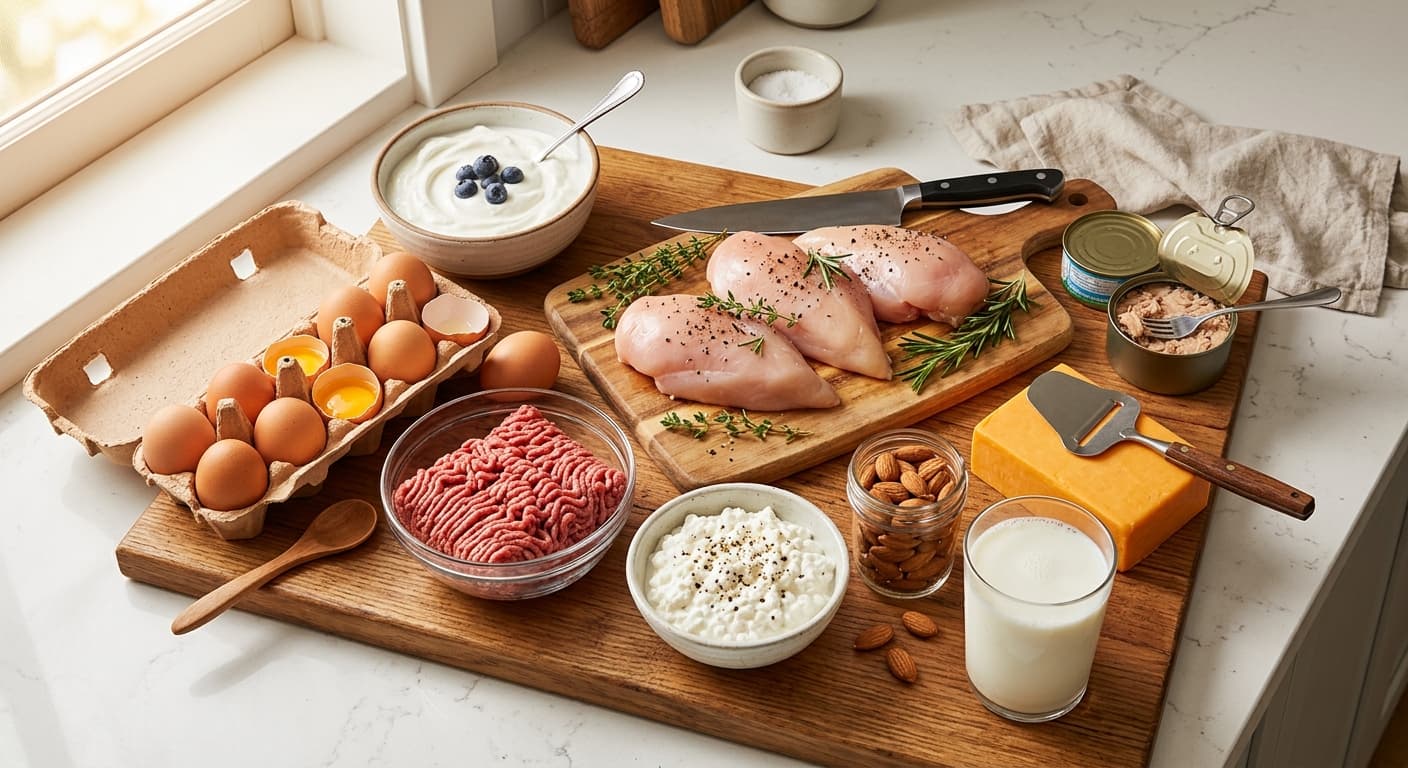
Let's get something out of the way: protein powder isn't magic. It's dried milk with flavoring. And while it's convenient, you absolutely don't need it to build muscle.
Maybe you don't like the taste. Maybe it wrecks your stomach. Maybe you're broke and a tub of whey costs more than a week of groceries. Whatever the reason, you're wondering — can you actually bulk without protein powder?
Yes. And honestly, you might end up with a better diet because of it.
When you take protein shakes off the table, you're forced to build meals around real, nutrient-dense food. You get more micronutrients, more fiber, more satiety cues, and a better relationship with food overall. The trade-off? It takes a bit more planning.
This guide gives you everything you need: the best whole food protein sources, how to structure your meals, a full day of eating, and the practical hacks that make it easy.
- You can absolutely hit your protein targets without any supplements
- Whole food protein sources like eggs, chicken, Greek yogurt, and cottage cheese are cheap and effective
- Aim for at least one strong protein source at every meal and snack
- Prep protein in bulk on weekends to make weekday eating effortless
- Combining protein sources at each meal makes hitting targets much easier
Why Protein Powder Isn't Required
The supplement industry has done an incredible job making you think you need powder to build muscle. You don't. Here's why:
Protein is protein. Your body doesn't care whether it came from a scoop of whey or a chicken breast. What matters is the total amount you eat over the course of a day, and whether you're getting enough essential amino acids — which virtually all animal-based foods provide.
The science backs this up. A 2017 meta-analysis in the British Journal of Sports Medicine found that protein supplementation does support muscle growth — but only because it helps people hit their total protein target. If you're already eating enough protein from food, adding a shake on top does nothing extra.
So what's "enough"? For bulking, aim for 0.7–1.0g per lb of body weight per day. For a 154 lb guy, that's 112–154g of protein daily.
That's very doable with food alone. Let's look at how.
The Best Whole Food Protein Sources for Bulking
Not all protein sources are created equal. When you're bulking without powder, you want foods that are:
- High in protein per serving — so you don't have to eat ridiculous volumes
- Affordable — so your grocery bill doesn't explode
- Easy to prep — so you actually eat them consistently
- Calorie-appropriate — some are lean, some add calories (both useful when bulking)
Tier 1: The Heavy Hitters
These are your daily staples. Build every meal around at least one of them.
| Food | Serving | Protein | Calories | Cost |
|---|---|---|---|---|
| Chicken breast | 5.3 oz | 46g | 248 | Low |
| Eggs (whole) | 4 large | 28g | 312 | Very low |
| Greek yogurt | 7 oz | 20g | 130 | Low |
| Cottage cheese | 7 oz | 22g | 180 | Low |
| Ground turkey (93%) | 5.3 oz | 33g | 240 | Medium |
| Canned tuna | 1 can (5 oz) | 30g | 130 | Very low |
Tier 2: Strong Supporting Cast
These add protein and calories. Pair them with Tier 1 foods.
| Food | Serving | Protein | Calories |
|---|---|---|---|
| Ground beef (85/15) | 5.3 oz | 36g | 340 |
| Pork loin | 5.3 oz | 39g | 270 |
| Salmon fillet | 5.3 oz | 34g | 310 |
| Milk (whole) | 2 cups | 16g | 300 |
| Cheese (cheddar) | 2 oz | 14g | 240 |
| Lentils (cooked) | 7 oz | 18g | 230 |
Tier 3: Protein Boosters
These aren't primary protein sources, but they add up across the day.
| Food | Serving | Protein | Calories |
|---|---|---|---|
| Peanut butter | 2 tbsp | 8g | 190 |
| Oats | 2.8 oz dry | 11g | 300 |
| Whole wheat bread | 2 slices | 8g | 180 |
| Edamame | 3.5 oz | 11g | 121 |
| Almonds | 1 oz | 6g | 170 |
Don't underestimate "protein boosters." If you eat oats at breakfast, bread at lunch, and nuts as a snack, that's an extra 25g of protein you didn't have to think about.
How to Structure Your Day (No Powder Required)
The key to hitting your protein without supplements is spreading it across 4–5 eating occasions. You don't need to eat every 2 hours like a bodybuilder from the '90s, but 3 meals plus 1–2 snacks makes it much easier.
Here's the math for a 154 lb guy aiming for 150g protein and 3000 calories:
| Meal | Target Protein | Target Calories |
|---|---|---|
| Breakfast | 35–40g | 600–700 |
| Lunch | 40–45g | 700–800 |
| Snack | 20–25g | 300–400 |
| Dinner | 40–45g | 700–800 |
| Evening snack | 15–20g | 300–400 |
| Total | 150–175g | 2,600–3,100 |
That's 30–45g per meal — roughly the size of one chicken breast or 4 eggs plus some yogurt. Completely manageable.
You've probably heard that your body can only absorb 30g of protein per meal. That's outdated and misleading. Recent research shows your body can use well over 40g per meal for muscle building — it just takes longer to digest. Eat as much as you need.
A Full Day of Eating: 3,000 Calories, 155g Protein, Zero Powder
Here's a complete day of food that hits serious bulking numbers with absolutely no supplements.
Breakfast: Loaded Egg & Cheese Scramble
- 4 whole eggs, scrambled
- 1 oz shredded cheese
- 2 slices whole wheat toast with butter
- 1 glass whole milk (1.25 cups)
| Calories | Protein | Carbs | Fat |
|---|---|---|---|
| 780 | 42g | 42g | 48g |
This takes under 10 minutes. Crack the eggs, shred some cheese, toast the bread, pour the milk. Done.
Lunch: Chicken & Rice Bowl
- 7 oz grilled chicken thigh (boneless, skin-on)
- 7 oz cooked white rice
- 3.5 oz black beans
- Salsa, avocado (1.8 oz), hot sauce
| Calories | Protein | Carbs | Fat |
|---|---|---|---|
| 820 | 52g | 82g | 28g |
If you meal prep your chicken and rice on Sunday, this is a 3-minute microwave lunch.
Afternoon Snack: Cottage Cheese & Fruit
- 7 oz cottage cheese
- 1 banana
- 1 oz almonds
| Calories | Protein | Carbs | Fat |
|---|---|---|---|
| 450 | 28g | 40g | 18g |
Dinner: Ground Beef Pasta
- 5.3 oz ground beef (85/15)
- 3.5 oz dry pasta
- 0.4 cups marinara sauce
- 0.7 oz parmesan cheese
- Side salad with olive oil
| Calories | Protein | Carbs | Fat |
|---|---|---|---|
| 830 | 48g | 75g | 34g |
Check out our ground beef recipe collection for more ideas.
Evening Snack: Greek Yogurt Bowl
- 7 oz Greek yogurt
- 2 tbsp honey
- 1 oz granola
| Calories | Protein | Carbs | Fat |
|---|---|---|---|
| 320 | 22g | 48g | 4g |
Daily Totals
| Calories | Protein | Carbs | Fat |
|---|---|---|---|
| 3,200 | 192g | 287g | 132g |
That's 192g of protein — more than enough for any skinny guy — and not a single scoop of powder in sight. If you're targeting closer to 3,000 calories, just reduce the rice and bread portions slightly.
7 Practical Tips for Bulking Without Supplements
1. Double Your Protein at Breakfast
Most people eat a carb-heavy breakfast (toast, cereal, oatmeal) and then try to cram all their protein into lunch and dinner. Flip this. Make breakfast your biggest protein meal of the day.
Four eggs alone give you 28g. Add milk and cheese and you're at 40g+ before 9 AM.
2. Drink Your Milk
Whole milk is basically nature's mass gainer. One liter gives you 640 calories, 32g of protein, 50g of carbs, and 34g of fat. It's cheap, it's easy, and it doesn't require any prep.
Drink a glass with every meal. That's an extra 16–20g of protein per day without thinking about it.
3. Eggs Are Your Best Friend
Eggs are the most versatile, cheapest, and most complete whole food protein source on the planet. At about 6g of protein per egg, eating 4–6 per day gives you 24–36g of protein for almost nothing.
Scrambled, fried, boiled, in omelets, baked into muffins — they work with every meal including dinner.
The old "eggs raise cholesterol" fear has been thoroughly debunked. For healthy adults who exercise, eating up to 3 whole eggs per day has no negative impact on cardiovascular health. Most recent studies show even higher intakes are fine.
4. Batch Cook Protein on Weekends
The #1 reason people reach for protein powder is convenience. Beat this by prepping your protein in advance:
- Grill 3.3 lbs of chicken breast on Sunday
- Hard-boil a dozen eggs
- Brown 2.2 lbs of ground turkey
- Cook a big pot of lentils
Store everything in containers. Now every meal is a 3-minute assembly job: grab prepped protein, add a carb source, add some veggies. Done.
If you're new to meal prepping, our complete meal prep guide walks you through the whole process.
5. Use the "Protein + Protein" Rule
Instead of relying on one protein source per meal, combine two. This makes hitting 40g+ per meal almost automatic:
- Eggs + cheese = 28g + 14g = 42g
- Chicken + Greek yogurt (as a sauce) = 46g + 10g = 56g
- Ground beef + beans = 36g + 9g = 45g
- Cottage cheese + milk = 22g + 8g = 30g
Two moderate protein sources beat one large one, every time.
6. Keep Emergency Protein On Hand
There will be days when you're behind on protein and it's 8 PM. For those moments, have these ready:
- Canned tuna or chicken — 30g protein, zero prep, shelf-stable
- Deli turkey slices — 20g per 3.5 oz, straight from the fridge
- Hard-boiled eggs — pre-cooked, grab-and-eat
- Greek yogurt cups — 20g protein, tastes like a snack
- String cheese — 7g protein per stick, portable
These aren't exciting, but they'll save your macros when you're short.
7. Don't Fear High-Fat Protein Sources
When bulking, you need calories AND protein. High-fat protein sources give you both:
- Whole eggs instead of egg whites
- Chicken thighs instead of chicken breast
- 85/15 ground beef instead of 95/5
- Whole milk instead of skim
- Full-fat cheese instead of reduced-fat
For a skinny guy trying to gain weight, the extra calories from fat are a feature, not a bug. You're not dieting — you're bulking. Use it. For more on choosing the right fats, check out our best fats for bulking guide.
Common Mistakes When Bulking Without Powder
1. Eating the Same 3 Foods Every Day
Chicken, rice, eggs. Chicken, rice, eggs. By day 4, you'd rather starve.
Variety isn't just about taste — different protein sources have different amino acid profiles, micronutrient content, and digestibility. Rotate between chicken, beef, pork, fish, eggs, dairy, and legumes throughout the week.
2. Skipping Breakfast Protein
A bowl of oatmeal with fruit is a great breakfast — but it has maybe 8g of protein. If you're trying to hit 150g+ in the day without powder, you can't afford to waste a meal on low-protein foods.
Add eggs, Greek yogurt, or milk to every breakfast. Non-negotiable.
3. Underestimating Dairy
Dairy is the unsung hero of powder-free bulking. Between whole milk, Greek yogurt, cottage cheese, and hard cheese, you can easily get 60–80g of protein per day from dairy alone — and it barely feels like effort.
If you tolerate dairy well, lean into it hard. If you're lactose intolerant, lactose-free milk and aged cheeses (which are naturally low in lactose) are good alternatives.
4. Not Tracking (At Least Initially)
"I eat a lot of protein" is not the same as "I eat 150g of protein." When you first ditch the powder, track your macros for 2–3 weeks. You'll quickly learn which meals hit your targets and which fall short.
After that, you'll have enough pattern recognition to do it intuitively.
5. Overcomplicating Things
You don't need to cook gourmet meals three times a day. A bulking diet without powder can be dead simple:
- Breakfast: Eggs + toast + milk
- Lunch: Chicken + rice + veggies
- Snack: Cottage cheese + fruit
- Dinner: Ground meat + pasta
- Night snack: Yogurt + nuts
That's it. Five straightforward meals, ~150g protein, ~3,000 calories. No chef skills required.
What About Muscle Recovery Without Supplements?
One argument for protein powder is the "anabolic window" — the idea that you need fast-absorbing protein immediately after training. Here's the reality:
The anabolic window is much larger than you think. Research shows muscle protein synthesis stays elevated for 24–48 hours after training, not 30 minutes. As long as you eat a protein-rich meal within a couple hours of training, you're fine.
Good post-workout meals without powder:
- 4 eggs + toast (quick, high-protein)
- Greek yogurt + granola + banana (no cooking)
- Leftover chicken from your meal prep (fastest option)
- Cottage cheese + fruit (zero effort)
For more ideas, see our post-workout meal guide.
The key is total daily protein intake, not nutrient timing wizardry. Eat enough protein spread across the day, train hard, sleep well — that's 95% of the equation.
Budget Comparison: Powder vs. Whole Foods
One reason people use protein powder is cost. Let's actually compare:
Cost Per 30g of Protein
| Source | Cost per 30g protein | Notes |
|---|---|---|
| Eggs (5 large) | $0.80–1.00 | Cheapest whole food option |
| Whole milk (3.8 cups) | $0.80–1.20 | Also gives you 600 cal |
| Chicken breast (5.3 oz) | $1.00–1.50 | Buy in bulk, freeze |
| Canned tuna (1 can) | $1.00–1.50 | Shelf-stable, zero prep |
| Greek yogurt (10.5 oz) | $1.20–1.80 | Buy tubs, not singles |
| Cottage cheese (10 oz) | $1.00–1.40 | Often on sale |
| Whey protein (1 scoop) | $0.80–1.50 | Depends heavily on brand |
Protein powder is roughly the same cost as eggs and milk — sometimes cheaper, sometimes more expensive. The difference isn't dramatic enough to matter.
Where whole foods win is total nutrition. That $1 of eggs gives you choline, vitamin D, B12, selenium, and healthy fats that no powder provides. You're getting more bang for your buck nutritionally, even if the raw protein cost is similar.
If budget is tight, our bulking grocery list shows you how to eat big for under $50/week.
When You Might Actually Need Powder
Let's be honest — there are situations where protein powder genuinely makes life easier:
- You travel constantly and can't meal prep
- You're eating 4,000+ calories and physically can't eat more food
- You have severe time constraints (like 15-minute lunch breaks)
- You're already eating 6 whole food meals and still falling short
If none of these apply, you don't need it. And even if one does, it's a convenience tool — not a requirement.
How FuelTheGains Can Help
Building a bulking diet from whole foods takes planning — figuring out portions, balancing macros, and making sure you're actually hitting your targets every single day. That's exactly what does for you.
You tell it your weight, your goal, and your food preferences. It builds a personalized meal plan with real food — chicken, eggs, rice, yogurt, all the stuff we've been talking about. No protein powder required (unless you want it). Every meal is calculated, every macro accounted for.
If you've been eyeballing your portions and hoping for the best, this is the upgrade that actually moves the needle.
The Bottom Line
Protein powder is a convenience, not a necessity. With the right food choices and a bit of planning, you can hit 150g+ of protein per day from whole foods alone — and your body will thank you for it.
Start simple. Eggs at breakfast, chicken at lunch, beef or fish at dinner, Greek yogurt for snacks. Track for two weeks, then run on autopilot.
The guys who built the best physiques in history — long before supplement companies existed — did it with steak, eggs, and milk. You can too.