
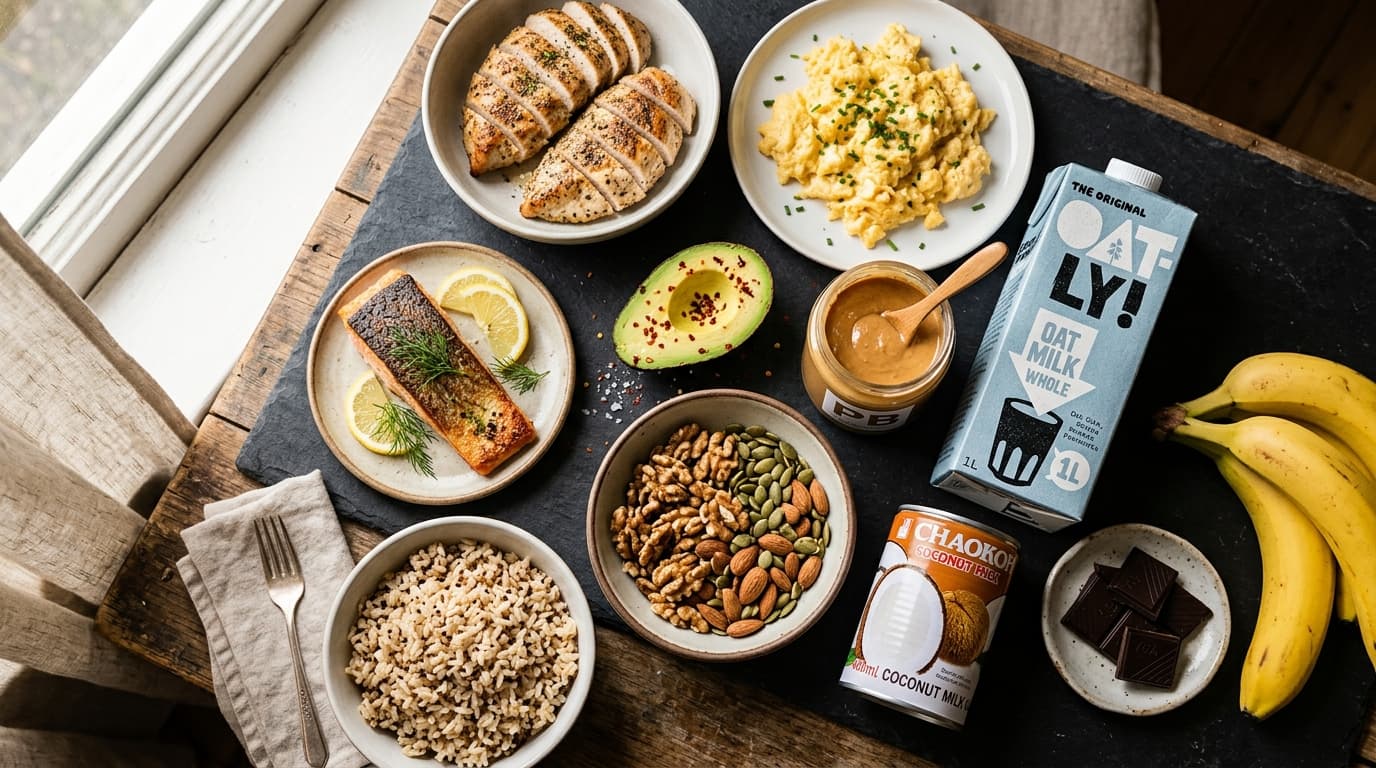
Let's be honest — most bulking advice assumes you can chug a gallon of whole milk, blend up whey shakes all day, and pile cheese onto everything. And for a lot of guys, that works great.
But if you're lactose intolerant — or dairy just wrecks your stomach — that advice is basically useless. Every "easy calorie hack" revolves around dairy, and you're left wondering how the hell you're supposed to hit 3,000+ calories when half the go-to bulking foods are off the table.
Here's the good news: dairy is not required to build muscle. Not even close. Plenty of elite athletes and serious lifters bulk successfully without touching a drop of milk. You just need the right swaps and a plan that works around your gut, not against it.
This guide covers everything — protein sources, calorie-dense alternatives, shake recipes, supplements, and a full sample meal plan — all 100% dairy-free.
- Dairy is convenient for bulking but completely replaceable with the right foods
- Lactose intolerance affects up to 68% of the global population — you're not alone
- Eggs, chicken, beef, fish, and plant proteins can easily cover your protein needs
- Coconut milk, avocado, and nut butters replace dairy as calorie-dense staples
- Dairy-free protein powders (beef isolate, egg white, pea/rice blends) work just as well as whey
- You don't need to sacrifice taste or convenience — just make targeted swaps
Why Dairy Dominates Bulking Advice (And Why It Doesn't Have To)
Dairy is popular in bulking circles for three reasons: it's calorie-dense, protein-rich, and cheap. A glass of whole milk delivers about 150 calories and 8g of protein for practically nothing. Whey protein is the cheapest protein powder per gram. Cheese adds calories to anything.
But here's what nobody talks about: roughly 68% of the world's population has some degree of lactose malabsorption. In some populations, it's as high as 90%. If dairy gives you bloating, gas, cramps, or worse — you're in the majority, not the minority.
And trying to bulk through digestive distress is a terrible strategy. When your gut is inflamed and uncomfortable, you eat less, absorb nutrients worse, and feel like garbage in the gym. Dropping dairy might actually help your bulk, not hurt it.
Step 1: Nail Your Protein Without Whey
The biggest concern most guys have when cutting dairy is protein. Whey is everywhere — in shakes, bars, recipes. But it's far from the only option.
Tier 1: Whole Food Protein Sources
These should be the foundation of your diet regardless of dairy status:
| Food | Protein per 3.5 oz | Calories | Notes |
|---|---|---|---|
| Chicken breast | 31g | 165 | The gold standard. Cheap, lean, versatile |
| Lean ground beef (90/10) | 26g | 196 | More calories than chicken, great for bulking |
| Eggs (whole) | 13g | 155 | Healthy fats + complete amino profile |
| Salmon | 25g | 208 | Omega-3s for recovery and inflammation |
| Turkey breast | 29g | 135 | Even leaner than chicken |
| Canned tuna | 26g | 116 | Budget-friendly, zero prep |
| Shrimp | 24g | 99 | Low calorie, high protein — great for cutting-conscious bulks |
| Pork loin | 27g | 143 | Underrated and affordable |
If you're eating 0.7-1.0g per lb of body weight in protein daily — which you should be — whole foods can cover 70-80% of that easily.
Tier 2: Dairy-Free Protein Powders
For the remaining 20-30%, a good protein powder helps. Here are your best options:
Beef protein isolate — Made from hydrolyzed beef, not actual steak blended up. Mixes well, digests easily, and has a complete amino acid profile similar to whey. Look for brands with 24-26g protein per scoop.
Egg white protein — Exactly what it sounds like. Excellent amino acid profile, no lactose, no bloating. Slightly foamy texture in shakes.
Pea + rice protein blend — The best plant-based option. Pea protein is high in lysine, rice protein is high in methionine — together they form a complete protein that rivals whey for muscle building. Studies show no significant difference in muscle gains compared to whey when total protein intake is matched.
Soy protein isolate — Complete protein, well-studied. Despite the myths, moderate soy intake does not affect testosterone levels in men. Multiple meta-analyses have confirmed this.
If you're switching from whey, start with a beef or egg white isolate — they taste the most similar and mix the best. Plant proteins have improved a lot but still have a different texture.
Step 2: Replace Dairy Calories
Dairy isn't just protein — it's a calorie vehicle. Whole milk, cheese, cream, butter — these add hundreds of easy calories. When you cut them, you need to replace those calories or your bulk stalls.
The Best Dairy-Free Calorie Sources
Nut butters — Peanut butter, almond butter, cashew butter. About 190 calories and 7-8g protein per 2 tbsp. Spread it on everything. Add it to shakes. Eat it by the spoon.
Avocado — Half a medium avocado is ~120 calories with healthy monounsaturated fats. Mash it on toast, add it to bowls, or blend it into shakes for creaminess.
Coconut milk (full fat, canned) — This is your secret weapon. One cup has about 445 calories and 48g of fat. Use it in shakes, curries, oatmeal, or rice dishes. It's the closest thing to heavy cream without the lactose.
Olive oil and avocado oil — 120 calories per tablespoon. Drizzle on rice, pasta, vegetables. You won't even taste it, but you'll add 200-400 calories to your daily total.
Nuts and seeds — Almonds, walnuts, macadamias, pumpkin seeds, sunflower seeds. Calorie-dense, portable, and require zero prep. A handful of almonds is ~170 calories.
Dark chocolate — 70%+ dark chocolate is dairy-free (check the label) and runs about 170 calories per 1 oz. A guilt-free way to add calories.
Coconut cream — Even thicker than coconut milk. Add a few tablespoons to your oatmeal or shakes for 100+ extra calories.
A typical dairy-heavy bulk might include 2 glasses of whole milk (300 cal), cheese on 2 meals (220 cal), and a whey shake with milk (400 cal) — that's ~920 calories from dairy alone. You need to intentionally replace these. Don't just remove dairy and hope for the best.
Step 3: Master Dairy-Free Shakes
Shakes are still the easiest way to add calories when you're struggling to eat enough. You just need the right base and ingredients.
The Base: What Replaces Milk?
| Milk Alternative | Calories per cup | Protein | Best For |
|---|---|---|---|
| Oat milk (full fat) | 120-150 | 3-4g | Creamy shakes, best all-rounder |
| Soy milk | 100-130 | 7-9g | Highest protein plant milk |
| Coconut milk (carton) | 70-80 | 0-1g | Lighter shakes, tropical flavors |
| Almond milk | 30-60 | 1g | Low-calorie option (not great for bulking) |
For bulking, oat milk or soy milk are your best bets. Almond milk is basically water with marketing — skip it unless you're adding other calorie sources.
Three Dairy-Free Bulking Shakes
The Mass Builder (850+ cal)
- 2 cups oat milk (300 cal)
- 1 scoop beef protein isolate (120 cal)
- 2 tbsp peanut butter (190 cal)
- 1 banana (100 cal)
- 2 tbsp honey (120 cal)
- ¼ cup oats (75 cal)
The Tropical Tank (900+ cal)
- 1 cup full-fat canned coconut milk (445 cal)
- 1 cup oat milk (150 cal)
- 1 scoop vanilla pea protein (110 cal)
- 1 banana (100 cal)
- ½ cup frozen mango (50 cal)
- 1 tbsp coconut oil (120 cal)
The Chocolate Monster (750+ cal)
- 2 cups soy milk (200 cal)
- 1 scoop chocolate egg white protein (110 cal)
- 2 tbsp almond butter (190 cal)
- 1 banana (100 cal)
- 1 tbsp cocoa powder (10 cal)
- 2 tbsp maple syrup (110 cal)
Blend in ¼ cup of dry oats to any shake for an extra 75 calories and 3g of protein. You won't taste it, and the texture is barely noticeable if you blend thoroughly.
Step 4: Build Your Dairy-Free Meal Plan
Here's a sample day targeting roughly 3,000 calories for a 154 lb guy. Adjust portions based on your calculated calorie target.
Meal 1 — Breakfast (7:00 AM)
- 4 whole eggs scrambled in olive oil (1 tbsp)
- 2 slices sourdough toast
- ½ avocado
- 1 banana
~720 cal | 32g protein | 38g fat | 65g carbs
Meal 2 — Mid-Morning Shake (10:00 AM)
- The Mass Builder shake (recipe above)
~850 cal | 45g protein | 28g fat | 105g carbs
Meal 3 — Lunch (1:00 PM)
- 7 oz chicken breast, grilled
- 1.5 cups white rice
- 1 tbsp olive oil drizzled on rice
- Mixed vegetables
~680 cal | 48g protein | 16g fat | 82g carbs
Meal 4 — Afternoon Snack (4:00 PM)
- 1.5 oz almonds
- 1 apple
- 2 rice cakes with 2 tbsp peanut butter
~530 cal | 16g protein | 30g fat | 52g carbs
Meal 5 — Dinner (7:00 PM)
- 7 oz salmon fillet
- Sweet potato (7 oz)
- Roasted broccoli with avocado oil
- Side salad with olive oil dressing
~720 cal | 42g protein | 30g fat | 68g carbs
Daily Totals
| Macro | Amount |
|---|---|
| Calories | ~3,500 |
| Protein | 183g |
| Fat | 142g |
| Carbs | 372g |
That's a solid surplus for most skinny guys, with zero dairy. If you need more calories, add another shake or increase your nut butter and oil portions.
Supplements You Actually Need (Dairy-Free)
When you cut dairy, there are a couple of nutritional gaps to watch out for.
Calcium
Dairy is the #1 calcium source for most people. Without it, you need to be intentional:
- Fortified plant milks — Most oat/soy milks are fortified to match dairy (~300mg per cup)
- Canned salmon or sardines (with bones) — 200-300mg per serving
- Leafy greens — Kale, bok choy, broccoli all contain calcium
- Calcium supplement — If you're not confident you're getting enough, 500-600mg daily fills the gap
Vitamin D
Vitamin D helps your body absorb calcium. Most lifters should supplement this anyway, dairy or not. Aim for 2,000-4,000 IU daily, especially if you don't get much sun.
Creatine
Not dairy-related, but if you're bulking, you should be taking creatine. 5g daily, every day. It's the most well-researched supplement in existence and it's naturally dairy-free.
Digestive Enzymes (Optional)
If you're not fully lactose intolerant but dairy-sensitive, lactase enzyme supplements taken before a meal can help you tolerate small amounts of dairy. Useful for social situations where avoiding dairy completely is awkward.
Don't rely on lactase pills as your primary strategy. They help with small amounts but won't fully compensate for a glass of milk or a big serving of ice cream. Build your diet around dairy-free foods and use enzymes as a backup.
Common Mistakes Dairy-Free Bulkers Make
1. Not replacing the calories. This is the biggest one. You drop dairy but don't add anything back, and suddenly you're 500-800 calories short every day. Your bulk stalls and you blame your "fast metabolism."
2. Relying on almond milk as a milk replacement. Almond milk has 30-60 calories per cup vs. 150 for whole milk. It's not a swap — it's a downgrade. Use oat or soy milk for bulking.
3. Avoiding all fat. Some guys go dairy-free and accidentally go low-fat too, since dairy was their main fat source. Fat is essential for hormone production (including testosterone). Keep fats at 25-35% of total calories.
4. Not reading labels. Dairy hides everywhere — in bread, protein bars, sauces, seasonings, "non-dairy" creamers (many contain casein). Get in the habit of checking ingredients for milk, whey, casein, lactose, and "milk solids."
5. Thinking dairy-free means plant-based. You can eat chicken, beef, eggs, and fish without touching dairy. Don't limit yourself to plant proteins unless you actually want to go plant-based. Check out our plant-based bulking guide if that's your goal.
6. Skipping the calorie shakes. When eating solid food is hard enough, liquid calories are your lifeline. Dairy-free shakes can hit 800-900 calories easily with the right ingredients.
Eating Out and Social Situations
Bulking without dairy at restaurants is easier than you think:
- Asian cuisine — Thai, Chinese, Japanese, and Vietnamese food is largely dairy-free. Stir-fries, rice dishes, noodle bowls, and sushi are all safe bets.
- Mexican food — Skip the cheese and sour cream. Tacos with meat, rice, beans, and guacamole are calorie-dense and dairy-free.
- Burgers — No cheese, extra avocado. Most buns are dairy-free (check for butter/milk in brioche).
- Italian — Olive oil-based pasta dishes (aglio e olio, marinara) instead of cream-based sauces. Skip the parmesan.
- Steakhouses — Steak, potatoes, vegetables. Just ask for olive oil instead of butter.
The key phrase: "No dairy, please — I'm lactose intolerant." Restaurants hear this constantly and know how to accommodate it.
For more tips on dining out while bulking, check our complete guide to eating out while bulking.
Grocery List: Dairy-Free Bulking Essentials
Print this out or screenshot it for your next grocery run. For a more comprehensive list, see our bulking grocery list on a budget.
Proteins
- Chicken breast and thighs
- Lean ground beef
- Eggs (buy in bulk — 2-3 dozen/week)
- Canned tuna and salmon
- Pork loin
- Dairy-free protein powder
Carbs
- White and brown rice
- Oats (rolled or quick)
- Sweet potatoes
- Pasta (egg-free varieties)
- Sourdough bread
- Bananas
Fats
- Peanut butter (natural)
- Almond butter
- Avocados
- Extra virgin olive oil
- Coconut oil
- Mixed nuts
- Dark chocolate (70%+)
Liquids
- Full-fat oat milk
- Soy milk
- Full-fat canned coconut milk
- Coconut cream
Extras
- Honey and maple syrup
- Rice cakes
- Frozen fruit (mango, berries)
- Cocoa powder
How FuelTheGains Makes Dairy-Free Bulking Easier
Figuring out what to eat, how much, and when — without dairy — takes planning. And let's be real, most guys don't want to spend hours calculating macros and building meal plans from scratch every week.
That's exactly what does for you. Tell the app about your dietary restrictions (including dairy-free), your goals, your schedule, and your food preferences. It generates a complete, personalized meal plan with exact portions, a shopping list, and calorie/macro tracking — all tailored to your bulk.
No more guessing whether you hit your calories. No more scrambling for dairy-free meal ideas. Just follow the plan, eat the food, and grow.
The Bottom Line
Being lactose intolerant doesn't mean you can't build serious muscle. It just means you swap milk for oat milk, whey for beef isolate, and cheese for avocado. The protein is there. The calories are there. The gains are there.
Stop using dairy intolerance as an excuse and start using it as motivation to build a cleaner, more intentional diet. Your gut will thank you — and your gains won't skip a beat.