
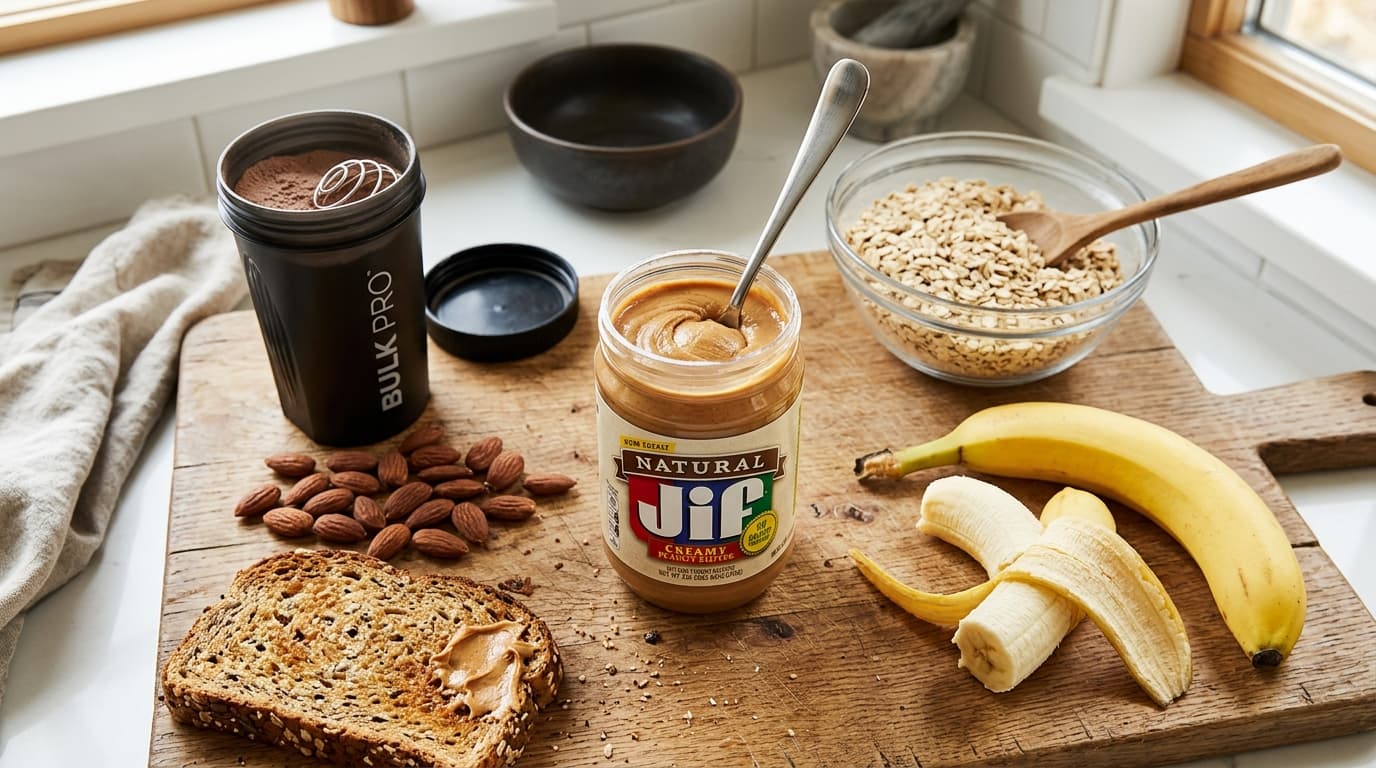
If you're a skinny guy trying to gain weight, peanut butter might be the single most important food in your kitchen. Two tablespoons pack nearly 200 calories — and you can eat it straight from the jar.
No cooking. No prep. No excuses.
But here's the thing most guys get wrong: they either eat too little peanut butter to make a difference, or they go overboard and wonder why they're gaining more fat than muscle. There's a sweet spot, and this guide will help you find it.
- Peanut butter delivers 190 calories and 7g protein per 2-tablespoon serving
- Aim for 2-4 tablespoons daily depending on your calorie target
- Choose natural peanut butter with just peanuts and salt — skip the added sugar brands
- Combine peanut butter with protein sources to create complete, muscle-building meals
- Peanut butter shakes are the easiest way to add 500+ calories to your day
Why Peanut Butter Is Perfect for Bulking
Let's start with the obvious: peanut butter is calorie-dense. That means you get a lot of energy in a small volume of food — exactly what a hardgainer needs.
Here's how it compares to other common bulking foods per 3.5 oz:
| Food | Calories | Protein | Fat | Carbs |
|---|---|---|---|---|
| Peanut butter | 588 | 25g | 50g | 20g |
| Chicken breast | 165 | 31g | 3.6g | 0g |
| White rice (cooked) | 130 | 2.7g | 0.3g | 28g |
| Whole milk | 61 | 3.2g | 3.3g | 4.8g |
| Banana | 89 | 1.1g | 0.3g | 23g |
Peanut butter packs 4.5x more calories than chicken breast per gram. That's insane.
And unlike pure junk food, peanut butter brings real nutritional value to the table:
- Healthy fats — mostly monounsaturated and polyunsaturated fats that support hormone production (including testosterone)
- Decent protein — not a primary source, but 25g per 3.5 oz adds up fast
- Micronutrients — magnesium, phosphorus, zinc, niacin, and vitamin E
- Fiber — about 6g per 3.5 oz, which helps with digestion
For skinny guys who struggle to eat enough, peanut butter is a cheat code. It's easy to eat, doesn't fill you up as much as whole foods, and you can add it to almost anything.
How Much Peanut Butter Should You Eat Per Day?
This depends on your overall calorie target. But here's a practical guideline:
| Daily Calorie Target | Recommended PB Intake | Calories from PB |
|---|---|---|
| 2,500 | 2 tbsp (1 serving) | ~190 |
| 3,000 | 3-4 tbsp (1.5-2 servings) | ~285-380 |
| 3,500+ | 4-6 tbsp (2-3 servings) | ~380-570 |
If you're following a 3000-calorie meal plan, that's about 3-4 tablespoons spread across the day. Easy.
Don't Overdo It
Peanut butter is calorie-dense, but it's also fat-dense. Each tablespoon has about 8g of fat. If you're eating 6+ tablespoons a day, that's nearly 50g of fat from peanut butter alone — which can crowd out other important macros.
The goal is to use peanut butter as a calorie booster, not your entire diet. Pair it with protein-rich foods, complex carbs, and vegetables.
Spread your peanut butter intake across 2-3 meals or snacks rather than eating it all at once. This makes it easier to digest and keeps your meals balanced.
Choosing the Right Peanut Butter
Not all peanut butter is created equal. Walk down the grocery aisle and you'll find everything from natural single-ingredient jars to sugar-loaded dessert spreads.
What to Look For
The ingredient list should say: Peanuts. Maybe salt. That's it.
Natural peanut butter has:
- No added sugar
- No hydrogenated oils (trans fats)
- No palm oil
- Just peanuts and sometimes salt
What to Avoid
- Added sugar — brands like Skippy and Jif regular add 2-3g sugar per serving. Not a dealbreaker, but unnecessary
- Hydrogenated oils — these are trans fats added to prevent separation. Bad for heart health
- Reduced-fat peanut butter — they remove the fat and replace it with sugar. You actually end up with similar calories but worse macros
- Flavored varieties — chocolate peanut butter, honey roasted, etc. Usually loaded with sugar
Natural peanut butter separates — the oil rises to the top. This is normal and actually a sign of quality. Stir it well when you first open it, then store it upside down in the fridge. Problem solved.
Best Budget Picks
You don't need to buy fancy artisan peanut butter. Store-brand natural peanut butter works perfectly. Look for:
- Store-brand "natural" or "just peanuts" varieties
- Kirkland (Costco) organic peanut butter — great value in bulk
- 365 by Whole Foods creamy peanut butter
A 16 oz jar typically costs $3-5 and lasts about 2 weeks if you're eating 2-3 tablespoons daily. That's one of the cheapest calorie sources you'll find — way cheaper than most items on a bulking grocery list.
Peanut Butter vs. Other Nut Butters
You might be wondering: is almond butter or cashew butter better? Let's compare per 2-tablespoon serving:
| Nut Butter | Calories | Protein | Fat | Carbs | Price |
|---|---|---|---|---|---|
| Peanut butter | 190 | 7g | 16g | 7g | $ |
| Almond butter | 196 | 7g | 18g | 6g | $$$ |
| Cashew butter | 188 | 6g | 16g | 9g | $$$ |
| Sunflower seed butter | 200 | 7g | 18g | 7g | $$ |
The macros are nearly identical across the board. The biggest difference? Price. Almond butter costs 2-3x more than peanut butter for essentially the same nutritional profile.
Unless you have a peanut allergy, peanut butter wins on value every time. Spend the savings on extra chicken breast or oats instead.
10 Ways to Add Peanut Butter to Your Bulking Diet
Here's where it gets practical. These are the easiest ways to sneak peanut butter calories into your day without feeling like you're force-feeding yourself.
1. The Classic PB Shake
This is the #1 bulking hack. A peanut butter shake takes 60 seconds and can easily hit 600-800 calories.
Basic recipe:
- 2 cups whole milk — 300 cal
- 1 scoop whey protein — 120 cal
- 2 tbsp peanut butter — 190 cal
- 1 banana — 100 cal
- ½ cup oats — 150 cal
Total: 860 calories, 55g protein.
If you're struggling to hit your calorie target, check out our guide to homemade mass gainer shakes for more recipes like this.
2. PB on Toast (Upgraded)
Don't just smear peanut butter on white bread. Level it up:
- 2 slices whole grain bread — 220 cal
- 2 tbsp peanut butter — 190 cal
- 1 sliced banana — 100 cal
- Drizzle of honey — 60 cal
Total: 570 calories. Takes 2 minutes.
3. Overnight Oats with PB
Mix the night before, grab and eat in the morning:
- 1 cup rolled oats — 300 cal
- 1 cup whole milk — 150 cal
- 2 tbsp peanut butter — 190 cal
- 1 scoop protein powder — 120 cal
- 1 tbsp honey — 60 cal
Total: 820 calories, 48g protein. Zero morning effort.
4. PB & Banana Rice Cakes
The perfect between-meals snack:
- 2 rice cakes — 70 cal
- 2 tbsp peanut butter — 190 cal
- ½ banana, sliced — 50 cal
Total: 310 calories. Portable and easy to eat even when you're not hungry.
5. Peanut Butter Yogurt Bowl
- 1 cup Greek yogurt — 130 cal
- 1 tbsp peanut butter — 95 cal
- ¼ cup granola — 120 cal
- Berries — 50 cal
Total: 395 calories, 28g protein.
6. PB Stuffed Dates
This is a game-changer for anyone with a sweet tooth:
- 4 Medjool dates — 280 cal
- 4 tsp peanut butter (stuff each date) — 130 cal
Total: 410 calories. Tastes like candy but it's whole food.
7. Peanut Noodle Stir-Fry
Peanut butter isn't just for sweet dishes. This savory option hits hard:
- 7 oz cooked noodles — 280 cal
- 2 tbsp peanut butter — 190 cal
- 1 tbsp soy sauce
- 5 oz chicken breast — 250 cal
- Mixed vegetables — 50 cal
- Sriracha to taste
Total: 770 calories, 48g protein. A legit dinner.
8. Apple Slices with PB
Simple, satisfying, and easy to eat at your desk:
- 1 medium apple — 95 cal
- 2 tbsp peanut butter — 190 cal
Total: 285 calories. The crunch factor makes it surprisingly satisfying.
9. PB Protein Balls (Batch Prep)
Make a batch on Sunday, grab 2-3 per day as snacks:
- 1 cup oats
- ½ cup peanut butter
- ⅓ cup honey
- 1 scoop protein powder
- ¼ cup chocolate chips
Mix, roll into 12 balls, refrigerate. Each ball is roughly 150 calories with 6g protein.
10. The Straight-From-the-Jar Emergency Spoon
Look — sometimes you're 300 calories short at the end of the day. Grab a spoon, eat 2 tablespoons of peanut butter, and move on. No shame. It works.
Peanut Butter and Your Macros
Let's talk about how peanut butter fits into a proper bulking macro split.
For a 150 lb guy bulking at 3,000 calories, a typical macro split might look like:
- Protein: 0.9g per lb = 135g
- Fat: 30% of calories = 100g
- Carbs: remaining calories = 375g
If you eat 3 tablespoons of peanut butter throughout the day, that contributes:
- 285 calories (9.5% of your daily target)
- 10.5g protein (7.7% of your daily target)
- 24g fat (24% of your daily fat target)
- 10.5g carbs (2.8% of your daily target)
See how it works? Peanut butter knocks out nearly a quarter of your fat target while adding meaningful calories. But it's not a significant protein source — you still need chicken, eggs, dairy, and protein powder to hit your protein numbers.
This is why pairing peanut butter with high-protein foods is crucial. A PB shake with whey protein? Perfect combo. PB on its own as your only snack? Missing the protein.
For a deeper dive on protein targets, check out our guide on how much protein you need to build muscle.
Common Mistakes With Peanut Butter While Bulking
1. Treating It as a Protein Source
Peanut butter has protein, yes. But at 7g per serving, you'd need to eat 5+ servings to make a meaningful dent — and that's 950 calories and 80g of fat. Use PB for calories and fats, and get your protein from actual protein sources.
2. Not Measuring Portions
This goes both ways. Some guys eyeball a "tablespoon" that's actually three tablespoons. Others are so careful they barely use any. When you're starting out, actually measure with a tablespoon so you know what a real serving looks like.
3. Buying Garbage Brands
If the first ingredient isn't "peanuts," put it back. You're not buying peanut-flavored sugar paste.
4. Eating It Right Before Training
Peanut butter is high in fat, which slows digestion. Eating a big glob 30 minutes before lifting can leave you feeling sluggish and bloated. Save it for post-workout meals or snacks between meals — not your pre-workout meal.
5. Ignoring the Calorie Density When Cutting
This article is about bulking, but keep this in mind: when you eventually transition to a cut, peanut butter becomes dangerous. Those easy calories that helped you bulk will work against you. Be aware and adjust portions accordingly.
If you have a peanut allergy, don't try to push through it. Sunflower seed butter and soy nut butter are the closest alternatives in terms of texture and calorie density. Almond butter works too but costs more.
The Best Time to Eat Peanut Butter
Timing isn't everything, but it can help:
Morning (Breakfast)
Add to oatmeal, toast, or a shake. Gets early calories in when your body needs fuel after an overnight fast. This is especially important if you're one of those guys who can't eat in the morning — a PB shake goes down easier than a full plate of food.
Between Meals (Snack)
The ideal use case. PB on rice cakes, apple slices, or dates gives you an easy 200-400 calorie bridge between meals without killing your appetite for the next one.
Post-Workout
Pair with a protein shake and a banana. The fats help slow protein absorption for a more sustained amino acid release (though the effect is modest — don't overthink this).
Before Bed
A tablespoon of peanut butter before bed gives your body slow-digesting fuel overnight. The fats and protein provide a steady supply while you sleep — which is when most muscle repair happens. Check out our list of bedtime snacks for muscle growth for more ideas.
Peanut Butter Allergies and Alternatives
About 1-2% of the population has a peanut allergy, and it's one of the most serious food allergies out there. If that's you, here are your best alternatives:
| Alternative | Calories (2 tbsp) | Protein | Taste |
|---|---|---|---|
| Sunflower seed butter | 200 | 7g | Closest to PB |
| Almond butter | 196 | 7g | Milder, slightly sweet |
| Cashew butter | 188 | 6g | Creamier, less nutty |
| Soy nut butter | 170 | 7g | Similar texture to PB |
| Tahini (sesame) | 178 | 5g | Savory, great in cooking |
All of these work in the recipes above. Sunflower seed butter is the most similar swap for baking and shakes.
Where FuelTheGains Comes In
Tracking how peanut butter fits into your macros sounds simple in theory. In practice? You're juggling protein targets, calorie goals, meal timing, and trying to figure out if that extra tablespoon puts you over your fat limit.
That's exactly what FuelTheGains solves. Tell us your stats, your goals, and your food preferences — and we build you a complete meal plan with exact portions. Peanut butter included, obviously.
No more guessing. No more spreadsheets. Just a personalized plan that tells you exactly what to eat, when to eat it, and how much.
The Bottom Line
Peanut butter is one of the most efficient bulking foods on the planet. It's cheap, it's calorie-dense, it tastes great, and you can add it to almost anything.
For skinny guys who struggle to eat enough, 2-4 tablespoons of natural peanut butter per day can be the difference between stalling at the same weight and finally seeing the scale move.
Buy a jar. Start tomorrow. Your future gains will thank you.