
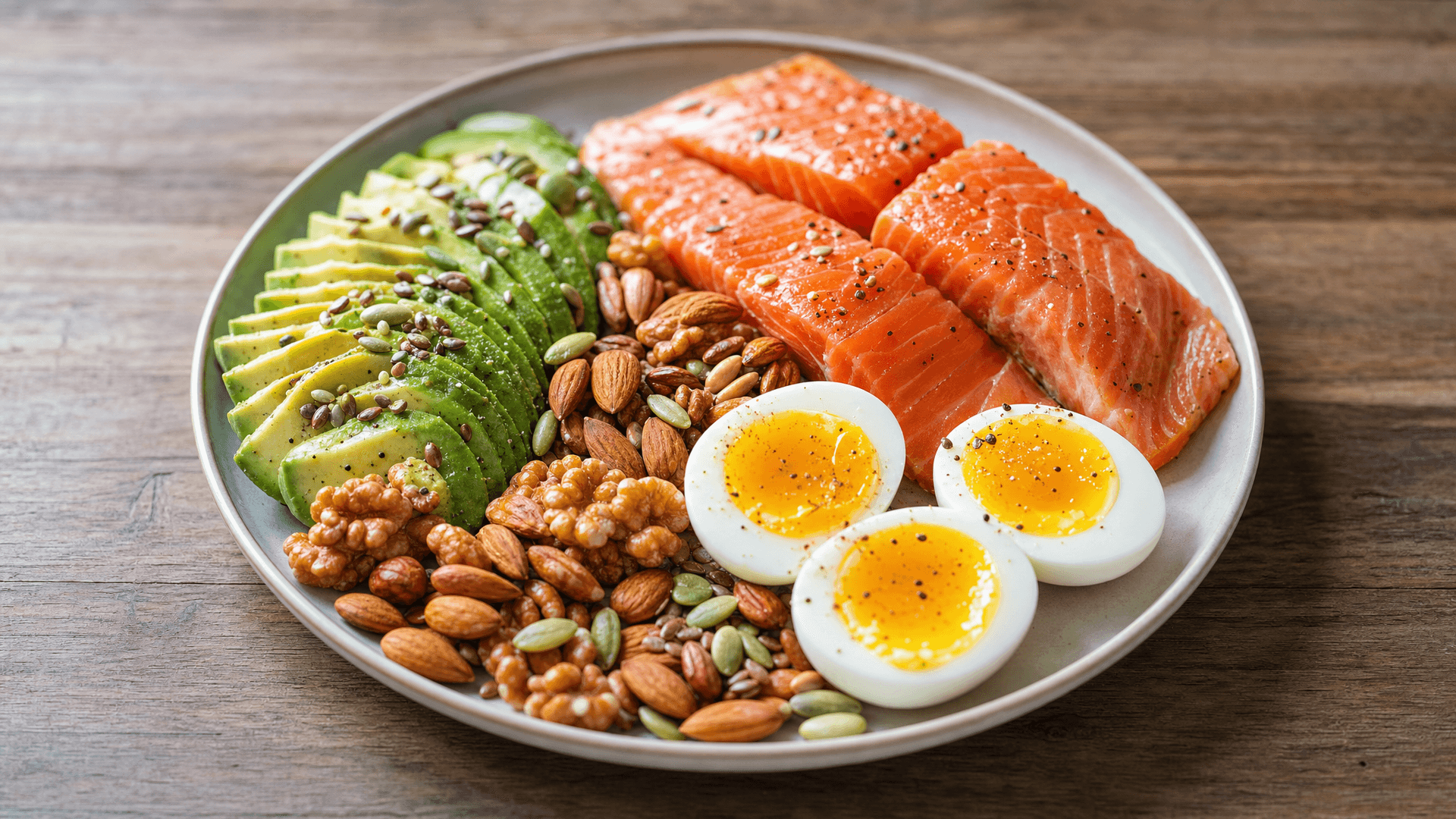
You've probably seen the clickbait. "10 Foods That SKYROCKET Your Testosterone!" with a thumbnail of some jacked dude holding a handful of brazil nuts.
Let's be real — no single food is going to turn you into a testosterone factory overnight. But here's what the science actually says: your diet as a whole has a massive impact on your hormonal environment, and if you're a skinny guy trying to bulk, you might be unknowingly sabotaging your T levels with poor food choices.
Low testosterone doesn't just mean less muscle. It means less energy, worse recovery, lower motivation, and a harder time gaining weight. For hardgainers who already struggle to put on size, that's the last thing you need.
This isn't a list of magic foods. It's a practical guide to eating in a way that supports healthy testosterone production — backed by actual research, not bro science.
- Dietary fat is essential for testosterone — don't go below 20% of total calories from fat
- Zinc and magnesium deficiencies are common in active guys and directly impact T levels
- Eggs, fatty fish, and red meat are the most testosterone-supportive protein sources
- Sleep and calorie surplus matter more than any single "T-boosting" food
- Most testosterone booster supplements are a waste of money
Why Testosterone Matters for Skinny Guys
Testosterone is the primary anabolic hormone in your body. It drives muscle protein synthesis, bone density, red blood cell production, and fat distribution. For a skinny guy trying to bulk, it's basically the master switch for gains.
Here's the thing most people miss: being in a calorie deficit tanks your testosterone. Studies show that prolonged undereating can reduce T levels by 10-15%. And if you're a hardgainer who "forgets to eat" or barely hits maintenance calories, you might be chronically underfed without realizing it.
That means step one isn't finding some exotic superfood. It's eating enough calories to actually support your bulk.
Once your calories are dialed in, the specific foods you choose can make a real difference. Let's break down what actually works.
The Macronutrient Foundation
Before we get into specific foods, you need to understand the hormonal impact of your overall macros.
Fat: The Non-Negotiable
This is the biggest one. Dietary fat is a direct precursor to testosterone production. Your body literally makes testosterone from cholesterol, which comes from fat.
Multiple studies have shown that men who eat low-fat diets (below 20% of calories from fat) have significantly lower testosterone levels. A 2021 meta-analysis in the Journal of Steroid Biochemistry and Molecular Biology confirmed that low-fat diets reduce total testosterone by about 10-15%.
For a skinny guy eating 2800-3200 calories per day, that means you need at least 70-80g of fat daily. Ideally, aim for 25-35% of your total calories from fat.
If you've been eating a low-fat, high-carb diet and feeling sluggish, bumping your fat intake to 30% of calories might be the single best change you can make for energy and recovery.
Protein: Enough but Not Excessive
You need adequate protein for muscle growth — that's obvious. But interestingly, extremely high protein diets (above 1.4g per lb) may slightly reduce testosterone. The sweet spot for both muscle building and hormonal health is about 0.7-1.0g per lb of body weight.
Carbs: Don't Fear Them
Carbohydrates support testosterone production too. Research shows that low-carb diets can increase cortisol (the stress hormone that opposes testosterone). For a bulking hardgainer, carbs are your best friend — they fuel your workouts, support recovery, and keep your hormonal profile healthy.
The Best Testosterone-Supporting Foods
Now let's get specific. These foods earn their spot based on their nutrient profiles — the vitamins, minerals, fats, and compounds that directly support T production.
1. Whole Eggs
If there's one food that belongs in every bulking hardgainer's diet, it's eggs. The whole egg — yolk included.
Egg yolks are rich in:
- Cholesterol — the direct building block of testosterone
- Vitamin D — linked to higher T levels in deficient men
- Zinc — essential for testosterone synthesis
- Saturated fat — yes, some saturated fat supports hormone production
- Choline — supports liver function and overall metabolism
A study published in the International Journal of Sport Nutrition found that men who ate 3 whole eggs per day after resistance training had significantly greater muscle gains than those who ate only egg whites, despite matched protein intake.
How much: 3-4 whole eggs per day. That gives you about 280 calories, 24g protein, and 20g of testosterone-friendly fat.
Don't throw away the yolks. Seriously. The yolk is where all the hormonal magic happens.
For healthy, active individuals, dietary cholesterol from eggs has minimal impact on blood cholesterol levels. The American Heart Association removed its daily cholesterol limit years ago. If you're young, active, and lifting — eat the whole egg.
2. Fatty Fish (Salmon, Sardines, Mackerel)
Fatty fish deliver a powerful combo for testosterone:
- Omega-3 fatty acids — reduce inflammation and support Leydig cell function (the cells that produce testosterone)
- Vitamin D — a 3.5 oz serving of salmon provides about 60-80% of your daily vitamin D needs
- Zinc and selenium — both critical for T production
- High-quality protein — 20-25g per 3.5 oz
A 2020 study in the journal Prostaglandins, Leukotrienes and Essential Fatty Acids found that omega-3 supplementation increased testosterone levels in overweight men. While you're not overweight (you're a skinny guy), the anti-inflammatory benefits of omega-3s support optimal hormonal function regardless of body type.
How much: Aim for 2-3 servings per week. A serving is about 5-7 oz.
Best options by calorie density:
| Fish | Calories per 5 oz | Protein | Fat | Omega-3s |
|---|---|---|---|---|
| Atlantic salmon | 310 | 34g | 18g | 3.2g |
| Sardines (canned) | 280 | 32g | 16g | 2.8g |
| Mackerel | 350 | 30g | 24g | 3.5g |
| Rainbow trout | 230 | 34g | 10g | 1.6g |
Canned sardines are dirt cheap, loaded with omega-3s, and you can eat them straight from the can with crackers. Perfect for a high-calorie snack between meals.
3. Red Meat (Beef, Bison, Lamb)
Red meat has gotten a bad rap, but for skinny guys trying to build muscle and support testosterone, it's incredibly effective.
Red meat provides:
- Zinc — 3.5 oz of beef provides about 35-45% of your daily zinc needs
- Saturated fat — in moderate amounts, supports steroid hormone production
- Iron (heme) — the most bioavailable form, critical for oxygen transport and energy
- B12 — essential for energy and nervous system function
- Creatine — yes, red meat is a natural source of creatine, which supports both performance and may have indirect hormonal benefits
A study in the British Journal of Nutrition found that men who ate a meat-containing diet maintained higher testosterone levels than those on a vegetarian diet matched for protein and calories.
How much: 3-4 servings per week. A serving is 5-7 oz.
Lean cuts like sirloin or round are fine, but don't shy away from fattier cuts like ribeye or ground beef (80/20) — you need the calories and fat when bulking. Check out our ground beef recipes for practical meal ideas.
4. Oysters and Shellfish
Oysters are the single richest food source of zinc on the planet. Six medium oysters provide about 32mg of zinc — that's nearly 300% of the daily value.
Zinc is arguably the most important mineral for testosterone. It's required for:
- Testosterone synthesis in the Leydig cells
- Conversion of androstenedione to testosterone
- Preventing excessive aromatization (testosterone converting to estrogen)
- Sperm production and reproductive health
Studies consistently show that zinc supplementation in deficient men significantly increases testosterone. And here's the kicker: athletes and active men are more likely to be zinc deficient because zinc is lost through sweat.
If oysters aren't your thing, other shellfish like crab, lobster, and shrimp also provide good zinc levels — just not as concentrated.
How much: Even 2-3 servings of shellfish per month makes a difference. When you can get fresh oysters, eat a dozen. Your T levels will thank you.
5. Nuts and Seeds (Especially Brazil Nuts and Pumpkin Seeds)
Different nuts serve different purposes for testosterone support:
Brazil nuts are the richest food source of selenium. Just 2-3 brazil nuts per day provide your entire daily selenium requirement. Selenium supports thyroid function and acts as an antioxidant in the testes, protecting testosterone-producing cells from oxidative damage.
Pumpkin seeds are loaded with zinc and magnesium — both critical for T production. A 1 oz serving provides about 15% of daily zinc and 18% of daily magnesium.
Almonds and walnuts provide healthy fats and vitamin E, which protects testosterone molecules from oxidation.
| Nut/Seed (1 oz) | Calories | Key T-Nutrient | % Daily Value |
|---|---|---|---|
| Brazil nuts (3 nuts) | 95 | Selenium | 988% |
| Pumpkin seeds | 160 | Zinc + Magnesium | 15% + 18% |
| Almonds | 165 | Vitamin E | 45% |
| Walnuts | 185 | Omega-3 (ALA) | 160% |
Don't go overboard on brazil nuts. More than 4-5 per day can lead to selenium toxicity over time. Stick to 2-3 daily — that's all you need.
For more options, check out our guide on the best nuts and seeds for bulking.
6. Extra Virgin Olive Oil
This one surprised researchers. A study in the Journal of Lipid Research found that men who consumed extra virgin olive oil as their primary fat source had a 17.4% increase in testosterone over 3 weeks compared to men who used other fats.
Why? EVOO contains:
- Monounsaturated fats — associated with higher T levels
- Oleuropein — a compound that may stimulate luteinizing hormone (which signals testosterone production)
- Anti-inflammatory polyphenols — reduce chronic inflammation that suppresses T
How to use it: Drizzle it on salads, use it for cooking, add it to shakes, or just take a tablespoon straight. Each tablespoon adds about 120 calories — an easy way to boost your daily calories while supporting hormonal health.
7. Garlic and Onions
Sounds weird, but there's legit science here. Both garlic and onions contain compounds that may support testosterone:
- Garlic contains allicin, which has been shown in animal studies to increase luteinizing hormone and reduce cortisol — both favorable for testosterone
- Onions contain quercetin, which may protect Leydig cells and enhance testosterone production. A systematic review found that onion juice supplementation consistently increased testosterone in animal models
The human evidence is still emerging, but these foods are healthy, cheap, and delicious regardless. Cook with them liberally.
8. Cruciferous Vegetables (Broccoli, Cauliflower, Brussels Sprouts)
These vegetables contain a compound called indole-3-carbinol (I3C) which helps your body metabolize excess estrogen. By reducing estrogen, you shift the testosterone-to-estrogen ratio in your favor.
For skinny guys, this matters because some body fat — even a little — can increase aromatase activity, converting some testosterone to estrogen. Cruciferous veggies help counteract that.
How much: 1-2 servings daily. They're low-calorie, so they won't take up much space in your calorie budget.
9. Pomegranates
A study in Endocrine Abstracts found that drinking pomegranate juice daily for 2 weeks increased salivary testosterone levels by an average of 24%. The likely mechanism is the high antioxidant content (ellagic acid and punicalagins) reducing oxidative stress in the testes.
Pomegranate juice is also calorie-dense — about 135 calories per cup — making it a useful liquid calorie source for hardgainers who struggle to eat enough.
10. Fortified Dairy and Milk
A glass of whole milk is a bulking classic for a reason. But beyond the calories and protein, fortified milk provides:
- Vitamin D — the sunshine vitamin that functions as a hormone and directly correlates with testosterone levels
- Calcium — supports bone health alongside testosterone
- Saturated fat (in whole milk) — supports hormone production
Men who are vitamin D deficient consistently show lower testosterone levels. If you don't get much sun, fortified dairy is one of the easiest dietary sources.
Check out our guide to the best dairy products for bulking for more options.
The Key Micronutrients for Testosterone
The foods above work because they deliver specific micronutrients. Here's the quick reference:
| Micronutrient | Daily Target | Best Food Sources | Why It Matters |
|---|---|---|---|
| Zinc | 11mg (men) | Oysters, red meat, pumpkin seeds | Direct testosterone synthesis |
| Magnesium | 400-420mg | Dark leafy greens, nuts, seeds | Reduces SHBG, freeing testosterone |
| Vitamin D | 1000-4000 IU | Fatty fish, fortified dairy, sun | Correlates directly with T levels |
| Selenium | 55mcg | Brazil nuts, fish, eggs | Protects testicular cells |
| Vitamin K2 | 100-200mcg | Fermented foods, egg yolks | Enhances testicular testosterone production |
| Boron | 6-10mg | Raisins, avocados, almonds | May increase free testosterone |
If you had to prioritize just one thing, get your vitamin D and zinc levels checked. These two deficiencies are incredibly common in young men and have the most dramatic impact on testosterone when corrected.
Foods That Can Hurt Your Testosterone
Just as important as what you eat is what you avoid — or at least limit.
1. Excessive Alcohol
Occasional drinking is fine. But regular heavy drinking (more than 3-4 drinks per session) directly suppresses testosterone production. It also increases aromatase activity, converting more T to estrogen. Learn more about the impact of alcohol on bulking.
2. Highly Processed Seed Oils
Some research suggests that excessive consumption of soybean oil, corn oil, and other high-omega-6 seed oils may promote inflammation that suppresses testosterone. This doesn't mean trace amounts in food will wreck your hormones, but relying on these as your primary cooking fats isn't ideal.
Better choices: Olive oil, butter, coconut oil, avocado oil.
3. Soy — The Nuanced Truth
Soy gets a lot of hate in fitness circles, but the evidence is actually mixed. Moderate soy consumption (1-2 servings per day) does NOT appear to significantly affect testosterone in healthy men. However, extremely high intake (4+ servings daily) of soy protein isolate may have mild estrogenic effects.
If you're eating a plant-based bulking diet, moderate soy is fine. Just don't make it your only protein source.
4. Trans Fats
Artificial trans fats (partially hydrogenated oils) are associated with lower testosterone, increased inflammation, and worse overall health. They're banned in most countries now but still pop up in some processed snacks and baked goods. Read labels.
5. Excessive Sugar
Chronic high sugar intake promotes insulin resistance, which is strongly associated with lower testosterone. A study in Clinical Endocrinology found that glucose ingestion acutely reduced testosterone levels by up to 25%, and they stayed suppressed for up to 2 hours.
This doesn't mean you need to eliminate sugar. But don't make candy and soda your primary calorie source when bulking — get your surplus from nutrient-dense, calorie-rich foods instead.
A Sample Day of Testosterone-Optimized Eating
Here's what a full day might look like for a 150 lb skinny guy aiming for 3000 calories:
Breakfast — 700 cal
- 4 whole eggs scrambled in butter
- 2 slices whole grain toast
- 1 cup whole milk
Snack — 350 cal
- Greek yogurt with 3 brazil nuts and pumpkin seeds
Lunch — 750 cal
- 7 oz ground beef (80/20) over rice
- Broccoli drizzled with EVOO
- Side of kimchi (fermented = vitamin K2)
Pre-Workout Snack — 300 cal
- Banana with 2 tbsp almond butter
Post-Workout — 500 cal
- Protein shake with whole milk, whey, banana, and 1 tbsp olive oil
Dinner — 650 cal
- 5 oz salmon fillet
- Roasted sweet potato with butter
- Mixed greens salad with EVOO dressing
Totals: ~3,250 cal | ~190g protein | ~110g fat | ~330g carbs
This hits the sweet spot for macros — about 30% fat, 23% protein, 47% carbs — while loading up on every key testosterone-supporting nutrient.
What About Testosterone Booster Supplements?
Let's be blunt: most testosterone booster supplements are garbage.
The supplement industry sells billions of dollars worth of "T boosters" every year, and the vast majority have zero evidence behind them. Tribulus terrestris, fenugreek, D-aspartic acid, ashwagandha — the effects, when they exist at all, are tiny and temporary.
The exceptions worth considering:
- Vitamin D3 (if you're deficient) — 2000-4000 IU daily
- Zinc (if you're deficient) — 15-30mg daily
- Magnesium (if you're deficient) — 200-400mg daily (magnesium glycinate or citrate)
Notice the pattern? Supplements work when you're correcting a deficiency. They don't push your levels above your natural ceiling.
Your money is better spent on quality food. Check our supplement guide for bulking for what actually earns its place in your stack.
The Lifestyle Factors That Matter More Than Food
Here's the uncomfortable truth: no amount of perfect eating will overcome poor sleep, chronic stress, or lack of training.
Sleep
Sleep is the single most powerful testosterone booster. Men who sleep 5 hours per night have 10-15% lower testosterone than those who sleep 7-8 hours. Your body produces most of its testosterone during deep sleep. Learn more about sleep and recovery for muscle growth.
Resistance Training
Heavy compound lifts — squats, deadlifts, bench, rows — acutely increase testosterone. Over time, consistent training creates a more favorable hormonal environment. If you're not lifting, no food list will help you.
Stress Management
Chronic stress elevates cortisol, which directly suppresses testosterone. Cortisol and testosterone have an inverse relationship — when one goes up, the other tends to go down. Find ways to manage stress: walk outside, meditate, limit social media, get enough sleep.
Body Fat
Both too much and too little body fat hurt testosterone. Extremely low body fat (<8%) suppresses T, while excess body fat increases aromatase activity. For optimal testosterone, maintain body fat around 10-18%.
Why FuelTheGains Makes This Easier
Eating for optimal testosterone while hitting a calorie surplus is a lot of plates to spin — macros, micros, meal timing, variety. That's where comes in.
Instead of trying to manually track whether you're getting enough zinc, vitamin D, and the right fat ratios, FuelTheGains builds you a personalized meal plan that accounts for all of it. You tell it your stats and goals, it gives you exactly what to eat — with recipes, grocery lists, and macro breakdowns. No guesswork, no spreadsheet gymnastics.
The Bottom Line
There are no magic testosterone foods. But there is a magic formula: eat enough calories, get enough fat, prioritize nutrient-dense whole foods, sleep well, and lift heavy.
The foods in this guide — eggs, fatty fish, red meat, oysters, nuts, olive oil, and cruciferous vegetables — give your body the raw materials it needs to produce testosterone optimally. Combine that with a proper calorie surplus and consistent training, and your hormones will take care of themselves.
Stop looking for shortcuts. Start eating like you mean it.