
You're hitting your calories. You're getting enough protein. You're training hard 4-5 days a week. But your gains have slowed to a crawl — or worse, completely stalled.
Before you add another 200 calories or switch to a new program, ask yourself this: when was the last time you thought about your vitamins and minerals?
If the answer is "never," you just found your bottleneck.
Most skinny guys treat bulking like a simple math problem — calories in, muscle out. And yeah, a caloric surplus and adequate protein are the foundation. But micronutrients are the workers that actually build the house. Without them, your body can't synthesize protein efficiently, recover properly, or produce the hormones that drive muscle growth.
Here's the good news: fixing micronutrient gaps is one of the easiest upgrades you can make. No extra supplements needed in most cases — just smarter food choices.
- Zinc, magnesium, and vitamin D are the three most common deficiencies in skinny guys
- Low vitamin D alone can reduce testosterone levels by up to 20%
- Iron deficiency tanks your workout performance before you notice any other symptoms
- B vitamins are the engine behind protein synthesis and energy metabolism
- You can fix most gaps by adding 3-4 specific foods to your weekly rotation
- Whole foods beat supplements for absorption in almost every case
Why Micronutrients Matter More Than You Think
Let's be blunt: you can eat 3,500 calories a day and still be malnourished.
Sound extreme? It's not. If those calories come mostly from white rice, protein shakes, peanut butter, and mass gainers — which is exactly what a lot of hardgainers live on — you're getting plenty of macros but almost zero micronutrient variety.
Here's what happens when key micronutrients are low:
- Protein synthesis slows down — your body literally can't build muscle as fast, even with surplus calories
- Testosterone drops — zinc and vitamin D are direct precursors to testosterone production
- Recovery takes longer — magnesium and B vitamins regulate muscle repair and nervous system recovery
- Energy crashes — iron and B12 affect oxygen delivery to muscles during training
- Sleep quality suffers — magnesium deficiency is one of the most common causes of poor sleep in young men
None of these show up on a scale or in a mirror — at least not immediately. But over weeks and months, they compound into stalled progress that no amount of extra food will fix.
The 7 Micronutrients Skinny Guys Are Almost Always Low On
Not all vitamins and minerals matter equally for bulking. These seven have the biggest impact on muscle growth, recovery, and hormonal health — and they're the ones most hardgainers are deficient in.
1. Vitamin D — The Testosterone Vitamin
Vitamin D isn't really a vitamin — it's a hormone precursor. And it's arguably the single most impactful micronutrient for muscle growth.
Why it matters for bulking:
- Directly influences testosterone production. Studies show men with sufficient vitamin D levels have significantly higher free testosterone than those who are deficient
- Regulates calcium absorption, which affects muscle contractions
- Plays a role in protein synthesis and muscle fiber repair
- Supports immune function — getting sick kills momentum more than anything
Why skinny guys are usually low:
If you spend most of your day indoors (office, gym, gaming), you're probably not getting enough sun exposure. And almost no foods contain meaningful amounts of vitamin D naturally.
How much you need: 2,000-5,000 IU daily. This is one micronutrient where supplementation genuinely makes sense for most people.
Best food sources:
| Food | Vitamin D per serving |
|---|---|
| Salmon (3.5 oz) | ~600 IU |
| Sardines (1 can) | ~270 IU |
| Egg yolks (2 large) | ~80 IU |
| Fortified milk (1 cup) | ~120 IU |
| Mushrooms (UV-exposed, 3.5 oz) | ~400 IU |
Even with food sources, most guys in northern climates should supplement vitamin D3 (not D2) with a fat-containing meal for better absorption. It's cheap and one of the few supplements with rock-solid evidence behind it.
2. Zinc — The Muscle-Building Mineral
Zinc is involved in over 300 enzymatic reactions in your body, and many of them are directly related to muscle growth.
Why it matters for bulking:
- Essential for testosterone production — zinc deficiency can drop testosterone levels by 40-50% in otherwise healthy men
- Required for protein synthesis at the cellular level
- Supports immune function and wound healing (read: muscle repair)
- Helps regulate insulin, which affects nutrient partitioning
Why skinny guys are usually low:
Zinc is lost through sweat — heavy training increases your daily needs. If you're also not eating much red meat or shellfish, you're likely not replacing what you lose.
How much you need: 11mg daily for men. Athletes may need 15-20mg.
Best food sources:
| Food | Zinc per serving |
|---|---|
| Oysters (6 medium) | 32mg |
| Beef (3.5 oz) | 5.5mg |
| Pumpkin seeds (1 oz) | 2.2mg |
| Chicken thigh (3.5 oz) | 2.4mg |
| Chickpeas (1 cup cooked) | 2.5mg |
Don't mega-dose zinc. More than 40mg daily can block copper absorption and cause nausea. If you supplement, stick to 15-25mg of zinc picolinate or zinc citrate — they absorb better than zinc oxide.
3. Magnesium — The Recovery Mineral
If you had to pick one mineral that skinny guys should prioritize, it's magnesium. It affects everything from sleep quality to muscle contractions to testosterone levels.
Why it matters for bulking:
- Directly involved in muscle relaxation and contraction — low magnesium means more cramps and worse performance
- Improves sleep quality, and sleep is when you grow
- Supports testosterone production (especially in guys who train hard)
- Regulates blood sugar and insulin sensitivity
- Required for ATP production — literally your body's energy currency
Why skinny guys are usually low:
Modern diets are notoriously low in magnesium. Soil depletion, food processing, and a general lack of dark leafy greens all contribute. Add heavy training (which increases magnesium loss through sweat) and you've got a recipe for deficiency.
Research backs this up: Studies have shown that magnesium supplementation in athletes with low levels leads to measurable improvements in strength and recovery.
How much you need: 400-420mg daily for adult men. Most guys get less than 300mg from food alone.
Best food sources:
| Food | Magnesium per serving |
|---|---|
| Pumpkin seeds (1 oz) | 156mg |
| Dark chocolate (1 oz, 70%+) | 65mg |
| Spinach (1 cup cooked) | 157mg |
| Black beans (1 cup cooked) | 120mg |
| Avocado (1 medium) | 58mg |
| Almonds (1 oz) | 80mg |
Take magnesium glycinate or threonate before bed. They absorb well and have a calming effect that improves sleep. Avoid magnesium oxide — it's cheap but your body barely absorbs it.
4. Iron — The Performance Mineral
Iron doesn't get much attention in the fitness world unless someone's anemic. But subclinical iron deficiency — low enough to affect performance but not low enough for a diagnosis — is surprisingly common in young men who train hard.
Why it matters for bulking:
- Iron carries oxygen to your muscles via hemoglobin. Less iron = less oxygen = worse workouts
- Supports energy metabolism and reduces fatigue
- Plays a role in muscle myoglobin (oxygen storage in muscle tissue)
- Affects cognitive function and motivation — low iron makes everything feel harder
Why skinny guys are usually low:
Intense exercise increases iron loss through sweat, GI tract stress, and something called "foot-strike hemolysis" (literally destroying red blood cells during heavy compound movements). If you're also not eating red meat regularly, your iron stores can deplete faster than you'd expect.
How much you need: 8mg daily for men. If you train intensely 4+ days per week, aim closer to 12-15mg from food.
Best food sources:
| Food | Iron per serving |
|---|---|
| Beef steak (6 oz) | 4.5mg |
| Lentils (1 cup cooked) | 6.6mg |
| Spinach (1 cup cooked) | 6.4mg |
| Fortified cereal (1 cup) | 8-18mg |
| Dark chicken meat (3.5 oz) | 1.3mg |
Iron from animal sources (heme iron) absorbs 2-3x better than iron from plants (non-heme). If you rely on plant sources, pair them with vitamin C — a squeeze of lemon on your lentils can double the absorption rate.
5. B Vitamins — The Energy Complex
B vitamins aren't a single nutrient — they're a family of eight vitamins that work together to convert food into energy and support protein synthesis. For bulking specifically, B6, B12, and folate are the big three.
Why they matter for bulking:
- B6 is required for amino acid metabolism — without it, protein synthesis is literally bottlenecked
- B12 is essential for red blood cell production and nervous system function
- Folate (B9) supports cell division and tissue growth
- Together, they regulate homocysteine levels, which when elevated can impair recovery
Why skinny guys are usually low:
B12 deficiency is common if you don't eat much meat or dairy. B6 can be depleted by high-protein diets (ironic, since lifters eat the most protein). And folate requires lots of leafy greens, which most hardgainers avoid.
How much you need:
| B Vitamin | Daily need |
|---|---|
| B6 | 1.3-1.7mg |
| B12 | 2.4mcg |
| Folate | 400mcg |
Best food sources:
- B6: Chicken breast, salmon, potatoes, bananas
- B12: Beef, eggs, dairy, fortified nutritional yeast
- Folate: Lentils, spinach, asparagus, fortified grains
If you're eating a varied diet with meat, eggs, and some vegetables, you're probably fine on B vitamins. But if you live on chicken, rice, and protein shakes — add a few eggs and a handful of spinach daily. Problem solved.
6. Calcium — Not Just for Bones
You probably associate calcium with bones (fair enough), but it's also critical for muscle function — and most young guys completely ignore it.
Why it matters for bulking:
- Required for muscle contraction — every rep you do depends on calcium signaling
- Supports nervous system function and neuromuscular coordination
- Works with vitamin D for bone health (important when you're adding 20-30 lbs of bodyweight)
- May support fat metabolism during a bulk, helping with body composition
Why skinny guys are usually low:
A lot of hardgainers are either lactose intolerant, don't drink milk, or simply don't eat enough dairy. And non-dairy calcium sources aren't as obvious.
How much you need: 1,000mg daily for men under 70.
Best food sources:
| Food | Calcium per serving |
|---|---|
| Greek yogurt (1 cup) | 260mg |
| Milk (1 cup) | 300mg |
| Canned sardines with bones | 325mg |
| Fortified plant milk (1 cup) | 300mg |
| Broccoli (1 cup cooked) | 60mg |
| Tofu (calcium-set, 3.5 oz) | 350mg |
If you're already using whole milk in your bulking shakes, you're getting a solid calcium boost without any extra effort.
7. Potassium — The Forgotten Electrolyte
Everyone talks about sodium. Nobody talks about potassium. But the ratio between the two matters more than either one alone — and most guys eating a typical bulking diet are way off balance.
Why it matters for bulking:
- Regulates fluid balance and muscle hydration
- Prevents cramps and supports proper muscle contractions
- Balances sodium to maintain healthy blood pressure (important as you eat more food)
- Supports glycogen storage in muscles
Why skinny guys are usually low:
The recommended daily intake is 3,400mg for men, and the average American gets about 2,500mg. When you're bulking on calorie-dense processed foods, the gap gets even wider.
Best food sources:
| Food | Potassium per serving |
|---|---|
| Potato (1 large, with skin) | 926mg |
| Sweet potato (1 medium) | 541mg |
| Banana (1 large) | 487mg |
| Avocado (1 medium) | 975mg |
| Spinach (1 cup cooked) | 839mg |
| Salmon (6 oz) | 680mg |
The "Micronutrient Cheat Meal" — 7 Foods That Cover Almost Everything
You don't need to obsess over individual vitamins and minerals. Instead, make sure these seven foods show up in your weekly rotation:
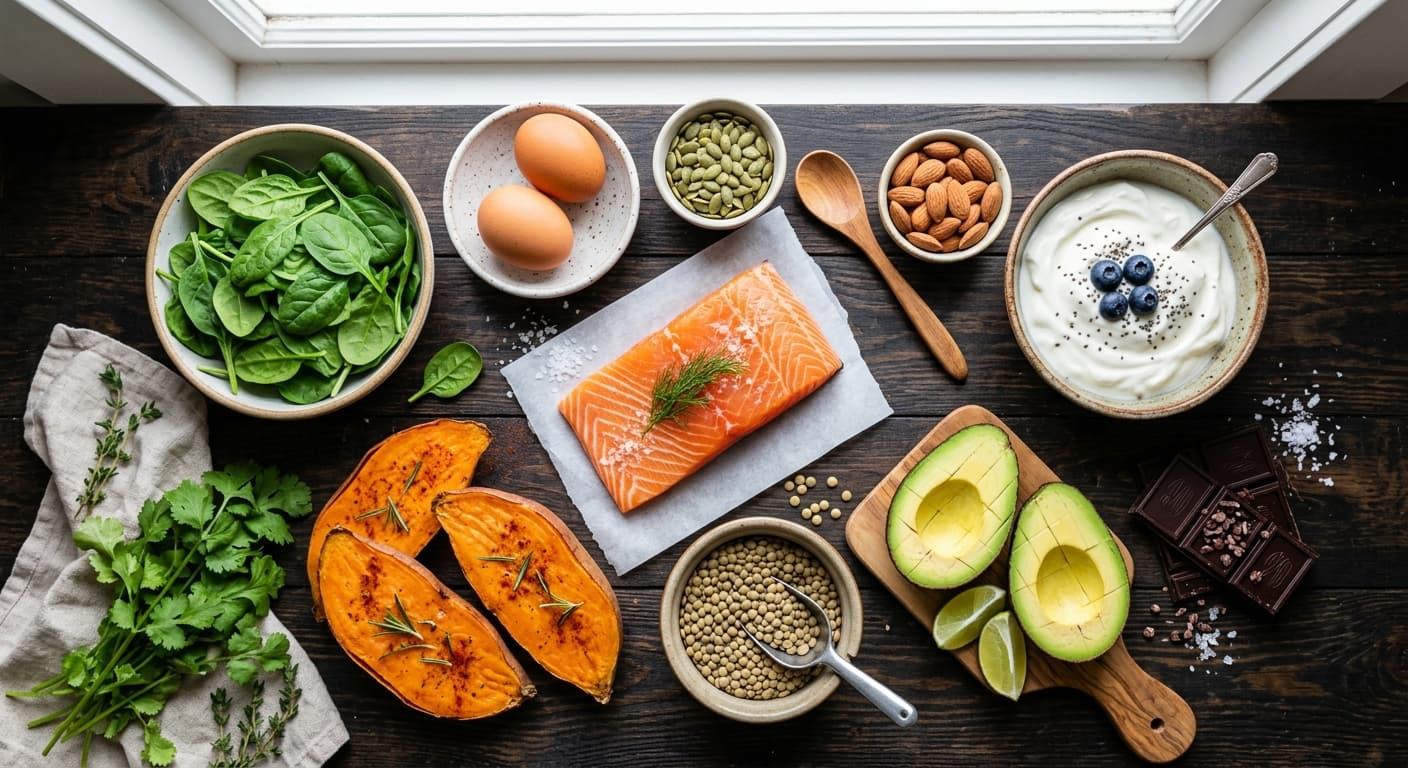
- Eggs (daily) — B12, B6, zinc, vitamin D, iron, choline. The single most nutrient-dense food for lifters
- Spinach (3-4x per week) — Magnesium, iron, folate, potassium, calcium. Throw a handful into shakes — you won't taste it
- Salmon (2x per week) — Vitamin D, B12, potassium, omega-3s. One of the best foods that exists
- Pumpkin seeds (daily snack) — Zinc, magnesium, iron. Keep a bag at your desk
- Sweet potatoes (3-4x per week) — Potassium, vitamin A, B6, fiber. Great carb source for bulking
- Greek yogurt (daily) — Calcium, B12, probiotics, protein. Perfect in your bedtime snack
- Lentils (2-3x per week) — Iron, folate, magnesium, potassium, fiber. Incredibly cheap and calorie-dense
Notice something? These are all whole, unprocessed foods. You don't need exotic superfoods or expensive supplements. Just real food, eaten consistently. That's the secret nobody wants to sell you because there's no money in it.
If you already have a solid grocery list, just make sure these seven items are on it every week.
How to Know If You're Deficient
The tricky thing about micronutrient deficiency is that symptoms are vague and gradual. You won't wake up one day and think "I'm zinc deficient." Instead, you'll notice:
- Always tired despite sleeping 7-8 hours — could be iron, B12, or magnesium
- Getting sick more often — likely zinc or vitamin D
- Strength plateaus despite progressive overload — magnesium, zinc, or vitamin D
- Poor sleep quality — almost certainly magnesium
- Mood issues, low motivation — B vitamins, vitamin D, or iron
- Muscle cramps during training — magnesium, potassium, or calcium
- Slow recovery between sessions — zinc, magnesium, or B vitamins
The only way to know for sure is a blood test. Ask your doctor for a comprehensive metabolic panel plus vitamin D, iron (ferritin), B12, and zinc levels. It's cheap, and the results might explain months of frustration.
Supplements: What's Actually Worth Taking
Let's be honest — the supplement industry wants you to buy a pill for everything. But for micronutrients, here's what the evidence actually supports:
Worth it for most guys:
- Vitamin D3 (2,000-5,000 IU daily) — Unless you live in a sunny climate and spend time outdoors daily, you probably need this
- Magnesium glycinate (200-400mg before bed) — Improves sleep and recovery. Most diets are low in magnesium regardless of how well you eat
- Zinc picolinate (15-25mg daily) — Only if you don't eat red meat or shellfish regularly
Probably unnecessary if you eat well:
- B-complex — A varied diet with meat, eggs, and some greens covers this
- Calcium — If you drink milk or eat yogurt daily, you're fine
- Iron — Don't supplement iron without a blood test confirming deficiency. Too much iron is harmful
- Multivitamins — Most are poorly dosed and use cheap forms that barely absorb. Better to target specific deficiencies
Never mega-dose micronutrients without medical supervision. More is not better. Fat-soluble vitamins (A, D, E, K) accumulate in your body and can reach toxic levels. Water-soluble vitamins (B, C) are less risky but still pointless to over-consume — you'll just pee them out.
A Day of Micronutrient-Rich Bulking
Here's what a 3,200 calorie bulking day looks like when you prioritize micronutrients alongside macros:
Breakfast — Loaded Egg Scramble
- 4 whole eggs scrambled with spinach and bell peppers
- 2 slices whole grain toast with butter
- 1 glass fortified orange juice
Micros hit: Vitamin D, zinc, iron, folate, B12, B6, vitamin C
Lunch — Salmon Rice Bowl
- 6 oz baked salmon
- 1 cup brown rice
- 1 cup roasted sweet potato
- Side of steamed broccoli
Micros hit: Vitamin D, B12, potassium, B6, calcium, omega-3s
Snack — Trail Mix & Yogurt
- 1 oz pumpkin seeds + 1 oz almonds + 1 oz dark chocolate
- 1 cup Greek yogurt with honey
Micros hit: Zinc, magnesium, calcium, iron, B12
Dinner — Beef & Lentil Stew
- 5 oz beef chuck in slow-cooked stew
- 1 cup lentils
- Potatoes, carrots, onions
- Side salad with avocado
Micros hit: Iron, zinc, B12, B6, folate, potassium, magnesium
Before Bed — Power Shake
- 2 cups whole milk
- 1 scoop whey protein
- 1 banana
- 2 tbsp peanut butter
- Handful of spinach
Micros hit: Calcium, potassium, B6, magnesium, B12
That's roughly 3,200 calories, 180g protein — and you've hit or exceeded your daily targets for every micronutrient on this list. No supplements needed (except maybe vitamin D if you're in a low-sun climate).
Common Mistakes Skinny Guys Make With Micronutrients
-
Relying on a multivitamin as insurance — Most multis use cheap, poorly absorbed forms. They give you a false sense of security while your actual food quality stays low
-
Eating the same 5 foods every day — Chicken, rice, protein shake, peanut butter, oats. Great for macros, terrible for micros. Rotate your protein sources and add variety
-
Ignoring vegetables entirely — "But they don't have calories!" True. They have something better: the micronutrients that make those calories actually work. Even one cup of spinach or broccoli daily makes a massive difference
-
Mega-dosing supplements — Taking 10,000 IU of vitamin D, 50mg of zinc, and 800mg of magnesium because "more is better." Your body has absorption limits. Excess can cause toxicity or block other nutrients
-
Not pairing nutrients correctly — Iron + vitamin C = better absorption. Calcium + iron = they compete. Vitamin D + fat = better absorption. These interactions matter
-
Skipping the blood test — You can't fix what you can't measure. A simple blood panel costs less than a month of random supplements and tells you exactly what you need
How FuelTheGains Helps You Stay On Track
Tracking micronutrients manually is a pain — nobody wants to look up the zinc content of every food they eat. That's where FuelTheGains comes in.
When you set up your personalized bulking plan, FuelTheGains doesn't just calculate your calories and macros. The meal plans are built with nutrient variety in mind, rotating protein sources, carbs, and fats so you naturally hit your micronutrient targets without thinking about it.
It's the difference between a meal plan that says "eat 3,000 calories" and one that makes sure those 3,000 calories actually do their job.
The Bottom Line
Calories and protein are the foundation. But micronutrients are the difference between a bulk that actually works and one that stalls out at month three.
You don't need to become a nutrition scientist. Just eat real food, rotate your sources, and make sure the seven key foods from this article show up in your week regularly. Your body will handle the rest.
The guys who build the most muscle aren't just eating the most food — they're eating the right food. Start there.