
You know you need to eat more protein. Every article, every coach, every jacked dude at your gym says the same thing. But then you look at your bank account and wonder how anyone affords 7 oz of chicken breast at every meal.
Here's the truth: eating enough protein to build muscle doesn't have to be expensive. The guys who spend $200+ a week on groceries aren't doing it because they have to — they're doing it because they don't know how to shop smart.
This guide breaks down exactly how to hit 0.7-1.0g per lb of protein daily while keeping your grocery bill under $50-60 per week. No fancy supplements required. No weird foods you've never heard of. Just practical, affordable meals that actually taste good.
- You can hit 150g+ protein daily on $50-60/week with smart shopping
- Eggs, canned tuna, chicken thighs, and cottage cheese are your budget protein pillars
- Buying in bulk, shopping sales, and using store brands saves 30-40% on groceries
- Combine cheap protein sources with calorie-dense carbs for complete bulking meals
- Batch cooking on Sunday saves both time and money throughout the week
Why Protein Gets Expensive (and How to Fix It)
The average guy trying to bulk spends way too much on protein for one simple reason: he buys the wrong cuts.
Boneless, skinless chicken breast at $6-7/lb? That adds up fast when you're eating 2-3 lbs of meat per day. But chicken thighs at $2-3/lb have almost the same protein content with more flavor and a bit more fat — which you actually need when bulking.
The key principle is cost per gram of protein. Not cost per pound of food. Not cost per calorie. Cost per gram of protein.
When you start thinking this way, your grocery list changes completely.
The Protein Cost Rankings
| Food | Protein per 3.5 oz | Approx. Cost per 30g Protein |
|---|---|---|
| Eggs (whole, large) | 13g | $0.75-1.00 |
| Canned tuna | 26g | $0.80-1.20 |
| Chicken thighs (bone-in) | 19g | $0.90-1.30 |
| Cottage cheese | 11g | $1.00-1.40 |
| Ground beef (80/20) | 17g | $1.20-1.60 |
| Dried lentils | 9g (raw) | $0.40-0.60 |
| Greek yogurt | 10g | $1.00-1.50 |
| Whole milk | 3.4g | $0.80-1.00 |
| Chicken breast | 31g | $1.50-2.20 |
| Whey protein | 75g | $0.80-1.20 |
Notice how chicken breast — the "default" bodybuilding food — is actually one of the most expensive options per gram of protein? Meanwhile, eggs, canned tuna, and chicken thighs crush it on value.
Dried lentils are the cheapest protein source on the planet. At $0.40-0.60 per 30g of protein, nothing else comes close. Combine them with rice for a complete amino acid profile.
The Budget Protein Pillars
These are the foods that should make up 70-80% of your protein intake when money is tight. Master these, and you'll never struggle to hit your protein targets again.
1. Eggs — The Ultimate Budget Protein
Eggs are basically nature's multivitamin wrapped in cheap protein. A dozen large eggs costs $2-4 depending on where you live, and gives you roughly 78g of protein.
That's about $1.00-1.50 for 30g of protein — and you're getting B vitamins, choline, selenium, and healthy fats thrown in for free.
How to use them:
- 4-egg scramble for breakfast (28g protein) — takes 5 minutes
- Hard-boil a dozen on Sunday, eat 2-3 as snacks throughout the week
- Add 2 eggs to ramen or fried rice for an instant protein boost
- Egg muffins for grab-and-go breakfasts (see our high-calorie breakfast guide)
Yes, eat the yolks. The cholesterol fear has been debunked for decades. Yolks contain half the protein plus all the micronutrients. Throwing them away is literally throwing away money and gains.
2. Canned Tuna — Cheap and Packed
A single can of tuna in water gives you 25-30g of protein for under $1.50. That's insane value.
The texture isn't exciting, but that's why recipes exist. Mix it with:
- Mayo + mustard + diced celery → classic tuna salad
- Sriracha + soy sauce + sesame oil → Asian-style tuna bowl
- Mashed avocado + lemon juice → healthier tuna spread
Stack it on toast, throw it in pasta, or eat it straight from the can if you're that guy. No judgment.
Limit tuna intake to 3-4 cans per week due to mercury content. Rotate with canned salmon (more expensive but mercury-safe) and canned chicken for variety.
3. Chicken Thighs — The Underrated King
Everyone obsesses over chicken breast, but bone-in, skin-on chicken thighs are the budget bulker's best friend:
- 30-50% cheaper than boneless skinless breast
- More flavor because of the fat and skin
- Harder to overcook — they stay juicy even if you forget them in the oven
- 19g protein per 3.5 oz — only slightly less than breast
Buy the family pack (usually 5-6 lbs) for the best price per pound. Season with salt, pepper, garlic powder, and paprika. Bake at 200°C (400°F) for 35-40 minutes. Done.
You'll get enough protein for 3-4 meals for around $6-8.
4. Cottage Cheese — The Sleeper Hit
Cottage cheese doesn't get enough love. A 16 oz container costs $3-4 and packs 55-60g of protein. It's also loaded with casein protein, which digests slowly — perfect for your bedtime snack.
Ways to make it not boring:
- Mix with berries and honey → sweet protein bowl
- Blend into smoothies → adds creaminess and protein without changing the flavor much
- Add to scrambled eggs → makes them fluffier and adds protein
- Top with everything bagel seasoning → savory snack that slaps
7 Budget Bulking Meals Under $3 Per Serving
Here's where theory meets practice. Each of these meals costs under $3 per serving, hits 30g+ protein, and takes 30 minutes or less to make.
Meal 1: The $1.50 Egg Fried Rice
| Ingredient | Cost | Protein |
|---|---|---|
| 3 eggs | $0.60 | 21g |
| 1 cup cooked rice | $0.15 | 4g |
| Frozen mixed vegetables (½ cup) | $0.25 | 2g |
| Soy sauce + sesame oil | $0.10 | 0g |
| Total | $1.10 | 27g |
Add a can of tuna or some leftover chicken to push it past 40g protein. This is the meal I'd eat every day if I had to pick one.
Cook the rice the night before (cold rice fries better). Scramble the eggs first, set aside, then stir-fry the rice and veggies on high heat. Add eggs back in, hit it with soy sauce. Three minutes, done.
Meal 2: Chicken Thigh Rice Bowl
| Ingredient | Cost | Protein |
|---|---|---|
| 2 bone-in chicken thighs | $1.50 | 38g |
| 1 cup cooked rice | $0.15 | 4g |
| Black beans (½ cup canned) | $0.30 | 7g |
| Salsa + cheese | $0.40 | 3g |
| Total | $2.35 | 52g |
Bake the thighs in bulk on Sunday. Reheat throughout the week with different sauces — BBQ, teriyaki, buffalo — to prevent flavor fatigue.
Meal 3: Tuna Pasta Bake
| Ingredient | Cost | Protein |
|---|---|---|
| 2 cans tuna | $2.00 | 52g |
| 7 oz pasta (dry) | $0.40 | 14g |
| Canned tomato sauce | $0.50 | 2g |
| Shredded cheese (¼ cup) | $0.40 | 7g |
| Total | $3.30 | 75g |
This makes 2-3 servings. Cook the pasta, drain, mix with tuna and sauce, top with cheese, bake at 190°C (375°F) for 15 minutes. Insane protein-to-cost ratio.
Meal 4: Lentil and Ground Beef Chili
| Ingredient | Cost | Protein |
|---|---|---|
| ½ lb ground beef (80/20) | $1.75 | 43g |
| ½ cup dried lentils | $0.30 | 13g |
| Canned diced tomatoes | $0.60 | 2g |
| Canned beans (kidney or black) | $0.50 | 7g |
| Onion + spices | $0.30 | 1g |
| Total | $3.45 | 66g |
Makes 2 big servings. Brown the beef, add everything else, simmer 25 minutes. Top with cheese and sour cream. This is also perfect as a slow cooker meal — throw it all in before work and come home to dinner.
Meal 5: Peanut Butter Banana Protein Oats
| Ingredient | Cost | Protein |
|---|---|---|
| 1 cup oats | $0.20 | 11g |
| 1 scoop whey protein | $0.60 | 25g |
| 2 tbsp peanut butter | $0.25 | 7g |
| 1 banana | $0.25 | 1g |
| 1 cup whole milk | $0.30 | 8g |
| Total | $1.60 | 52g |
Cook oats with milk, stir in protein powder, top with sliced banana and peanut butter. 52g of protein for $1.60. This is the best calorie-per-dollar breakfast you'll ever make.
Meal 6: Budget Burrito Bowl
| Ingredient | Cost | Protein |
|---|---|---|
| 1 cup cooked rice | $0.15 | 4g |
| Black beans (½ cup canned) | $0.30 | 7g |
| 3 scrambled eggs | $0.60 | 21g |
| Salsa + hot sauce | $0.20 | 0g |
| Shredded cheese (¼ cup) | $0.40 | 7g |
| Total | $1.65 | 39g |
No meat required. Beans + eggs + cheese stack up to nearly 40g of protein for the price of a vending machine snack.
Meal 7: Cottage Cheese Power Bowl
| Ingredient | Cost | Protein |
|---|---|---|
| 1 cup cottage cheese | $1.50 | 28g |
| ¼ cup granola | $0.35 | 3g |
| ½ cup frozen berries | $0.50 | 1g |
| 1 tbsp honey | $0.15 | 0g |
| 2 tbsp almonds | $0.30 | 4g |
| Total | $2.80 | 36g |
Takes 2 minutes to assemble. Great as a snack or dessert that actually hits your macros.
A Full Day of Eating: 150g Protein for Under $12
Here's what a complete day looks like when you combine these budget meals. This plan targets a 150-170 lb guy trying to hit around 3,000 calories and 150g+ protein.
| Meal | Recipe | Calories | Protein | Cost |
|---|---|---|---|---|
| Breakfast | PB Banana Protein Oats | 680 | 52g | $1.60 |
| Lunch | Chicken Thigh Rice Bowl | 750 | 52g | $2.35 |
| Snack | 2 hard-boiled eggs + banana | 260 | 14g | $0.60 |
| Dinner | Lentil Beef Chili (1 serving) | 580 | 33g | $1.70 |
| Before Bed | Cottage Cheese Power Bowl | 420 | 36g | $2.80 |
| Total | 2,690 | 187g | $9.05 |
$9.05 for 187g of protein. Scale the carb portions up or down to match your specific calorie target. If you need more calories, check out our guide on how to add 500 calories to any meal for easy hacks.
That's $63.35 per week. Most guys spend more than that eating out twice. Cooking at home is the single biggest money-saving move you can make while bulking.
Smart Shopping Strategies That Save 30-40%
Knowing what to eat is half the battle. Knowing how to buy it is the other half.
Buy Store Brands — Always
Store-brand eggs, oats, rice, canned goods, and frozen vegetables are nutritionally identical to name brands. The only difference is the packaging and a 20-40% price markup you're paying for a logo.
This one switch alone can save $15-20 per week on a typical bulking grocery run.
Shop the Sales Cycle
Grocery stores rotate sales on a 6-8 week cycle. Chicken thighs go on sale? Buy 10-12 lbs and freeze them. Ground beef hits $3/lb? Stock up.
Buying protein when it's on sale and freezing it is the closest thing to a financial cheat code in the grocery world.
Buy in Bulk (the Right Way)
| Item | Regular Price | Bulk Price | Savings |
|---|---|---|---|
| Rice (20 lb bag) | $1.50/lb | $0.80/lb | 47% |
| Oats (5 lb canister) | $4.00/lb | $2.40/lb | 40% |
| Eggs (5 dozen) | $0.25/egg | $0.17/egg | 32% |
| Chicken thighs (family pack) | $4.50/lb | $3.30/lb | 27% |
| Dried beans (4 lb bag) | $2.00/lb | $1.20/lb | 40% |
Only buy in bulk for things that won't go bad before you use them. Rice, oats, dried beans, and canned goods are perfect. Fresh produce? Not so much.
Use Frozen Vegetables and Fruits
Frozen vegetables are picked and flash-frozen at peak ripeness. They're often more nutritious than "fresh" produce that's been sitting on a truck for a week, and they cost 40-60% less.
Frozen broccoli, spinach, mixed vegetables, and berries should be staples in your freezer.
Shop at Discount Grocers
Stores like Aldi, Lidl, and Costco consistently beat traditional supermarkets by 20-30% on staple items. If you have one within driving distance, make it your primary grocery store.
Batch Cooking: The Real Money Saver
Cooking every meal from scratch is exhausting and leads to ordering takeout — which destroys your budget and usually your macros too.
The fix is batch cooking. Spend 2-3 hours on Sunday preparing food for the entire week.
The Sunday Cook Template
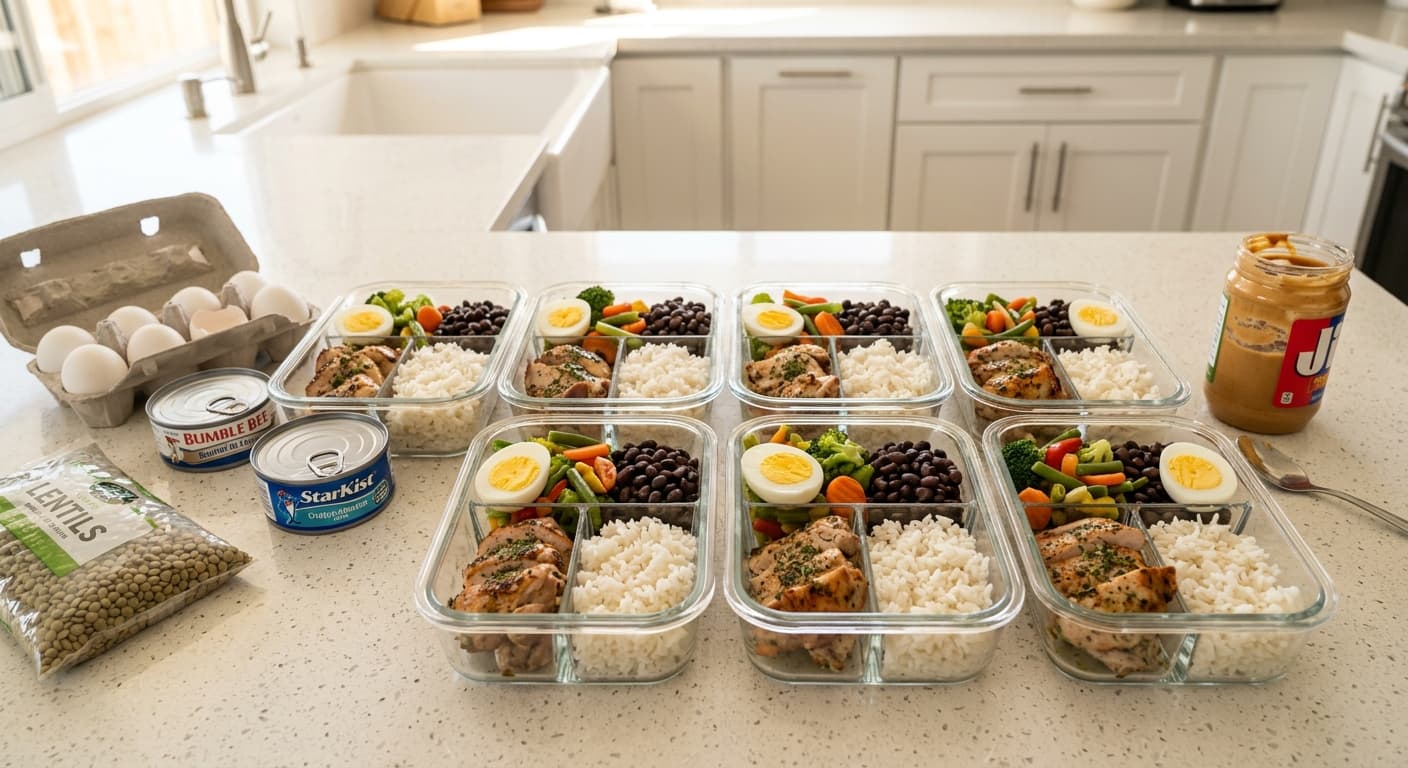
- Protein: Bake 4-5 lbs of chicken thighs (season half with BBQ rub, half with garlic herb)
- Carbs: Cook a big pot of rice + a pot of lentils
- Eggs: Hard-boil 12 eggs
- Vegetables: Roast 2 sheet pans of mixed vegetables
- Extras: Make a batch of chili or a tuna pasta bake
This gives you 15-20 pre-portioned meals for the week. Just grab a container, microwave for 2 minutes, eat. For more meal prep strategies, check out our complete meal prep guide for muscle gain.
The time investment pays for itself in money saved (no takeout) and consistency (no "I don't have anything to eat" excuses).
Common Mistakes Budget Bulkers Make
1. Skipping Protein at Breakfast
Cereal and toast are cheap, sure. But they give you almost zero protein and leave you hungry by 10 AM. Invest the extra $0.50 in eggs or protein oats and you'll stay full longer while actually making progress.
2. Buying Pre-Seasoned or Pre-Marinated Meat
That "teriyaki chicken" in the fancy packaging costs 2-3x more than plain chicken plus a $3 bottle of teriyaki sauce that lasts a month. Buy plain, season yourself.
3. Relying Too Heavily on Protein Powder
Whey protein is great as a supplement, but at $0.80-1.20 per scoop, it shouldn't be your primary protein source. Real food is cheaper, more filling, and provides micronutrients that powder doesn't. Use 1-2 scoops per day max and get the rest from food.
4. Ignoring Legumes
Beans and lentils are the most underrated bulking food. They're dirt cheap, loaded with both protein and carbs, high in fiber, and incredibly versatile. If you're not eating legumes, you're leaving the cheapest gains on the table.
5. Not Tracking What You Spend
Just like tracking macros, tracking your grocery spending reveals where money is leaking. Use your phone's notes app or a simple spreadsheet. Most guys find they're spending $20-30/week on "extras" (snacks, drinks, impulse buys) that contribute nothing to their goals.
The $50/Week Bulking Grocery List
Here's a complete grocery list that will fuel a week of bulking for around $50. Adjust quantities based on your calorie needs.
Proteins (~$25)
- 3 dozen eggs — $6-9
- 4 lbs chicken thighs (family pack) — $6-8
- 6 cans tuna — $6-8
- 16 oz cottage cheese — $3-4
- 1 lb ground beef (80/20) — $3-4
Carbs (~$10)
- 5 lbs rice — $3-4
- 2.5 lbs oats — $2-3
- 1 loaf whole wheat bread — $2-3
- 1 lb dried lentils — $1-2
- 6 bananas — $1-2
Fats & Extras (~$8)
- 16 oz peanut butter — $3-4
- 1 gallon whole milk — $3-4
- Cooking oil (olive or canola) — $2 (lasts multiple weeks)
Produce (~$7)
- Frozen mixed vegetables (2 bags) — $3-4
- Frozen berries (1 bag) — $2-3
- Onions + garlic — $1-2
For a more detailed breakdown, check out our bulking grocery list on a budget with brand recommendations and store comparisons.
Supplements Worth the Money (and Which to Skip)
When you're on a budget, most supplements are a waste of money. Here's the honest breakdown:
Worth It
- Creatine monohydrate — $0.10/day, backed by decades of research, improves strength and muscle gain. Non-negotiable. Learn more in our creatine guide for skinny guys
- Whey protein (1-2 scoops/day) — only if you're consistently missing protein targets from food
- Vitamin D — $0.05/day, most people are deficient, affects testosterone and recovery
Skip It
- Mass gainers — overpriced sugar. Make your own high-calorie shake for 1/3 the cost
- BCAAs — useless if you're already eating enough protein (you are, right?)
- Pre-workout — coffee costs $0.10 per cup and does the same thing
- Testosterone boosters — they don't work. Save your money
How FuelTheGains Makes It Easier
Figuring out exactly how many calories and how much protein you need — then building meal plans around a budget — is genuinely hard. Especially when you're new to this.
That's what was built for. Tell it your body stats, your goals, and your budget preferences, and it generates a complete bulking plan with meals, macros, and a grocery list tailored to you. No guesswork, no spreadsheets, no wondering if you're eating enough.
It won't make chicken thighs appear in your fridge. But it will tell you exactly how many to buy.
The Bottom Line
Building muscle on a budget isn't about deprivation — it's about being strategic. Eggs, chicken thighs, canned tuna, cottage cheese, lentils, rice, and oats are all you need to hit 150g+ protein daily without spending more than $50-60 per week.
The guys who say "eating healthy is too expensive" are the same guys spending $15 on lunch every day. Cook your own food, buy smart, and batch prep on Sundays. Your wallet and your muscles will both thank you.
Start this week. Pick 3 meals from this article, buy the ingredients, and commit to 7 days. That's all it takes to prove to yourself that budget bulking works.