
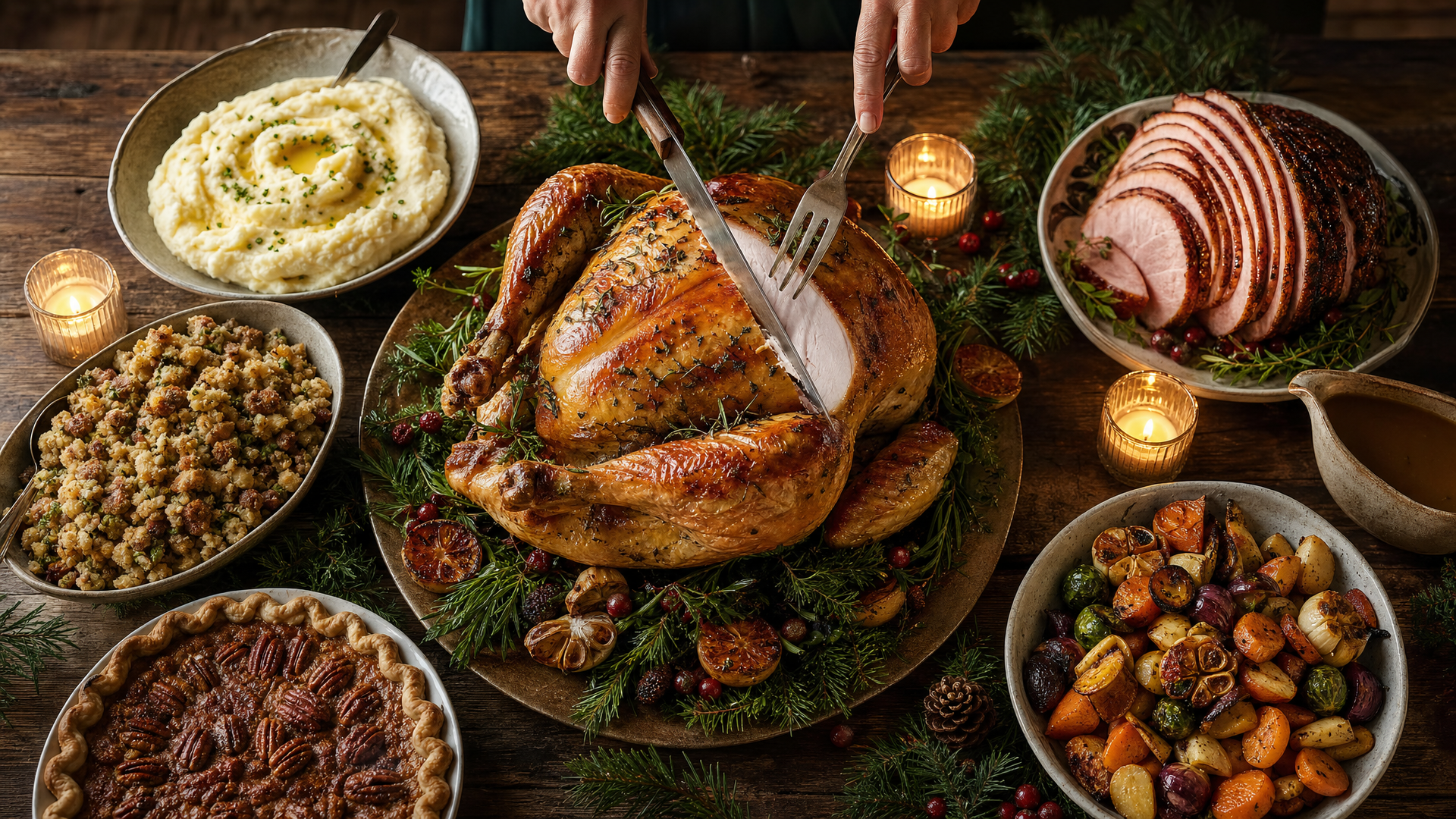
For eleven months a year, your biggest problem is getting enough food down. You're forcing in a third meal you're not hungry for, chugging shakes, and still watching the scale crawl.
Then Thanksgiving hits, and for about six weeks food is everywhere. Office parties, family dinners, leftover pie at 11pm, cookie tins on every counter. A hardgainer's dream, right?
Not quite. Most of that food is sugar, fat and alcohol, with very little protein. Your gym closes early, you're traveling, your sleep falls apart, and by January 2nd you've gained 9 lbs. You don't know how much of it is muscle, fat or just water from all the salt and carbs.
This guide shows you how to treat the holidays as a planned six-week bulking block instead of a free-for-all. You'll build plates around protein, keep training through the chaos, handle the drinking, and read the scale correctly when you get home.
- Treat Thanksgiving to New Year's as a planned six-week bulk with a clear weight-gain target
- Hit your protein number every single day, especially on feast days
- Build every holiday plate protein-first: meat, then vegetables, then whatever else you want
- Train at least 3 times per week with short full-body sessions, even while traveling
- Limit alcohol to planned occasions and keep a protein meal before you drink
- Expect a 1-3 kg water-weight spike after big meals and judge progress by weekly averages
- Take your real measurements in mid-January, after the water has settled
Why the Holidays Are Different for Hardgainers
Most holiday fitness content is written for people trying not to gain weight. That's not you. You actually want a surplus. The issue is what kind of surplus you get, not whether you get one.
The Calories Are Easy. The Protein Isn't.
A typical Thanksgiving or Christmas dinner can easily hit 2,000-3,000 calories in one sitting. But look at where those calories come from:
| Food | Calories | Protein |
|---|---|---|
| Mashed potatoes with butter (1 cup) | 240 | 4g |
| Stuffing (1 cup) | 350 | 6g |
| Sweet potato casserole (1 cup) | 400 | 4g |
| Dinner rolls with butter (2) | 300 | 6g |
| Pecan pie (1 slice) | 500 | 6g |
| Eggnog (1 cup) | 340 | 10g |
| Wine (2 glasses) | 250 | 0g |
| Total | 2,380 | 36g |
That's nearly 2,400 calories with only 36g of protein. You'd get the same protein from one decent chicken breast.
If you eat like this for six weeks with no plan, you'll gain weight. But a big chunk of it will be fat, because without enough protein and a training stimulus, your body has nothing pushing those calories toward muscle.
Training Takes a Hit
Gyms shorten their hours. You fly to your parents' place. There's a party every Friday. You sleep 5 hours, wake up hungover, and skip leg day "just this once," four times in a row.
The surplus is only half of what builds muscle. The other half is a progressive training stimulus. Take that away and the extra calories mostly go to fat storage.
Alcohol Is Everywhere
The holiday season is basically a six-week open bar. Alcohol doesn't just add empty calories. It can blunt muscle protein synthesis, wreck your sleep, and kill your motivation to train the next day. We cover the details in our guide on how alcohol affects muscle growth while bulking, and the short version is: a few drinks occasionally is fine, regular heavy drinking is a real problem for gains.
Step 1: Set Up Your Holiday Bulk Like a Real Block
The difference between "I gained holiday weight" and "I ran a holiday bulk" is having a plan before Thanksgiving week starts.
Pick a Realistic Weight Target
For a lean bulk, a good rate is about 0.25-0.5% of body weight per week. During the holidays you can push a bit higher since the food environment is working for you, but don't go crazy.
For a 155 lb guy, that means:
- Conservative: 0.5 lb per week, about 3 lbs over six weeks
- Aggressive: 1 lb per week, about 6.5 lbs over six weeks
Anything beyond that, after the water settles, is mostly fat. Write your target down. If you started a winter bulk back in October like we laid out in our fall bulking season plan, the holidays are just the next phase of it. Don't hit pause, and don't throw the plan out either.
Lock In Your Protein Number
This is the one number you're not negotiating on. Aim for 0.7-1.0g per lb of body weight every day, including Thanksgiving and Christmas.
For that 155 lb lifter, that's roughly 110-155g of protein per day. On a normal day you probably already have a routine for hitting it. On holiday days, you need a strategy, because the food in front of you won't do it on its own.
Don't Bother Counting Every Calorie on Feast Days
Trying to log a homemade casserole at your aunt's house is a waste of time. On the big days, track two things only:
- Protein (rough estimate is fine)
- Whether you trained
On normal weekdays between the holidays, go back to tracking like usual. That keeps the overall six weeks under control without turning Christmas dinner into a spreadsheet.
Out of the roughly 42 days between Thanksgiving and New Year's, only about 5-8 are true feast days. The rest are regular days with a few extra cookies. Your results come from what you do on the other 35.
Step 2: Build Your Holiday Plate Protein-First
This is the most important skill of the season. You don't need to skip anything or bring Tupperware to Grandma's house. You just need to fill your plate in the right order.
The Protein-First Plate Rule
Every time you walk up to a holiday buffet or sit down at a family dinner:
- Protein first. Take a big portion of turkey, ham, roast beef, or whatever the main meat is. Aim for about 7-9 oz of cooked meat, which is roughly two palm-sized portions.
- Then vegetables. Green beans, roasted carrots, Brussels sprouts, salad. Even if they're drowned in butter, that's fine. Calories aren't your enemy.
- Then everything else. Stuffing, potatoes, rolls, casserole. Take what you want.
- Dessert after a break. Wait 20-30 minutes, then go for pie if you still want it. You probably will.
Just reordering your plate moves your protein intake from around 35g to 60-70g in a single meal, without skipping a single dish.
Best Protein Sources on the Holiday Table
| Food | Typical portion | Protein |
|---|---|---|
| Roast turkey (white meat) | 2 palm-sized slices | 50g |
| Roast turkey (dark meat) | 2 palm-sized slices | 44g |
| Glazed ham | 2 thick slices | 36g |
| Prime rib / roast beef | 1 medium slice | 45g |
| Shrimp cocktail | 10 large shrimp | 30g |
| Deviled eggs | 4 halves | 12g |
| Cheese board | A good handful | 15g |
Turkey is the MVP. Lean, high-protein, and there's always a ton of it. Ham is solid too. If you're at a party with only finger foods, hit the shrimp, the meatballs and the cheese.
Volunteer to take the leftover turkey home. Turkey sandwiches, turkey omelets and turkey fried rice can carry your protein for the next three days.
The Pre-Feast Protein Load
Big holiday meals usually happen mid-afternoon or evening. The classic mistake is skipping breakfast and lunch "to save room." That leaves you with zero protein until 4pm.
Do the opposite. On feast days:
- Breakfast: 3-4 eggs plus Greek yogurt, or a big shake. Target 40g protein.
- Lunch / pre-dinner snack: A light protein hit, like cottage cheese, a protein bar or a shake. Another 30g.
- The feast: Protein-first plate. 60-70g.
That's 130-140g protein before you've touched a slice of pie. Now the stuffing and dessert are a bonus on top of a solid day, not the whole day.
If you're a guest, offer to bring something. Make it a high-protein dish: a big shrimp platter, a chili, a protein-heavy dip with Greek yogurt base, or a tray of chicken skewers. You get guaranteed protein and you look like a great guest.
Step 3: A Training Schedule That Survives the Break
Here's the honest truth: your training will get messier in December. That's fine. The goal isn't a perfect program. It's enough stimulus to tell your body to use the extra food for muscle.
Switch to a Minimum Effective Schedule
If you normally run a 4-5 day split, shift to 3 full-body sessions per week from Thanksgiving through New Year's. Full-body is more forgiving. If you miss a day, you haven't missed "legs" for the entire week.
A simple template:
Session A
- Squat: 3 sets of 5-8
- Bench press: 3 sets of 6-10
- Barbell or dumbbell row: 3 sets of 8-12
- Plank: 3 sets
Session B
- Romanian deadlift: 3 sets of 6-10
- Overhead press: 3 sets of 6-10
- Pull-ups or lat pulldown: 3 sets of 6-12
- Walking lunges: 2 sets of 10 per leg
Alternate A and B. Each session takes 45-60 minutes. Keep pushing for one more rep or a little more weight each week when you can.
When You're Traveling
No gym at your parents' place? You've got options:
- Day passes. Most commercial gyms sell them for a small fee. Look one up before you travel.
- Hotel gyms. Usually a set of dumbbells up to about 50 lbs, which is plenty for a full-body session with higher reps.
- Bodyweight circuits. Push-ups, pistol squat progressions, inverted rows under a sturdy table, Bulgarian split squats on the couch. Do 4 rounds and go close to failure.
A bodyweight workout won't build as much as your normal program, but it maintains the signal. Three "good enough" sessions beat zero perfect ones every time.
Schedule Workouts Around the Feasts
Train the morning of a big meal or the day after. A hard session on Thanksgiving morning means your muscles are primed when that giant meal lands. A session the morning after puts all that stored glycogen to work, and you'll probably hit a PR.
Book your holiday workouts into your calendar like appointments. "Gym 9am Dec 26" is far more likely to happen than "I'll fit something in."
Don't try to "burn off" a big meal with hours of cardio the next day. You're bulking. The surplus is the point. Extra cardio just eats into your recovery and the calories you worked to eat.
Step 4: Handle the Alcohol Without Wrecking Your Bulk
You're not going to go six weeks without a drink at the holidays, and nobody's asking you to. But a little strategy goes a long way.
Rules for Holiday Drinking
- Plan your drinking nights. Pick the 3-5 events where you actually want to drink. Office party, Christmas Eve, New Year's Eve. Stay mostly dry at the rest.
- Eat a protein-heavy meal first. Never drink on an empty stomach. Food slows alcohol absorption, and you'll have your protein covered before your judgment goes downhill.
- Cap it around 2-4 drinks. Research suggests moderate drinking has a much smaller effect on muscle protein synthesis than heavy binges. The big damage comes from the 8-drink nights.
- Alternate with water. One drink, one glass of water. Less hangover, better sleep, better workout the next day.
- Skip the sugary cocktails if you want more food. Eggnog and mulled wine are calorie bombs with basically no protein. If you're going to spend 400 calories, spend them on ham.
Protect the Next Morning
The real cost of a heavy night is usually the lost training day and the terrible food choices that follow. Before bed after drinking: a big glass of water and a casein shake or some cottage cheese. The next morning: eggs, coffee, and a workout if you can manage one, even an easy one.
For a deeper look at the science behind all this, read our full breakdown of alcohol and bulking.
Step 5: Practical Hacks for the Whole Season
Here's how to keep things on track across the whole stretch, not just the big days.
Keep a Protein Backup Everywhere
Holiday schedules are unpredictable. Put a few of these in your bag, car or suitcase:
- A shaker with a pre-portioned scoop or two of protein powder
- Protein bars
- Beef jerky, about 2 oz per bag
- Single-serve Greek yogurt or skyr cups if you have a fridge
When the only food at a party is chips and cookies, you're not stuck.
Use Leftovers Like a Meal Prep Service
The week after Thanksgiving is basically free meal prep. Strip the leftover turkey off the bone, portion it into containers of about 5 oz, and you've got protein for 4-5 days.
Same for Christmas ham. A 9 lb ham feeds a family and still leaves several days of protein for you.
Keep Your Morning Routine Locked
Holiday chaos usually happens in the evening. Mornings are the part of your day you still control. Make breakfast your non-negotiable: same protein-heavy breakfast every single day, even on vacation. That alone covers a third of your daily protein no matter what happens later.
Protect Your Sleep
Late nights, travel and alcohol all wreck sleep, and sleep is when you build muscle. Aim for 7+ hours on most nights. If you were out until 2am, sleep in instead of setting an alarm for an early workout. Push the session to the afternoon.
You don't need a perfect holiday season. Hit your protein and train on about 80% of days, and you'll come out of January bigger and stronger than you went in.
Common Holiday Bulking Mistakes
These are the ones we see every year:
- Skipping meals to "save room." You end up with a huge, protein-poor dinner and nothing else. Eat normally all day and let the feast be extra.
- Treating every day like a feast day. Christmas is one day. The whole of December isn't. Go back to your normal plan between the big events.
- Dropping training completely. A month off the gym plus a big surplus is a recipe for fat gain. Three short sessions per week is enough to keep the signal.
- Drinking your calories. Eggnog, cocktails and beer can easily add 1,000+ calories a night with zero protein. Spend those calories on actual food instead.
- Cutting hard in January. You see the scale jump and panic. Most of that jump is water. Don't start a crash diet on January 2nd. Wait for the real number.
- Not weighing yourself at all. Ignoring the scale for six weeks means you can't tell if you gained a sensible 4.5 lbs or a sloppy 13 lbs. Keep weighing, even if the numbers are noisy.
- Letting relatives guilt you. "You're eating MORE turkey?" Yes. Smile, thank them for the great meal, and take another slice.
Step 6: Gains vs. the January Water-Weight Spike
You've had six weeks of big meals. You step on the scale on January 2nd and you're up 9 lbs. Is that all muscle? Is it all fat? Neither.
Why the Scale Lies After the Holidays
Holiday food is loaded with salt and carbs. Both make your body hold extra water:
- Carbs: Every gram of stored glycogen pulls about 3 grams of water into your muscles with it.
- Sodium: Ham, gravy, stuffing and cheese are salty. Your body holds water to balance it out.
- Alcohol and poor sleep: Both mess with hormones that regulate fluid balance.
- Food volume: You literally have more food in your gut after a feast. That's real weight on the scale, and it's not tissue.
After a single massive meal, it's normal to be up 2-4 lbs the next morning. String a few of those together and a 4-7 lbs spike in early January is completely expected, on top of whatever real tissue you gained.
We break this down in detail in Weight Fluctuations While Bulking: Gain or Water?, but here's the holiday-specific version.
How to Find Your Real Number
- Keep weighing daily throughout the holidays, same time each morning, after the bathroom, before eating.
- Use weekly averages, not single days. The single-day number after Christmas dinner is meaningless.
- Go back to normal eating on January 2nd: your regular bulking calories, normal salt, normal carbs, no alcohol.
- Wait 7-10 days. The water will drop off on its own.
- Compare your mid-January weekly average to your weekly average from the week before Thanksgiving. That's your true holiday gain.
| Measurement | Before Thanksgiving | Jan 2nd | Mid-January |
|---|---|---|---|
| Weekly average | 70.0 | 73.8 | 72.4 |
| Change from start | — | +3.8 | +2.4 |
| What it means | Baseline | Mostly water and food | Real gain |
(Example in kg for a lifter starting at 70 kg.)
In this example, the lifter's real gain over six weeks is about 5.3 lbs. That's right in the range for an aggressive but controlled bulk. Not the scary number from January 2nd.
Check More Than the Scale
Weight is only one data point. Before Thanksgiving, record:
- Waist measurement at the navel
- Your top working sets on 3-4 main lifts
- Photos front, side and back in the same lighting
Compare them again in mid-January. If your lifts went up, your waist grew a little (maybe 0.5-1 inch), and your arms and chest look fuller, you built muscle. If your lifts stalled and your waist jumped 2 inches, the next block needs a smaller surplus and more consistent training.
Unless your waist measurement exploded, there's no reason to switch to a cut. Drop back to your normal lean-bulk surplus and keep going. The winter is still the best season to keep building.
Making the Holidays Work With FuelTheGains
The hardest part of a holiday bulk isn't the big dinners. It's the days in between, when your routine is gone, you're in a different kitchen, and you have no idea how much protein you've actually eaten.
That's where FuelTheGains comes in. You tell it your weight, your goal and how fast you want to gain, and it builds you a bulking meal plan with your calories and protein already worked out. When the holidays throw your schedule around, you can lean on simple, high-protein meals planned to hit your numbers, instead of guessing between parties.
It's built for the guys who struggle to eat enough, so it focuses on what actually matters for hardgainers: hitting your surplus consistently and getting your protein in every day, not counting every almond.
Set up your plan before Thanksgiving week at and go into the holidays with a strategy instead of a guilt trip.
The Bottom Line
The holidays are the one time of year when the food comes to you. Instead of fighting it or feeling guilty about it, use it. Eat protein first, keep three workouts a week on the calendar, drink with a plan, and ignore the January 2nd scale.
Do that, and you'll walk into the new year with real muscle on your frame, not just a hangover and a tighter pair of jeans.
Happy holidays. Now go eat some turkey.