
You want to bulk. You also want to keep eating money for rent. These two goals feel like they're at war — chicken breast, ground beef, and protein powder add up fast when you're trying to eat in a surplus every single day.
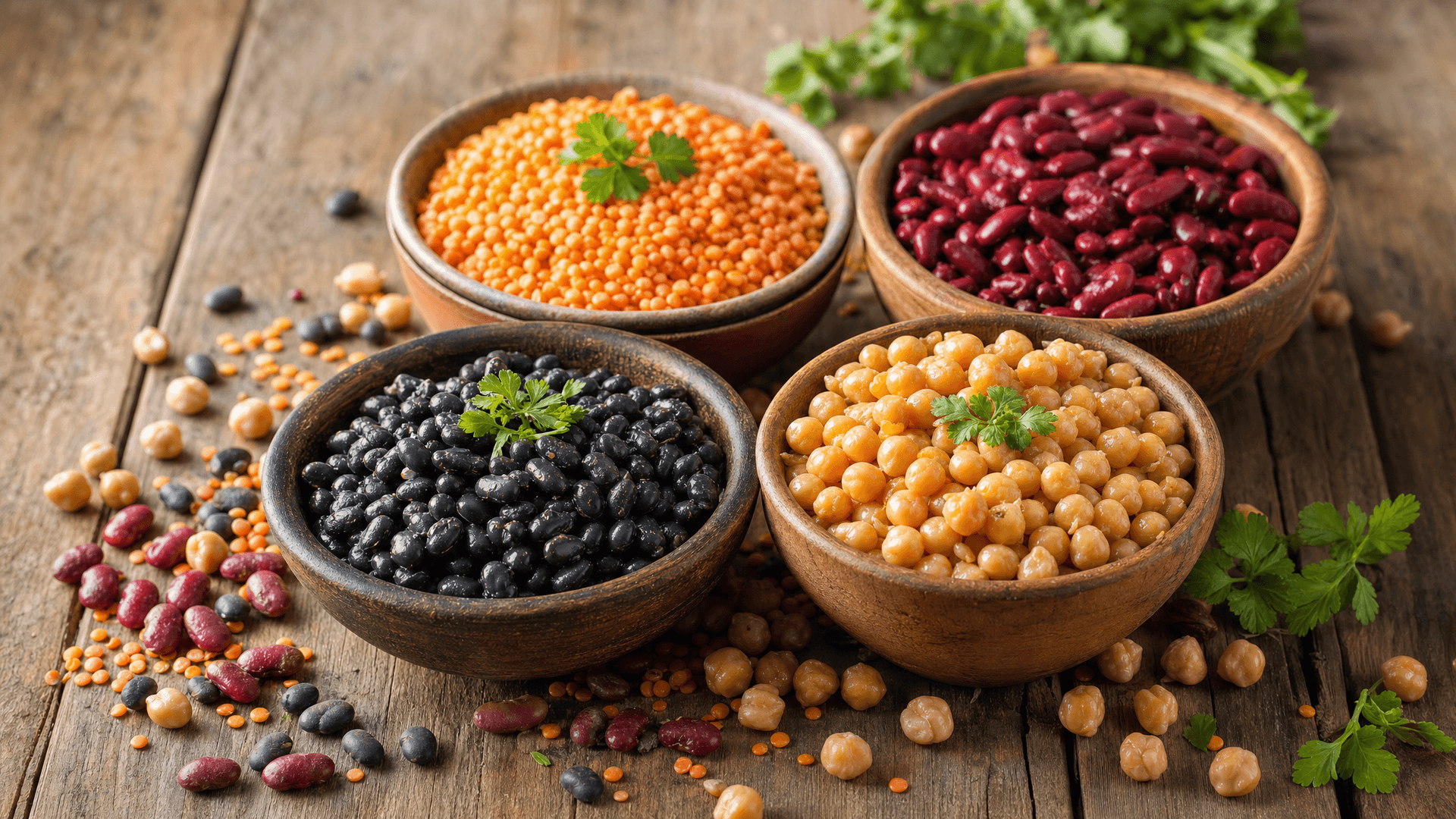
Here's the food almost every skinny guy sleeps on: beans and legumes. We're talking pennies per serving, a huge dump of slow-digesting carbs, AND a real hit of protein in the same spoonful. They're shelf-stable for months, so you can buy in bulk and never watch them rot in the fridge like that spinach you swore you'd use.
So why does nobody talk about them for bulking? Two reasons. One, they're "boring" — nobody's posting a bowl of lentils on their story. Two, the gut thing. The first week you go hard on beans, your stomach files a formal complaint. That's the real reason skinny guys quit, and it's completely fixable.
This is the full breakdown: which legumes win on cost, calories, and protein, how to actually cook them cheap, and how to eat enough without spending your day on the toilet.
- Dried beans cost roughly a tenth of what canned costs — batch-cook and freeze
- Lentils are the fastest win: no soaking, cheap, and easy to hit big calories
- Beans give you protein AND slow carbs in one food, which is perfect for a surplus
- The gut discomfort is temporary — ramp up slowly and your body adapts in 2-3 weeks
- Pair beans with rice or dairy to complete the amino acid profile
- Legumes are a base, not your whole protein plan — stack them with animal or powder protein
Why beans are a bulking cheat code
Most bulking foods force you to pick a lane. Rice and oats are cheap carbs but almost no protein. Chicken is protein but zero carbs and a real cost per gram. Beans quietly do both jobs at once.
Take a cup of cooked black beans: around 220 calories, 15g protein, and 40g of slow carbs, for maybe a few cents if you cooked them from dried. That's a legit muscle-building brick that costs less than the seasoning you put on it.
The slow carbs matter more than people think when you're bulking. You need a constant surplus, which means eating when you're not hungry. Beans are dense and filling but they don't spike-and-crash you the way sugary junk does, so you can stack meal on meal without feeling wrecked. And the fiber keeps your digestion moving when you're shoveling in 3,000+ calories a day.
If you want the wider picture on where legumes sit against everything else, our 12 best protein sources for bulking ranked by cost and convenience puts them side by side with meat, eggs, and powder. Beans won't top that list on protein density — but on cost per gram of protein, almost nothing beats them.
Beans are lower in the amino acid methionine, and grains are lower in lysine. Eat them together — beans and rice, lentils and bread — across the day and you get a complete profile. You do NOT need them in the same bite, just the same day.
The ranking: best legumes for bulking
Not all legumes are equal for a hardgainer. Here's how the main players stack up on the three things that actually matter: calories, protein, and cost. Values are per cooked cup, which is roughly 6-7 oz depending on the bean.
| Legume | Calories | Protein | Carbs | Best for |
|---|---|---|---|---|
| Lentils | 230 | 18g | 40g | Fastest, no soak, top protein |
| Chickpeas | 270 | 15g | 45g | Highest calories, versatile |
| Black beans | 220 | 15g | 40g | Flavor, meal-prep staple |
| Kidney beans | 225 | 15g | 40g | Chili, curries, texture |
| Pinto beans | 245 | 15g | 45g | Refried, burritos |
| Navy beans | 255 | 15g | 47g | Highest carb, baked beans |
| Edamame | 190 | 18g | 15g | Snacking, high protein |
| Peas (split) | 230 | 16g | 41g | Soups, cheap bulk |
Lentils: the hardgainer's best friend
If you only take one thing from this article, make it lentils. No soaking, they cook in 20 minutes, and they carry the highest protein of the common legumes at 18g a cup. A single 1.1 lb bag of dried red lentils costs almost nothing and makes enormous batches.
Red lentils cook down soft and fast — perfect for dal, soups, or stirring into a curry. Green and brown lentils hold their shape, so they work in salads and grain bowls. Both are gold for bulking.
Chickpeas: the calorie king
Chickpeas edge out the others on straight calories at around 270 a cup, and they're the most versatile thing in the pantry. Roast them, blend them into hummus, throw them in curries, or toss them cold into a salad. A big scoop of hummus made from a 14 oz can, plus olive oil, is one of the easiest calorie bombs you can build.
Black, kidney, and pinto beans: the workhorses
These three are your meal-prep backbone. They all land around 220-245 calories and 15g protein per cup, and they take on whatever flavor you throw at them. Black beans for burrito bowls, kidney beans for chili, pinto for refried beans in a wrap. Buy whichever is cheapest at your store — nutritionally they're close enough that it doesn't matter.
Buy dried, not canned. A 1.1 lb bag of dried beans costs a fraction of the same weight in cans and yields two to three times the cooked volume. Canned is fine for convenience, but if you're broke and bulking, dried is where the real savings live.
The real math: how cheap is cheap?
Let's put actual numbers on the "cheap protein" claim, because this is the whole reason to bother.
A 1.1 lb bag of dried beans or lentils typically makes around 6-7 cooked cups. That's roughly 100g of protein and about 1,500 calories from the whole bag, for the price of a single coffee. Compare that to chicken breast, where the same protein might cost you five to ten times more.
Here's a week of bulking-grade legume eating and what it costs you in calories and protein:
| Daily legume intake | Calories | Protein | Rough weekly cost |
|---|---|---|---|
| 1 cup | 230 | 16g | Pocket change |
| 2 cups | 460 | 32g | Still pocket change |
| 3 cups | 690 | 48g | Less than one meal out |
Three cups a day gets you nearly 700 bulking calories and almost 50g of protein for less than the price of a single restaurant meal — across the whole week. That's the cheat code. If your budget is the thing holding your bulk back, legumes solve it faster than anything.
For the full plan on eating big without draining your account, our guide to high-protein meals on a budget for bulking shows how to build entire days around foods like this.
How to actually cook them (cheap and fast)
The number one excuse is "beans take forever." They don't — you just have to cook in batches instead of per-meal. Here's the system.
The soak (for beans, not lentils)
Dried beans want a soak; lentils and split peas don't. Two ways to do it:
- Overnight: cover beans with a few inches of water, leave on the counter 8-12 hours.
- Quick soak: cover with water, bring to a boil, kill the heat, cover, and wait 1 hour.
Either way, drain and rinse before cooking. Soaking cuts cook time and, more importantly for you, washes away some of the compounds that cause gas.
The cook
Cover soaked beans with fresh water by a couple inches, simmer until tender — usually 60-90 minutes for most beans, and only 20-30 for lentils. Salt them near the end. A pressure cooker or Instant Pot slashes that to 20-30 minutes from dried, no soak needed, which is why it's the single best kitchen buy for a broke bulker.
Batch and freeze
This is the part that makes it sustainable. Cook a huge pot on Sunday, portion into containers or freezer bags, and freeze in roughly 7 oz chunks. They keep for months and thaw in minutes. Now "beans take forever" becomes "beans take the time it takes to microwave them."
Freeze cooked beans flat in zip bags. They stack like books, thaw fast, and you can snap off exactly the portion you need without defrosting the whole batch.
The gut problem (and how to beat it)
Time for the honest talk. The first week you ramp up beans, your digestion is going to protest. Bloating, gas, the works. This is the actual reason most skinny guys try legumes once and quit. So let's kill this excuse permanently.
The cause is the fiber and specific carbs (oligosaccharides) that your gut bacteria aren't used to processing in bulk. The key word is used to — this is an adaptation problem, not a permanent flaw. Your gut microbiome literally shifts to handle more fiber when you feed it more fiber consistently.
Ramp up slowly
Do not go from zero beans to three cups a day. That's begging for misery. Start with half a cup a day for a few days, then bump to one cup, then keep climbing every few days. Give your gut two to three weeks and the bloating fades hard. Guys who "can't handle beans" almost always just went too fast, too soon.
Cook them right
A few tricks that measurably cut the gas:
- Always discard the soak water and cook in fresh water.
- Rinse canned beans thoroughly — that thick liquid is part of the problem.
- Add kombu (a seaweed strip) or a bay leaf while cooking; both help break down the tough carbs.
- Cook them fully soft. Undercooked beans are harder on your gut.
Hydrate and move
Fiber needs water to move through you smoothly. If you're upping beans, up your water too, or the fiber works against you. A short walk after a big bean-heavy meal also keeps digestion moving instead of letting it sit and ferment.
If you're chronically bloated even after weeks of ramping up, back off and go slower — don't just power through. Everyone's tolerance is different, and pushing a truly unhappy gut can make you skip meals, which is the opposite of what a bulk needs.
Building bulking meals around legumes
Knowing the numbers is one thing. Here's how to turn them into meals you'll actually eat every day without getting bored.
The burrito bowl
The easiest big-calorie legume meal. Layer it up:
- 1 cup cooked rice
- 1 cup black beans
- 3.5 oz of cheese
- Half an avocado
- Salsa, hot sauce, whatever
That's around 800 calories and close to 30g of protein, most of it dirt cheap. The rice completes the amino acids the beans are light on, so you're getting quality protein, not just quantity.
The mega dal
Red lentils simmered with onion, garlic, tomato, and spices, finished with a splash of oil or a spoon of butter. Serve over a big scoop of rice. It scales endlessly, reheats perfectly, and a single pot feeds you for days. Add 5 oz of shredded chicken if you want to push the protein even higher.
The loaded chili
Kidney and pinto beans, ground beef or a plant mince, tomato, and spices. Chili is a bulking machine because you can pack it with calorie-dense add-ons — cheese, sour cream, a side of cornbread — and it tastes better as leftovers.
Hummus as a calorie multiplier
Blend chickpeas with tahini, olive oil, lemon, and garlic. The olive oil and tahini turn a modest bean into a fat-rich, calorie-dense spread. Eat it with pita, on wraps, or straight off a spoon when you need to sneak in another 300 calories.
The simplest amino-acid pairings: beans + rice, lentils + bread, hummus + pita, chili + cornbread. Grain plus legume is the oldest cheap-protein hack on earth for a reason — it works.
For a guy going fully meat-free, legumes stop being a side character and become the backbone of the whole plan. Our plant-based bulking guide for skinny guys goes deep on structuring an entire muscle-building diet around foods like these.
Common mistakes to avoid
Even with a food this simple, there are ways to screw it up. Watch for these.
- Going too fast on the ramp-up. Covered it above, but it's the number one killer. Slow and steady.
- Treating beans as your only protein. Legumes are a fantastic base, but their protein is less concentrated and slightly lower quality than animal sources. Stack them with eggs, dairy, meat, or powder — don't lean on them alone to hit a big protein target.
- Buying only canned. Convenient, sure, but you're paying a huge markup and getting less food. Learn to batch-cook dried and your grocery bill drops off a cliff.
- Under-seasoning. Plain beans are why people think they're boring. Salt, acid, fat, spice, and aromatics turn them from punishment into something you crave.
- Forgetting the fat and calories. Beans are moderate-calorie for their volume. For bulking you WANT to add oil, cheese, avocado, tahini — the stuff that turns a filling-but-modest bowl into a real surplus meal.
When a bean meal feels too filling for the calories, add fat, not more beans. A tablespoon of olive oil or a handful of cheese adds 100-150 calories without adding volume that fills you up more.
How much should you actually eat?
There's no magic number, but here's a sane target. For a bulking hardgainer, working up to 2-3 cups of cooked legumes a day gives you a strong base of cheap calories and 30-50g of protein without dominating your whole diet.
That leaves plenty of room for the rest of your food — the meat, eggs, dairy, and shakes that round out your protein quality. Think of legumes as the cheap foundation you build on, not the entire house. A 155 lb guy chasing a lean bulk might get a fifth to a quarter of his daily calories from legumes and grains, then fill the rest with denser stuff.
And remember your protein target scales with bodyweight. Most lifters do well around 0.7-1.0g per lb of protein a day. Beans help you get there cheaply, but they'll rarely get you all the way alone — which is exactly why they're a base and not the finish line.
Where FuelTheGains fits
Here's the honest problem with a bean-heavy bulk: the tracking. When your day is a moving target of "some rice, a couple scoops of lentils, half an avocado, whatever chili's left," it's easy to think you're in a surplus while you're actually spinning your wheels. Cheap food only builds muscle if there's enough of it, consistently.
That's where comes in. It's built for exactly this kind of eater — the guy trying to gain on a budget who needs to know his real calorie and protein numbers without turning every meal into a spreadsheet. Plug in your foods, see where you actually land, and stop guessing whether your beans-and-rice bulk is doing anything.
You don't need expensive food to grow. You need enough food, hit consistently, with enough protein. Legumes handle the "cheap" and the "enough." A little tracking handles the "consistently." Put those together and a broke student can out-eat a guy spending five times as much.
The bottom line
Beans, lentils, and chickpeas are the most underrated bulking food there is. They're absurdly cheap, they pull double duty on carbs and protein, and they keep in your pantry for months. The only real barrier is the gut adjustment, and that's a two-to-three-week problem, not a permanent one.
Start with lentils this week — no soaking, cheap, fast. Cook a big batch, freeze it flat, and add half a cup to your meals to start. Ramp up slowly, pair them with rice, and pile on the oil and cheese to hit your surplus.
Do that, and you've just unlocked the cheapest muscle-building calories on the planet. Your wallet and your gains will both thank you.