
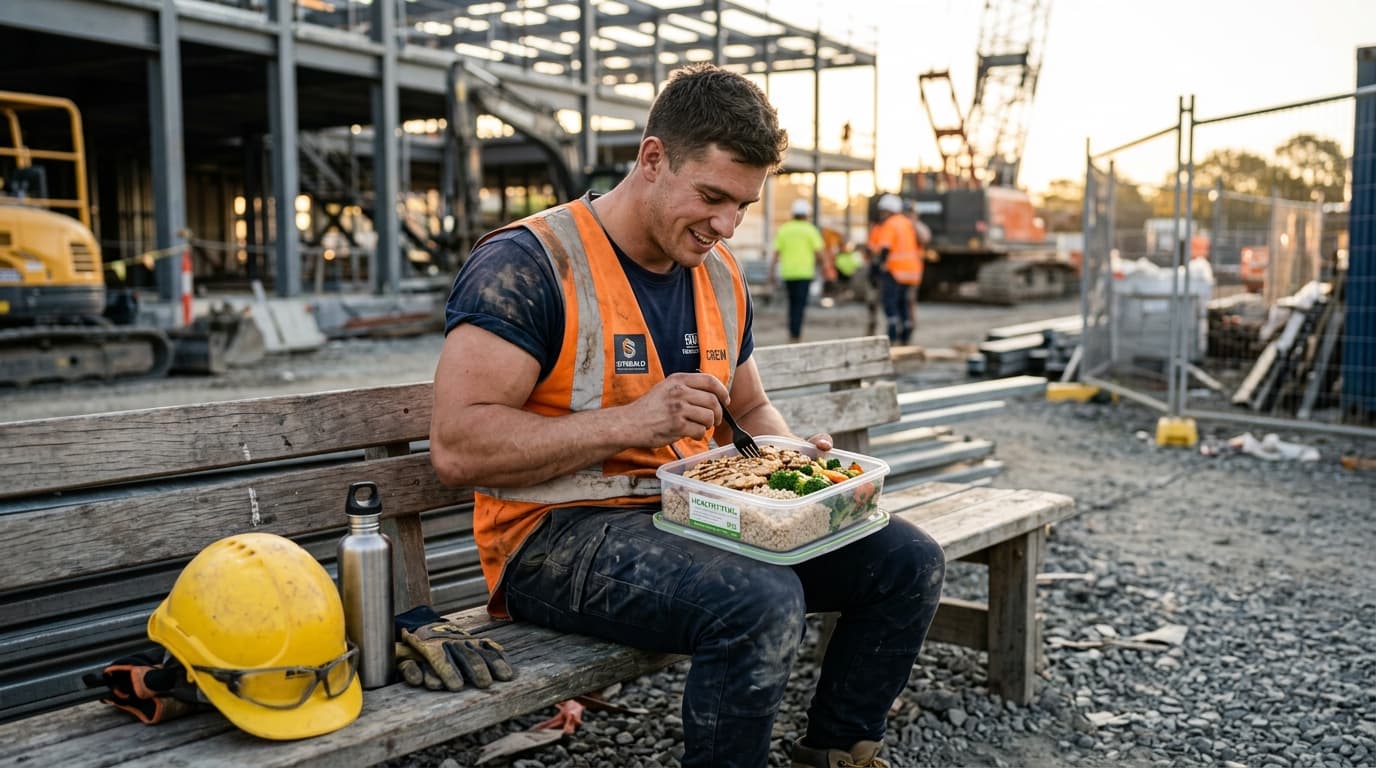
You hit the gym four times a week. You track your macros. You eat your meals on schedule. And yet — the scale barely moves.
If you work a physical job — construction, warehouse, landscaping, trades, retail on your feet all day — you already know the problem. Your body burns through calories like fuel in a furnace. What works for a guy with a desk job doesn't even come close for you.
Here's the reality: a physically demanding job can burn anywhere from 500 to 1,500 extra calories per day on top of your baseline metabolism. That's basically an entire extra meal's worth of energy — gone before you even step into the gym.
But here's the good news: you absolutely can bulk with a physical job. You just need a different strategy than the "eat 500 calories above TDEE" advice that assumes you sit still for 8 hours a day.
- Physical jobs can burn 500-1,500+ extra calories daily — your surplus needs to account for this
- Calculate your true TDEE using an activity multiplier of 1.7-2.2, not the standard 1.55
- Front-load calories before and during your shift to fuel performance and protect muscle
- Liquid calories are your best friend — shakes are easier to consume and digest on the go
- Meal prep is non-negotiable when you're burning this many calories
- Sleep and recovery become even more critical with double physical demands
Why Bulking With a Physical Job Is Harder
Let's put some numbers on it. A 165 lb guy with a sedentary office job might have a Total Daily Energy Expenditure (TDEE) around 2,200-2,400 calories. Add a 300-500 calorie surplus, and he's eating 2,500-2,900 calories to bulk. Totally manageable.
Now take that same guy and put him on a construction site, a warehouse floor, or a landscaping crew. His TDEE jumps to 3,200-3,800 calories — sometimes more. To bulk, he now needs 3,500-4,300 calories per day.
That's a massive difference. And it creates three specific problems:
1. The Calorie Gap Is Huge
Most skinny guys already struggle to eat enough. Telling someone who can barely hit 2,500 calories that they need 4,000? That feels impossible. And honestly, it is — if you try to do it the conventional way with just whole foods and three meals a day.
2. You're Exhausted After Work
After 8-10 hours of physical labor, the last thing you want to do is cook an elaborate meal. Many guys come home, eat whatever's easy, and crash. That's not a bulking strategy — that's survival mode.
3. Eating On the Job Is Tricky
You might get a 30-minute lunch break. Maybe two 15-minute breaks. Try fitting 1,500+ calories into those windows with limited refrigeration and no microwave. It takes planning.
The biggest mistake physical workers make is eating like office workers. Your calorie needs are in a completely different league — treat your nutrition plan accordingly.
Step 1: Calculate Your Actual TDEE
The standard TDEE calculators online use activity multipliers like this:
| Activity Level | Multiplier | Example |
|---|---|---|
| Sedentary | 1.2 | Desk job, no exercise |
| Lightly active | 1.375 | Desk job + 3x gym |
| Moderately active | 1.55 | Desk job + 5x gym |
| Very active | 1.725 | Physical job + 3x gym |
| Extremely active | 1.9-2.2 | Heavy labor + daily training |
If you have a physical job and you lift weights, you're solidly in the 1.7-2.2 range. Most guys underestimate this and wonder why they can't gain weight.
Here's how to calculate it:
- Find your Basal Metabolic Rate (BMR). For a 165 lb, 5'10" male, that's roughly 1,750 calories
- Multiply by your activity factor: 1,750 × 1.85 = 3,238 calories (your TDEE)
- Add your bulking surplus: 3,238 + 400 = ~3,600 calories per day
If you're not sure which multiplier to use, start with 1.8 and track your weight for two weeks. If you're not gaining 0.5-1 lb per week, bump it up.
For a deeper dive into calculating your calories, check out our complete guide to bulking calories.
Step 2: Structure Your Meals Around Your Shift
This is where most advice falls apart. Generic bulking plans assume you eat at 8am, 12pm, 3pm, 6pm, and 9pm in the comfort of your home. That's not your life.
Here's a meal structure that actually works for shift workers:
The 5+1 Framework
| Meal | Timing | Target Calories | What |
|---|---|---|---|
| Meal 1 | Before shift (5-6am) | 600-800 | Big breakfast — eggs, oats, toast |
| Meal 2 | Morning break (9-10am) | 400-600 | Shake + sandwich or wrap |
| Meal 3 | Lunch break (12-1pm) | 700-900 | Main meal — rice, meat, veggies |
| Meal 4 | Afternoon break (3pm) | 400-500 | Shake + snack |
| Meal 5 | Post-gym (6-7pm) | 600-800 | Dinner — protein heavy |
| Meal 6 | Before bed (9pm) | 300-500 | Casein shake or yogurt bowl |
| Total | 3,000-4,100 |
The key insight: front-load your calories. You need fuel during the shift, not after. Most guys eat light during the day and try to cram everything in at dinner. That's backwards when your job is burning 100-200 calories per hour.
If you work nights, the same framework applies — just shift everything. Your "breakfast" is whenever you wake up, and you front-load before and during your shift regardless of the clock.
Step 3: Master Portable, High-Calorie Foods
You need foods that are calorie-dense, don't need refrigeration (or survive in a cooler), and can be eaten quickly. Here are the MVPs:
Tier 1: Calorie Bombs (Easy to Eat Fast)
- Trail mix — 3.5 oz = 500+ calories. Throw a bag in your pocket
- Peanut butter sandwiches — 2 sandwiches on whole wheat = 800 calories, 30g protein
- Protein bars — 250-400 calories each, zero prep
- Bananas + nut butter packets — 300 calories, takes 2 minutes
- Dried fruit and nuts — calorie-dense, shelf-stable, no mess
Tier 2: Cooler-Friendly (Prep the Night Before)
- Rice and chicken containers — the classic for a reason
- Burritos / wraps — wrap in foil, eat cold or room temp
- Pasta salad with olive oil and protein — high calorie, tastes good cold
- Hard-boiled eggs — 6 eggs = 450 calories, 36g protein
- Greek yogurt cups — 150 calories, 15g protein each
Tier 3: Liquid Calories (Your Secret Weapon)
- Mass gainer shakes — 600-1,000 calories in a shaker bottle
- Homemade shakes — milk + protein + oats + PB + banana = 700-900 calories
- Whole milk — 16 oz = 300 calories with zero effort
Liquid calories are absolutely critical for physical workers. You can drink a 700-calorie shake in 3 minutes during a break. Try eating 700 calories of chicken and rice that fast.
For more shake ideas, check out our guide to high-calorie shakes for weight gain.
Step 4: The Bulk-Proof Meal Prep System
When you're working 8-12 hour physical shifts plus training, you don't have time to cook every day. Meal prep isn't optional — it's the foundation of your entire bulk.
Sunday Prep (2 Hours)
Here's what a weekly prep session looks like:
Proteins (pick 2):
- Grill 4.5 lbs of chicken thighs (fattier = more calories than breast)
- Cook 2.2 lbs of ground beef (80/20 for extra calories)
Carbs (pick 2):
- Cook 3.3 lbs of white rice (a rice cooker is a $20 investment that pays for itself)
- Boil 2.2 lbs of pasta
Extras:
- Make 10 PB&J sandwiches — freeze them. They thaw perfectly by lunch
- Mix 5 overnight oat jars (oats + protein powder + milk + chia seeds)
- Hard-boil 24 eggs
That's roughly 25-30 meals and snacks handled in one session. Package them in containers, stack them in the fridge, and grab what you need each morning.
Invest in a good insulated lunch bag with ice packs. A 6-pack cooler bag lets you carry 3 meals + 2 shakes for a full shift. That's 2,000+ calories ready to go.
For a complete meal prep walkthrough, see our meal prep guide for muscle gain.
Step 5: Nail Your Pre-Shift and Post-Shift Nutrition
These two meals are the most important in your day. Get them right, and everything else falls into place.
Pre-Shift Meal (60-90 Minutes Before Work)
This is your fuel tank for the morning. It needs to be:
- High in complex carbs — slow-burning energy for hours of physical work
- Moderate protein — protect muscle while you're active
- Moderate fat — slows digestion, keeps you full longer
Example pre-shift meal (750 calories):
- 3.5 oz oats with whole milk and honey (450 cal)
- 3 scrambled eggs (210 cal)
- 1 banana (100 cal)
Post-Shift / Post-Gym Meal
After work and training, your body is running on empty. This meal should be:
- High protein — kickstart muscle repair
- High carbs — replenish glycogen from the double whammy of work + gym
- Lower fat — faster digestion when you need nutrients quickly
Example post-training meal (800 calories):
- 7 oz chicken thighs (380 cal)
- 7 oz white rice (260 cal)
- 5 oz roasted veggies with olive oil (160 cal)
For more on workout nutrition timing, read our guide to pre-workout meals and post-workout meals for bulking.
Step 6: Adjust Your Training for Recovery
Here's what nobody talks about: your physical job is a workout. Maybe not a hypertrophy-optimized one, but your muscles, joints, and nervous system don't know the difference between lifting boxes at work and lifting weights at the gym. Fatigue is fatigue.
That means you need to be smarter about your training:
Train 3-4 Days, Not 5-6
You're already doing physical work 5-6 days a week. Adding 5+ gym sessions on top is a recipe for burnout and injury. Three to four focused sessions per week is plenty.
Prioritize Compound Movements
You don't have the recovery budget for 20+ sets of isolation work. Focus on the big lifts that give you the most bang for your buck:
- Squats or leg press
- Bench press or dumbbell press
- Rows or pull-ups
- Overhead press
- Deadlifts (go lighter if your back takes a beating at work)
Keep Sessions Under 60 Minutes
Get in, hit the main lifts, do 2-3 accessories, and get out. Long gym sessions aren't productive when your body is already running a recovery deficit.
Listen to Your Body
Some days after a brutal shift, the gym isn't happening — and that's okay. A missed session beats a stress injury. If you're consistently too wrecked to train, your nutrition or sleep needs work before your program does.
Step 7: Sleep Like Your Gains Depend on It (They Do)
Sleep is when your body actually builds muscle. Growth hormone peaks during deep sleep, protein synthesis ramps up, and your muscles repair from the day's damage.
With a physical job plus weight training, you're placing double the demand on your recovery systems. If office workers need 7-8 hours, you need 8-9 hours minimum.
Practical Sleep Tips for Physical Workers
- Set a non-negotiable bedtime. If you're up at 5am, you need to be asleep by 9pm. Not in bed scrolling — asleep.
- Eat a slow-digesting protein before bed. A casein shake or 7 oz of cottage cheese keeps amino acids flowing while you sleep.
- Keep your room cold and dark. Your body sleeps deeper in cooler temperatures.
- Magnesium before bed. 400mg of magnesium glycinate can improve sleep quality and help with muscle cramps from physical work.
For a deeper dive into how sleep impacts your gains, check our sleep and recovery guide.
If you're sleeping less than 7 hours consistently, don't bother optimizing your meal plan. Fix sleep first — it's the single biggest recovery factor, and no amount of food compensates for sleep deprivation.
Step 8: Track and Adjust Weekly
With so many variables — job intensity, gym sessions, food intake — you need a simple tracking system to know if your bulk is working.
What to Track
- Body weight — weigh yourself every morning, same conditions. Use the weekly average, not daily numbers. Target: 0.5-1 lb gain per week.
- Calorie intake — at least estimate your daily totals. Precision isn't needed; consistency is.
- Energy levels — if you're dragging through shifts and can barely train, you're under-eating.
- Strength progress — are your lifts going up? If yes, the bulk is working regardless of scale fluctuations.
How to Adjust
| Situation | Adjustment |
|---|---|
| Not gaining weight | Add 300 calories (one extra shake) |
| Gaining too fast (>1 lb/week) | Cut 200 calories |
| Low energy at work | Add carbs to pre-shift meal |
| Can't recover from gym | Drop to 3 training days, increase sleep |
| Weight stalled for 2+ weeks | Recalculate TDEE — your job might be burning more than you think |
The number one reason physical workers fail at bulking is underestimating their calorie needs. When in doubt, eat more. A small calorie surplus won't make you fat — it'll make you grow.
Common Mistakes to Avoid
-
Using a "moderately active" TDEE multiplier. You're not moderately active. You're very to extremely active. Using the wrong multiplier can leave you 500-800 calories short.
-
Skipping breakfast to sleep 20 more minutes. That pre-shift meal is your most important meal. Set the alarm earlier. Your gains will thank you.
-
Relying on one big dinner. You can't eat 4,000 calories in two meals without feeling miserable. Spread it across 5-6 smaller meals.
-
Ignoring liquid calories. If you're struggling to eat enough, you should be drinking at least 500-800 calories per day in shakes. It's the easiest lever to pull.
-
Training like you have a desk job. Five-day bro splits with 25 sets per muscle group don't work when your body is already under physical stress 40+ hours a week.
-
Neglecting hydration. Physical labor + training = massive water loss. Dehydration kills performance, digestion, and recovery. Aim for at least 100-130 oz daily.
-
Not sleeping enough. Eight hours isn't lazy — it's the minimum for someone with your activity level. Protect your sleep like you protect your gym time.
A Sample Day: Putting It All Together
Here's what a full bulking day looks like for a 165 lb warehouse worker who trains after his shift:
5:00 AM — Wake up
5:30 AM — Breakfast (750 cal)
- 3.5 oz oats + whole milk + honey
- 3 eggs scrambled with cheese
- 1 banana
9:30 AM — Morning Break (550 cal)
- Homemade shake: milk + protein + oats + PB
- 1 granola bar
12:30 PM — Lunch (800 cal)
- 7 oz chicken thighs
- 7 oz rice
- 3.5 oz mixed veggies
- Drizzle of olive oil
3:00 PM — Afternoon Break (450 cal)
- 2 PB&J sandwiches
- 1 apple
4:00 PM — End of shift
5:00 PM — Gym (60 min)
6:30 PM — Post-Gym Dinner (800 cal)
- 7 oz ground beef
- 5 oz pasta
- Tomato sauce + cheese
9:00 PM — Before Bed (400 cal)
- 7 oz cottage cheese
- 1 oz almonds
- 1 tbsp honey
Daily Total: ~3,750 calories, ~200g protein
That's enough to fuel a physical job, support gym training, and create a surplus for muscle growth. Adjust portions up or down based on your specific needs and weekly weigh-ins.
How FuelTheGains Makes This Easier
Let's be honest — calculating your TDEE, figuring out your surplus, planning meals around a shift schedule, and tracking everything manually is a lot of work on top of an already demanding day.
That's where comes in. You tell us your job type, your training schedule, and your goals. We generate a personalized meal plan that accounts for your actual activity level — not some generic "moderately active" estimate. Every meal is timed around your shift, with portable options for breaks and quick meals for when you get home wrecked.
No guesswork. No spreadsheets. Just a plan that matches your actual life.
The Bottom Line
Bulking with a physical job isn't harder because something is wrong with your body. It's harder because your calorie needs are significantly higher than what most advice assumes.
Once you accept that you need to eat like an athlete — because that's basically what you are — everything clicks. Meal prep, liquid calories, front-loading your nutrition, and dialing back your training volume are the keys.
You've already got the work ethic. You prove it every shift. Now apply that same discipline to your nutrition, and the gains will follow.