
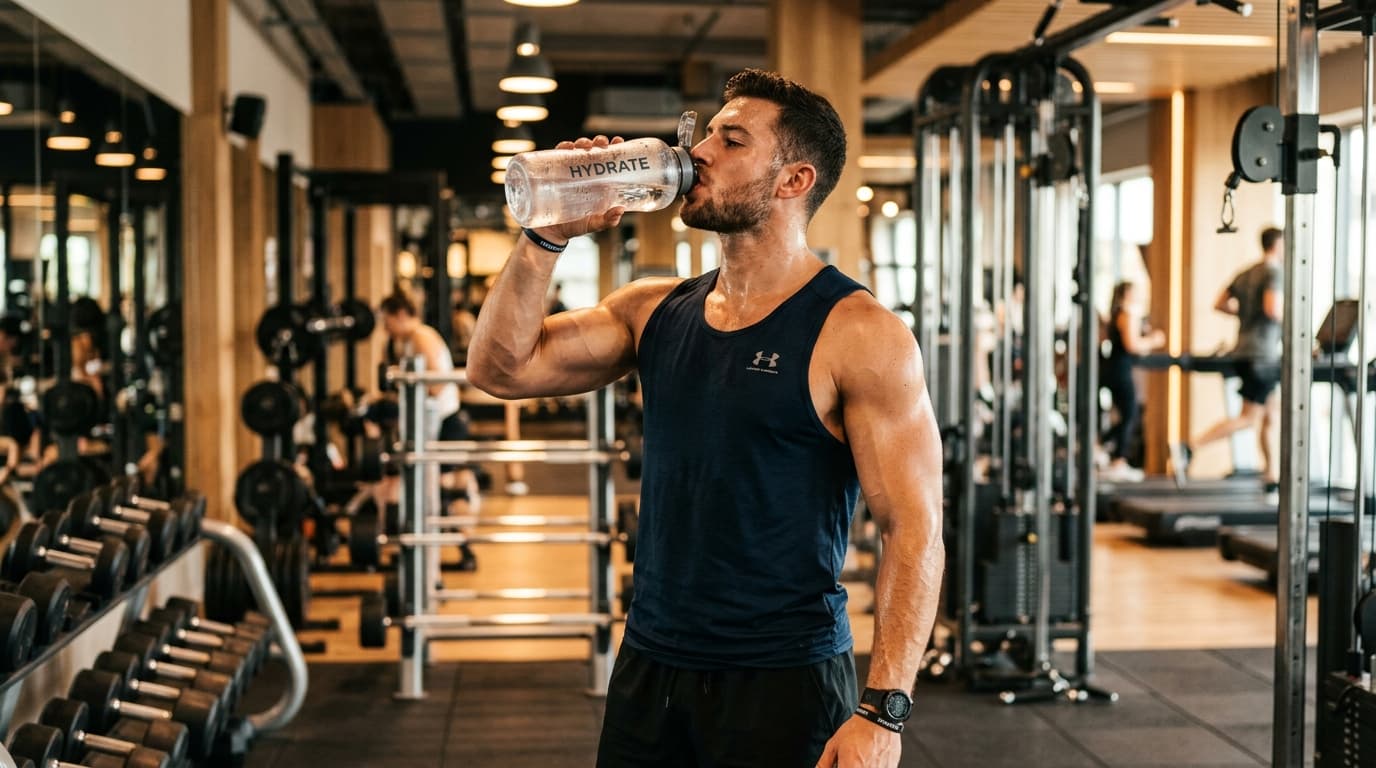
You're eating big, lifting heavy, and tracking every gram of protein. But here's a question most skinny guys never ask: are you drinking enough water?
It sounds basic. Almost too basic to matter. But hydration is one of the most overlooked factors in a successful bulk — and being even slightly dehydrated can tank your performance, slow your digestion, and limit how much muscle you actually build.
Let's break down exactly how much water you need while bulking, why it matters more than you think, and how to make it effortless.
- Aim for at least 100-130 oz of water per day while bulking
- Dehydration as low as 2% bodyweight reduces strength and endurance significantly
- High protein diets require more water for kidney function and nitrogen processing
- Drink water before, during, and after workouts — not just when you're thirsty
- Creatine users need an extra 16-32 oz per day
- Track your hydration by monitoring urine color — pale yellow is the target
Why Hydration Matters More When You're Bulking
When you're eating at maintenance or cutting, hydration is important but relatively straightforward. Bulking changes the equation for several reasons.
You're Eating More Food
More food means more digestion. Your body needs water to break down food, absorb nutrients, and transport them to your muscles. When you jump from 2,000 to 3,000+ calories per day, your digestive system is working significantly harder.
Ever feel bloated, sluggish, or backed up during a bulk? Dehydration is often the culprit. Your gut needs water to move food through your system efficiently. Without it, you get that uncomfortable "food baby" feeling that makes eating your next meal even harder.
If you've been struggling with digestion problems while bulking, increasing your water intake is the first thing to try before anything else.
You're Eating More Protein
This is the big one. High-protein diets produce more urea and nitrogen waste products that your kidneys need to filter out. The process requires — you guessed it — water.
For a 154 lb guy eating 0.9g per lb of protein, that's 140g of protein per day. Your kidneys are processing a lot of nitrogen, and they need adequate fluid to do it efficiently.
Research consistently shows that high-protein diets are perfectly safe for healthy kidneys — as long as hydration is adequate. Don't give your body a reason to struggle.
You're Training Harder
A proper bulk means progressive overload in the gym. Heavier weights, more volume, more intensity. All of that means more sweating and greater fluid loss during training.
Even 2% dehydration (that's just 3 lbs of water loss for a 154 lb guy) has been shown to:
- Reduce strength by up to 10%
- Decrease endurance by up to 20%
- Impair cognitive focus and mind-muscle connection
- Increase perceived effort (everything feels harder)
You're leaving gains on the table every single session if you're walking into the gym dehydrated.
How Much Water You Actually Need
Let's get specific. Forget the generic "8 glasses a day" advice — that's not enough for someone who's actively bulking and training hard.
The Baseline Formula
A solid starting point for bulking:
| Factor | Amount |
|---|---|
| Base intake | 0.5-0.6 oz per lb bodyweight |
| Training days | Add 16-32 oz |
| Hot climate | Add 16 oz |
| Creatine use | Add 16-32 oz |
| High protein (>2g/kg) | Add 8-16 oz |
Example Calculations
A 150 lb guy who trains 4x per week:
- Base: 150 × 0.55 = ~83 oz
- Training day bonus: 24 oz
- Training days total: ~107 oz
- Rest days total: ~83 oz
A 180 lb guy who trains 5x per week and takes creatine:
- Base: 180 × 0.55 = ~99 oz
- Training day bonus: 24 oz
- Creatine bonus: 24 oz
- Training days total: ~147 oz
- Rest days total: ~123 oz
These numbers include water from all sources — plain water, beverages, and food. About 20% of your daily water typically comes from food, especially if you eat fruits, vegetables, and soups.
Water and Muscle Growth: The Science
This isn't just about staying comfortable. Hydration has a direct, measurable impact on your ability to build muscle.
Muscle Is 76% Water
Muscle tissue is roughly 76% water by weight. When you're dehydrated, your muscle cells shrink. When they're well-hydrated, they swell. This cell swelling isn't just cosmetic — it's an anabolic signal.
Research shows that cell hydration status directly influences protein synthesis. Well-hydrated cells are in an anabolic (building) state. Dehydrated cells shift toward a catabolic (breaking down) state.
In practical terms: if you're spending money on quality protein sources and a solid meal plan, you want every gram to be utilized efficiently. Dehydration literally reduces how effectively your body builds muscle from the protein you eat.
Nutrient Transport
Water is the delivery system for everything — amino acids, glucose, creatine, vitamins, minerals. Your blood is about 90% water. When you're dehydrated, blood volume drops, and nutrient delivery to your muscles slows down.
This matters most in two windows:
- Post-workout — when your muscles are primed for nutrient uptake
- During sleep — when most muscle repair and growth happens
Glycogen Storage
Every gram of glycogen (stored carbs in your muscles) binds with 3-4g of water. When you're bulking and eating plenty of carbs, your muscles store more glycogen — but only if there's enough water to go with it.
Fully hydrated glycogen stores mean:
- Fuller, harder-looking muscles
- Better workout performance (glycogen is your primary fuel for lifting)
- More energy throughout the day
If you've noticed your muscles looking "flat" despite eating enough carbs for bulking, inadequate hydration is almost always the reason.
When to Drink: Timing Your Hydration
Just like meal timing matters for your bulk, water timing matters too. You can't chug 100 oz at dinner and call it a day.
Morning (Within 30 Minutes of Waking)
Start with 16-24 oz of water first thing. You've been sleeping for 7-8 hours without any fluid intake. You wake up dehydrated every single morning — it's unavoidable.
This morning hydration:
- Kickstarts your metabolism
- Helps you digest breakfast more easily
- Gets your body out of the mild catabolic state from overnight fasting
Pre-Workout (2 Hours Before)
Drink 16 oz about 2 hours before training. This gives your body time to absorb and distribute the water without leaving you feeling waterlogged during your session.
During Workout
Sip 7-10 oz every 15-20 minutes during training. Don't wait until you're thirsty — by the time you feel thirst, you're already mildly dehydrated.
For sessions longer than 60 minutes, consider adding electrolytes (sodium, potassium, magnesium) to your water. Sweating doesn't just lose water — it loses minerals that are essential for muscle contraction and performance.
Post-Workout
Drink 16-24 oz in the hour after training. This supports nutrient delivery to your muscles during the critical recovery window and helps your post-workout meal digest properly.
Throughout the Day
Spread the remaining intake evenly. Keep a water bottle with you and sip consistently rather than chugging large amounts at once. Your body absorbs water more efficiently in smaller, frequent doses.
Try to drink most of your water between meals rather than during meals. Large amounts of water with food can dilute digestive enzymes and slow absorption. A small glass with meals is fine — just don't chug a liter with your chicken and rice.
Hydration and Creatine
If you're taking creatine while bulking (and you should be — it's the most well-researched supplement for muscle growth), your water needs increase.
Creatine works by pulling water into your muscle cells, increasing cell volume and supporting ATP regeneration. But it can only do this if there's enough water available.
When creatine supplementation meets inadequate hydration:
- You get bloated (water is pulled to muscles but also retained subcutaneously)
- You may experience cramping
- The performance benefits are reduced
- Digestion can suffer
When creatine meets proper hydration:
- Muscle cells are maximally volumized
- Strength and power output increase
- Recovery between sets improves
- You look fuller, not bloated
The fix is simple: add an extra 16-32 oz of water per day when supplementing with creatine. Most guys who complain that "creatine makes me bloated" are just not drinking enough water.
Signs You're Not Drinking Enough
Your body gives you clear signals. Learn to read them.
The Urine Test
This is the simplest and most reliable daily check:
| Urine Color | Hydration Status | Action |
|---|---|---|
| Clear/very pale | Well hydrated | Maintain current intake |
| Pale yellow | Optimal | This is the target — keep doing what you're doing |
| Dark yellow | Mildly dehydrated | Drink 16 oz now |
| Amber/honey | Moderately dehydrated | Drink 24 oz+ and increase daily intake |
| Dark amber/brown | Severely dehydrated | Drink immediately, reassess your entire hydration strategy |
Check first thing in the morning and again in the afternoon. Morning urine is always darker — that's normal. But if your afternoon urine is still dark yellow, you're behind on water.
Other Dehydration Symptoms
- Headaches — especially during or after workouts
- Fatigue and brain fog — even after sleeping well
- Dry mouth and lips — obvious but often ignored
- Decreased appetite — ironic, since you need to eat more while bulking
- Constipation — your body pulls water from the colon when dehydrated
- Muscle cramps — especially during training
- Poor pump — muscles feel flat despite good training
That last one is key for lifters. If your pumps have been weak lately and your training hasn't changed, drink more water before you blame your pre-workout.
Practical Tips to Drink More Water
Knowing you need 100-130 oz is one thing. Actually drinking that much every day is another. Here's how to make it automatic.
Get a Big Bottle
Buy a 32 oz water bottle and know exactly how many fills you need per day. Having a target makes it tangible.
For a 115 oz daily target:
- Fill 1: Morning (done by 10 AM)
- Fill 2: Midday (done by 2 PM)
- Fill 3: Afternoon/workout (done by 6 PM)
- Fill 4: Evening (done by 9 PM — stop here to avoid waking up to pee)
Front-Load Your Intake
Drink most of your water before 6 PM. Nobody wants to wake up three times during the night to use the bathroom — and sleep is critical for muscle growth. Aim to have 75% of your daily water consumed by late afternoon.
Flavor It If You Need To
Plain water gets boring. That's fine — there's no rule saying it has to be unflavored.
Good options:
- Lemon or lime slices
- Sugar-free electrolyte powders
- Cucumber and mint
- Sugar-free flavoring drops
- Sparkling water (counts the same as still)
Bad options:
- Soda (sugar, empty calories that don't help your bulk)
- Excessive juice (too much sugar)
- Energy drinks as your primary fluid source
Pair Water With Habits
Link water intake to things you already do:
- Wake up → drink 16 oz
- Sit down at desk → fill water bottle
- Before each meal → drink a glass
- Pre-workout → 16 oz
- After bathroom break → refill and drink
Habit stacking works because you're not relying on willpower or memory.
Use Your Phone
Set 4-5 reminders throughout the day for the first few weeks. It's not sexy, but it works until the habit is automatic.
If you struggle to eat enough calories while bulking, don't drink large amounts of water right before or during meals — it fills your stomach and suppresses appetite. Instead, sip between meals and have just a small glass with food.
What Counts Toward Your Water Intake
Not everything has to be plain water. Here's what counts and what doesn't.
Counts
- Plain water — obviously
- Coffee and tea — yes, they count. The mild diuretic effect is vastly overstated. A couple cups of coffee contribute more fluid than they cause you to lose
- Milk — counts and adds protein/calories (great for bulking)
- Protein shakes — the liquid base counts
- Sparkling water — identical to still water for hydration
- Fruits and vegetables — watermelon, cucumbers, oranges, etc. are 80-95% water
- Soups and broths — excellent hydration source
Doesn't Count (or Counts Negatively)
- Alcohol — net dehydrating effect, especially in larger amounts. If you're wondering about alcohol and your bulk, it impacts more than just hydration
- Very high-sugar drinks — can actually increase water needs due to osmotic effects
Common Hydration Mistakes During a Bulk
1. Only Drinking When Thirsty
Thirst is a lagging indicator. By the time you feel thirsty, you're already 1-2% dehydrated — enough to impact performance. Drink on a schedule, not on demand.
2. Chugging Large Amounts at Once
Your body can only absorb about 7-10 oz of water every 15-20 minutes. Drinking a liter at once means most of it passes straight through. Sip consistently throughout the day instead.
3. Cutting Water Before Bed to Avoid Peeing
If you stop drinking water at 4 PM because you don't want to wake up at night, you're missing a huge chunk of your daily intake. Move the cutoff to 8-9 PM and use the bathroom right before bed.
4. Replacing Water With Calorie Drinks Only
Yes, your high-calorie shakes count toward hydration. But if all your fluid comes from calorie-dense sources, you might overshoot your calorie target or neglect plain water's benefits for digestion.
5. Forgetting Electrolytes
Water alone isn't enough if you're sweating heavily. Sodium, potassium, and magnesium are critical for hydration at the cellular level. If you drink tons of water but still feel dehydrated, you might need electrolytes, not more water.
A simple fix: add a pinch of salt to your water, or use a sugar-free electrolyte mix.
Hydration and Your Bulking Supplements
Most supplements you take during a bulk interact with hydration in some way.
| Supplement | Hydration Impact | Action |
|---|---|---|
| Creatine | Pulls water into muscles | Increase intake by 16-32 oz |
| Protein powder | Requires water for processing | Ensure adequate baseline intake |
| Pre-workout (caffeine) | Mild diuretic effect | Drink extra 8 oz per serving |
| BCAAs/EAAs | Generally neutral | Mix with water — free hydration |
| Fiber supplements | Absorb water in the gut | Drink extra 8-16 oz |
If you're stacking multiple supplements (which most serious bulkers do), the cumulative water requirement adds up. Check out our complete supplements guide for the full picture.
How FuelTheGains Helps You Stay on Track
Tracking water intake alongside your calories and macros can feel like yet another thing to manage. That's exactly why builds hydration into your personalized bulking plan.
Instead of guessing how much water you need, the app calculates your optimal intake based on your bodyweight, activity level, supplement use, and climate. It integrates hydration tracking with your meal schedule so you can see everything in one place — no separate app, no spreadsheet, no guesswork.
Because the truth is, tracking something is the fastest way to improve it. And when hydration is right, everything else in your bulk works better.
The Bottom Line
Water isn't glamorous. Nobody posts their hydration stats on Instagram. But for a skinny guy trying to bulk up, getting your water intake right is one of the easiest, cheapest, and most impactful changes you can make.
Drink 100-130 oz per day. More on training days. Front-load it before evening. Track your urine color. That's it.
Your muscles, your digestion, your performance, and your gains will thank you.