
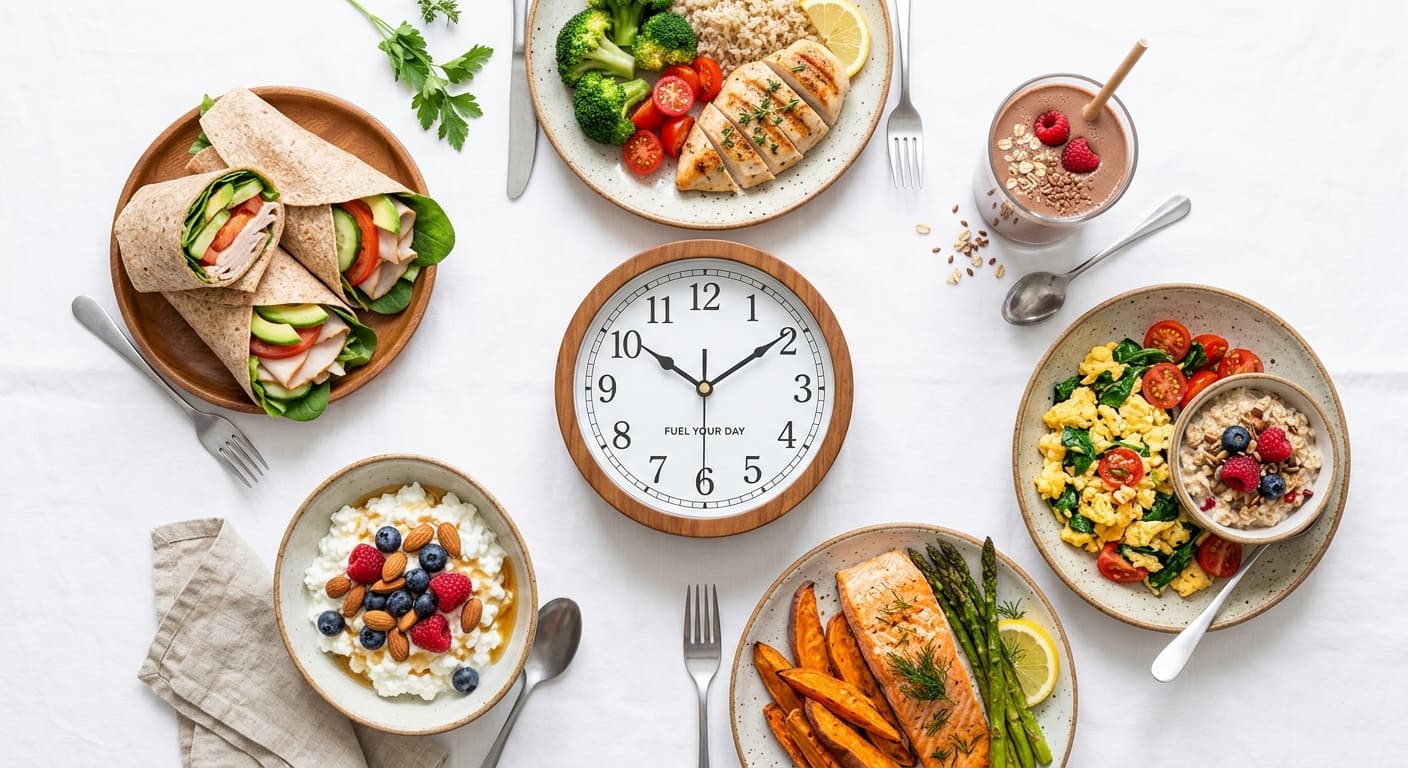
You've nailed your calories. Your macros are dialed in. You're hitting the gym hard. But you're still not growing as fast as you expected.
Here's the thing most skinny guys overlook: when you eat matters almost as much as what you eat. Not in some bro-science "anabolic window" way — in a real, evidence-backed, protein-synthesis way.
If you're cramming all your protein into two huge meals and calling it a day, you're leaving gains on the table. And if you're skipping breakfast, training fasted, and then wondering why the scale won't move — this article is going to change everything.
Let's break down exactly how to time your meals for maximum muscle growth during a bulk.
- Eat 4-6 meals per day spaced 3-4 hours apart to maximize muscle protein synthesis
- Distribute protein evenly across meals — aim for 30-50g per meal
- Eat a solid meal 2-3 hours before training and another within 2 hours after
- The "anabolic window" is real but much wider than you think — about 4-6 hours
- Pre-sleep protein (casein or cottage cheese) can boost overnight recovery
- Consistency in meal timing builds habits that make hitting calories effortless
Why Meal Timing Actually Matters for Bulking
Let's get the nuance right. Meal timing isn't magic. If your total daily calories and protein are wrong, no amount of perfect timing will save you. Total intake is king.
But once you've got the fundamentals locked in — which you should if you've read our guide on how to calculate your bulking calories — timing becomes the next lever you can pull.
Here's the science: your body can only synthesize muscle protein so fast. Research from the Journal of the International Society of Sports Nutrition shows that muscle protein synthesis (MPS) is maximally stimulated by about 0.18g per lb of high-quality protein per meal. Eat more than that in one sitting, and the extra protein gets used for energy or other bodily functions — not muscle building.
This means a 165 lb guy eating 150g of protein in just two meals (75g each) is wasting a significant portion of that protein from a muscle-building perspective. The same 150g spread across 5 meals (30g each) triggers MPS five separate times throughout the day.
That's five muscle-building spikes vs. two. Same total protein. Completely different results.
A 2018 meta-analysis found that eating protein at least 4 times per day led to significantly greater lean mass gains compared to fewer, larger meals — even when total protein intake was matched.
How Many Meals Per Day for Bulking?
The sweet spot for most skinny guys is 4 to 6 meals per day, spaced roughly 3 to 4 hours apart.
Here's why this range works so well:
- 4 meals minimum ensures you trigger MPS frequently enough to maximize growth
- 6 meals maximum is practical — more than that becomes a full-time job
- 3-4 hour spacing allows MPS to return to baseline before you spike it again
If you're someone who struggles to eat enough — and let's be honest, most hardgainers do — more frequent meals are a game-changer. It's much easier to eat five 600-calorie meals than three 1000-calorie ones. Your stomach will thank you, and so will your digestion.
Sample Meal Frequency Schedule
Here's what a typical day looks like with 5 meals:
| Meal | Time | Window |
|---|---|---|
| Meal 1 (Breakfast) | 7:00 AM | Wake up |
| Meal 2 (Snack/Shake) | 10:00 AM | Mid-morning |
| Meal 3 (Lunch) | 1:00 PM | Midday |
| Meal 4 (Pre/Post-Workout) | 4:00-5:00 PM | Around training |
| Meal 5 (Dinner) | 8:00 PM | Evening |
Adjust this to fit your schedule. If you train in the morning, shift everything earlier. If you're a night owl, push it later. The exact clock times don't matter — the spacing does.
Set phone alarms for your first week until eating on schedule becomes automatic. Most guys who "can't eat enough" are actually just eating too infrequently.
The Protein Distribution Rule
This is the single most underrated concept in bulking nutrition: protein distribution.
Most guys eat something like this:
- Breakfast: 10g protein (toast and coffee)
- Lunch: 30g protein (decent)
- Dinner: 80g protein (massive steak)
- Total: 120g — and most of it wasted from an MPS perspective
Here's what you should be doing instead:
| Meal | Protein Target | Example |
|---|---|---|
| Breakfast | 30-40g | 3 eggs + Greek yogurt |
| Mid-morning | 30-40g | Protein shake + nuts |
| Lunch | 35-45g | Chicken breast + rice |
| Pre/Post-workout | 30-40g | Shake or chicken wrap |
| Dinner | 35-50g | Salmon + sweet potato |
Every meal should have at least 30g of protein. This is the threshold that research consistently shows maximizes the MPS response per meal. Going above 50g isn't harmful — it's just not as efficient for muscle building specifically.
If you're not sure where to find high-quality protein sources that fit a bulking diet, check out our breakdown of the best protein sources for bulking.
The easiest way to hit even protein distribution: start every meal by asking "where's the protein?" If you can't answer that immediately, the meal needs work.
Pre-Workout Nutrition: Fueling Performance
What you eat before training directly impacts how hard you can push in the gym. Train underfueled and you'll lift less, fatigue faster, and generate less muscle stimulus.
When to Eat Before Training
The ideal pre-workout meal is 2 to 3 hours before your session. This gives your body enough time to digest and shuttle nutrients into your bloodstream without feeling sluggish or nauseous during heavy compound lifts.
If you can only eat 60-90 minutes before training, go lighter — a shake or a smaller snack. If you ate a big meal 3+ hours ago, a quick snack 30-45 minutes before is fine too.
What to Eat
Your pre-workout meal should emphasize:
- Protein: 30-40g to pre-load amino acids
- Carbs: 40-80g for energy (glycogen = fuel for lifting)
- Low to moderate fat: Fat slows digestion, which is fine 3 hours out but not 60 minutes out
Pre-Workout Meal Ideas
| Meal | Protein | Carbs | Timing |
|---|---|---|---|
| Chicken + rice + veggies | 40g | 60g | 2-3 hours before |
| Turkey wrap with banana | 35g | 55g | 2-3 hours before |
| Protein shake + oats | 30g | 45g | 60-90 min before |
| Greek yogurt + granola | 25g | 35g | 60 min before |
For a deeper dive into pre-workout eating, read our full guide on the best pre-workout meals for bulking.
Post-Workout Nutrition: The Recovery Window
Here's where bro science and real science collide. You've probably heard that you need to slam a protein shake within 30 minutes of your last set or your workout is "wasted." That's not quite how it works.
The Anabolic Window Is Real — But It's Wider Than You Think
The post-workout period is a time of heightened muscle protein synthesis. Your muscles are primed to absorb nutrients and start the repair process. But the "window" isn't 30 minutes — it's more like 4 to 6 hours from your pre-workout meal.
Here's the practical takeaway:
- If you ate 2-3 hours before training: You have about 1-2 hours after your workout before you really need to eat. No rush.
- If you trained fasted or haven't eaten in 4+ hours: Get protein in sooner — within 60 minutes post-workout.
- If you ate right before training: Your pre-workout meal is still being digested and providing amino acids. You're fine waiting a bit.
What to Eat Post-Workout
Your post-workout meal should prioritize:
- Protein: 30-50g — whey is fast but whole food works too
- Carbs: 50-80g to replenish glycogen
- Low-moderate fat: Not critical to avoid, but don't drown your chicken in oil
A classic post-workout shake:
- 1 scoop whey protein (25g protein)
- 1 banana (27g carbs)
- 1 cup whole milk (8g protein, 12g carbs)
- 2 tbsp honey (34g carbs)
Total: ~33g protein, 73g carbs, 450 calories. Quick, easy, and covers your bases.
For more post-workout ideas, we've got a whole article on the best post-workout meals for bulking.
The Pre-Sleep Meal: Your Secret Weapon
This is one most skinny guys completely ignore — and it might be the easiest win on this entire list.
You sleep for 7-9 hours. That's 7-9 hours without protein. For a hardgainer trying to maximize every ounce of growth, that's a long time for your muscles to go without fuel.
Why Pre-Sleep Protein Works
Research from Maastricht University found that consuming 30-40g of casein protein before bed significantly increased overnight muscle protein synthesis compared to a placebo. The subjects literally built more muscle while sleeping.
Casein is a slow-digesting protein that releases amino acids steadily over 6-8 hours — perfect for overnight recovery.
Pre-Sleep Meal Ideas
| Option | Protein | Calories | Digestion Speed |
|---|---|---|---|
| Cottage cheese (1 cup) | 28g | 220 | Slow (casein) |
| Casein shake + milk | 35g | 250 | Slow |
| Greek yogurt + peanut butter | 30g | 350 | Medium-slow |
| Casein shake + banana | 30g | 280 | Slow |
If you hate the taste of casein powder, just eat cottage cheese. It's mostly casein protein naturally. Mix in some honey and cinnamon and it tastes like dessert.
Meal Timing Around Your Schedule
Let's be realistic. You've got a job, school, a social life, or all three. Perfect meal timing means nothing if it doesn't fit your life.
Here are three real-world schedules based on different training times:
Morning Trainer (6:00 AM workout)
| Time | Meal | Notes |
|---|---|---|
| 5:30 AM | Quick shake or banana + protein bar | Light pre-workout |
| 7:30 AM | Big breakfast | Post-workout: eggs, oats, fruit |
| 11:00 AM | Lunch | Chicken, rice, veggies |
| 2:30 PM | Snack | Shake + nuts or bulking snack |
| 6:00 PM | Dinner | Steak, pasta, salad |
| 9:30 PM | Pre-sleep | Cottage cheese + honey |
Afternoon Trainer (4:00 PM workout)
| Time | Meal | Notes |
|---|---|---|
| 7:00 AM | Breakfast | Eggs, toast, yogurt |
| 10:00 AM | Mid-morning | Shake + oats |
| 1:00 PM | Lunch (pre-workout) | Big meal: chicken, rice, veggies |
| 5:30 PM | Post-workout | Shake + banana |
| 7:30 PM | Dinner | Salmon, sweet potato, greens |
| 10:00 PM | Pre-sleep | Casein shake |
Evening Trainer (7:00 PM workout)
| Time | Meal | Notes |
|---|---|---|
| 7:00 AM | Breakfast | Big — this is far from training |
| 10:30 AM | Mid-morning | Snack or shake |
| 1:00 PM | Lunch | Solid meal |
| 4:30 PM | Pre-workout meal | Moderate: chicken wrap + fruit |
| 8:30 PM | Post-workout dinner | Biggest meal of the day |
| 10:30 PM | Pre-sleep | Cottage cheese or casein |
The key insight: adapt the framework to your life, not the other way around. The spacing and protein distribution principles stay the same regardless of when you wake up, train, or sleep.
Carb Timing: Does It Matter?
You'll hear a lot about carb timing — eating carbs around workouts, avoiding carbs at night, carb cycling, and a dozen other strategies. Here's the truth for skinny guys who are bulking:
Carb timing is the least important timing variable. Total carb intake matters far more than when you eat them.
That said, if you want to optimize:
- Before training: Carbs provide glycogen for energy. A carb-rich meal 2-3 hours before lifting helps performance.
- After training: Carbs help replenish glycogen stores and can enhance protein absorption when combined with protein.
- At night: Despite the myth, eating carbs at night does not make you fat. Calories determine fat gain, not timing.
For a comprehensive look at the best carb sources for your bulk, check out our guide on the best carbs for bulking.
If you have trouble eating enough, front-load your carbs earlier in the day when appetite is naturally higher. Save lighter meals for the evening.
Common Meal Timing Mistakes
1. Skipping Breakfast
This is the number-one mistake hardgainers make. You just went 8+ hours without food. Your body is in a catabolic state. Every hour you delay eating in the morning is an hour of potential muscle building you're missing.
You don't need a gourmet meal — even a shake with oats and protein powder counts. Just get something in.
2. The Two-Meal Bulk
Some guys try to eat their entire surplus in lunch and dinner. This leads to:
- Massively oversized meals that wreck your digestion
- Poor protein distribution (MPS only peaks once or twice)
- Feeling stuffed and uncomfortable all afternoon
- Frequently falling short on total calories because "I'll just eat more at dinner"
3. Training Completely Fasted
Fasted training has its place — but not for skinny guys trying to bulk. Without fuel, your workout intensity drops. Lower intensity means less mechanical tension. Less tension means less growth stimulus.
Even a banana and a scoop of whey 30-45 minutes before training is infinitely better than nothing.
4. Obsessing Over the 30-Minute Window
Rushing to chug a shake in the locker room while you're still sweating isn't necessary. If you ate a proper pre-workout meal, you have plenty of time. Shower, drive home, and eat a real meal. You'll be fine.
5. Ignoring Pre-Sleep Nutrition
You wouldn't go 8 hours during the day without eating. So why do it at night? A simple pre-bed snack of cottage cheese or a casein shake takes 2 minutes and delivers 6-8 hours of steady amino acids to your recovering muscles.
6. Inconsistent Meal Timing
Eating at random times every day makes it harder to build habits and harder for your body to regulate hunger cues. When you eat at roughly the same times daily, your body starts getting hungry on schedule — which is exactly what a hardgainer needs.
How to Build a Meal Timing Routine That Sticks
Knowing the science is great. Actually implementing it in your chaotic life is another thing entirely.
Start With 4 Meals
Don't jump to 6 meals on day one if you're currently eating 2. Add one meal per week:
- Week 1: Add a real breakfast
- Week 2: Add a mid-morning or afternoon snack
- Week 3: Add a pre-sleep meal
- Week 4: Fine-tune timing and protein distribution
Use Shakes Strategically
Liquid calories are a hardgainer's best friend. They're fast, easy on the stomach, and you can pack 500-800 calories into a single shake. Use them for your "harder" meals — mid-morning, post-workout, or pre-sleep.
If you want some ideas, we've covered the best high-calorie shakes for weight gain in detail.
Prep in Batches
Meal timing only works if the food is ready when the alarm goes off. Spend 2-3 hours on Sunday prepping:
- A big batch of rice or pasta
- 2-3 lbs of grilled chicken
- Hard-boiled eggs
- Pre-portioned snack bags (nuts, dried fruit)
- Overnight oats for 3 mornings
When your food is already in the fridge, eating on schedule becomes effortless.
Track Your Timing
For the first 2-3 weeks, log not just what you eat but when you eat it. Most tracking apps (MyFitnessPal, Cronometer) record meal times automatically. Review at the end of each week and look for patterns:
- Are there any 5+ hour gaps without protein?
- Is your protein distribution roughly even?
- Are you eating within 2-3 hours before training?
How FuelTheGains Makes Meal Timing Easy
Look — planning 5 meals a day, hitting protein targets at each one, adjusting around your training schedule, and doing it all consistently? That's a lot of mental overhead.
That's exactly why we built . It generates a fully personalized meal plan based on your body stats, training schedule, and goals — with meals already timed and portioned for optimal muscle growth. No guesswork, no spreadsheets, no "what should I eat right now?" moments.
You tell it when you train, and it structures your pre-workout, post-workout, and all your other meals around your actual schedule. Every meal hits the right protein threshold. Every day hits your calorie target.
It takes the entire mental load off meal timing so you can focus on what matters: training hard and growing.
The Bottom Line
Meal timing won't turn a bad diet into a good one. But for skinny guys who already have their calories and macros in order, it's the difference between decent progress and great progress.
Eat 4-6 times per day. Spread your protein evenly. Fuel your workouts. Feed your muscles before bed. Keep it consistent.
The guys who grow fastest aren't the ones with the most complicated diets — they're the ones who show up and eat on schedule, day after day, week after week. Start today.