
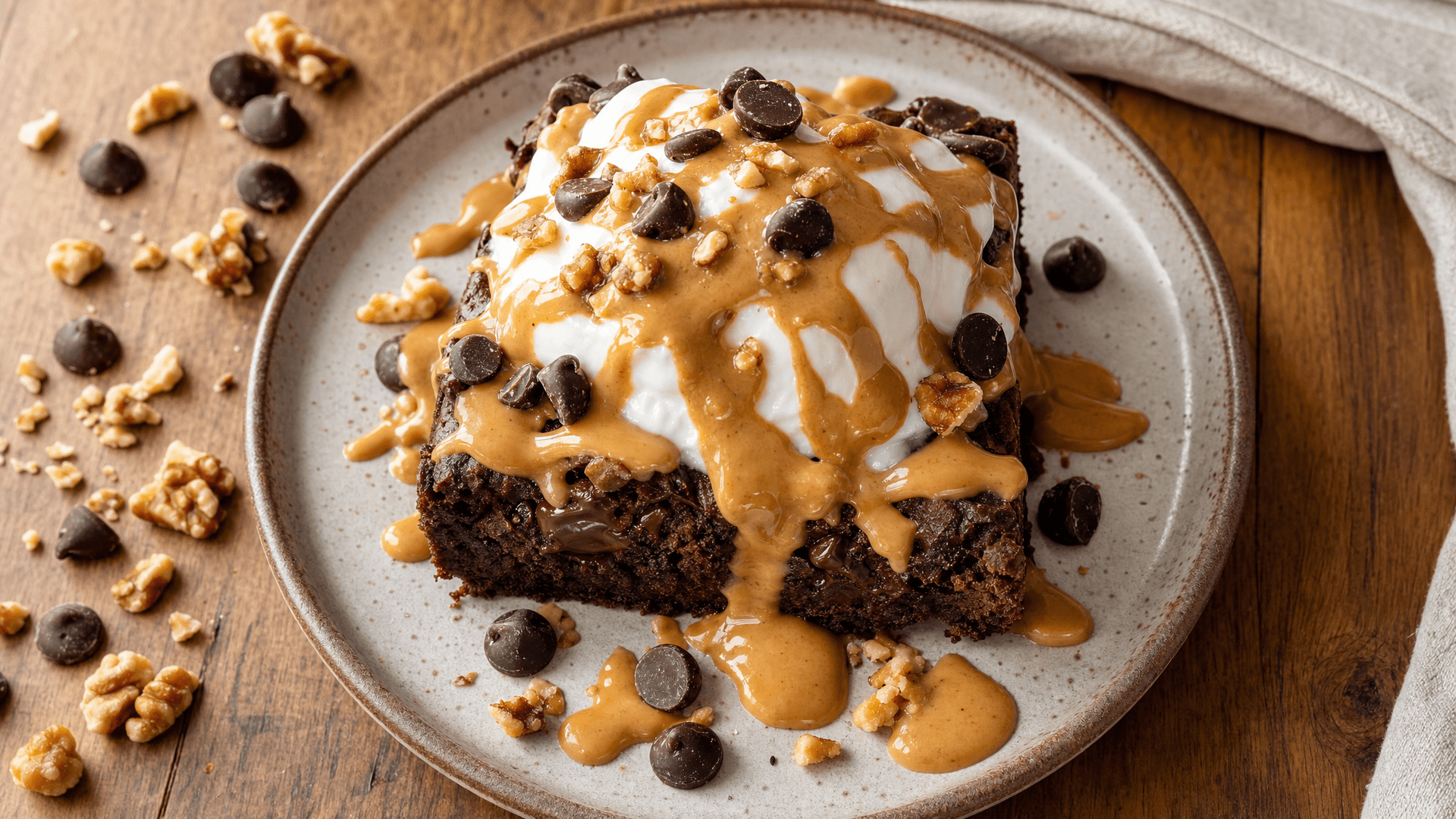
You know the feeling. It's 8pm, you're still 700 calories short of your target, and there's a fourth container of chicken and rice sitting in the fridge staring at you. Your fork feels like it weighs 10 lb. You eat three bites and give up.
That's not a discipline problem. That's a fullness problem, and savory food causes it faster than almost anything else.
Here's the thing every hardgainer figures out eventually: you were never too full for dessert. Ever. You could be groaning on the couch after a huge dinner and still find room for a bowl of ice cream. That's not weakness — it's a real, measurable quirk of appetite regulation, and you can absolutely use it to hit a surplus.
Most bulking recipe roundups are savory. Rice, chicken, pasta, beef. Useful, but they all pull from the same overloaded well. Dessert is a completely separate appetite channel, and it's sitting there unused.
So here are 12 protein desserts, each engineered to land between 500 and 900 calories with 25g+ protein. Cheap ingredients. Barely any cooking. Macros listed for every one so they slot into a tracked bulk instead of blowing it up.
- Sweet food bypasses the fullness wall that savory meals slam into — use it
- Every dessert here hits 500-900 calories and 25g+ protein
- Build them from a base of dairy protein, oats or fruit, and a dense fat source
- Most take under 10 minutes and need zero baking
- Track them like any other meal — these replace calories, they don't add free ones
- One dessert a day is usually all a hardgainer needs to close the gap
Why dessert calories are the easiest calories you'll ever eat
There's a thing researchers call sensory-specific satiety. Put simply: your appetite for a specific flavor drops off fast as you eat it, but your appetite for a different flavor stays high. Eat a plate of chicken and rice and your body stops wanting chicken and rice. It hasn't stopped wanting chocolate.
That's why dessert exists as a course. It's not cultural fluff — it's your brain unlocking a fresh appetite for something new.
For a guy at 130-165 lb trying to gain 0.5-1 lb a week, this is the single most useful biological loophole available. You need roughly 300-500 calories above maintenance every single day. Not sometimes. Every day. And the days you miss are the days a savory meal beat you.
The second reason: calorie density. Dessert ingredients are naturally dense. Peanut butter, chocolate, oats, dates, full-fat dairy, honey. A bowl you can finish in four minutes carries the same energy as a plate that takes you 25 minutes to force down.
The third reason is boring but real: you'll actually do it. Compliance beats optimization every single time. A perfect meal plan you abandon in week two loses to a sloppy one you follow for six months.
Dessert calories work because they're easy, not because they're magic. A pint of store ice cream is 1,100 calories and 20g of protein for the whole tub. The versions below hit the same calories with double the protein and a fraction of the sugar. That difference is what decides whether you gain muscle or just gain.
The formula: how to build a protein dessert that doesn't wreck your bulk
Every recipe below is the same four-part structure. Once you see it, you can invent your own forever.
1. A dairy protein base. Greek yogurt, cottage cheese, quark, or skyr. This is where most of your protein comes from, and it gives you the creamy texture that makes the whole thing feel like dessert instead of a punishment. Blended cottage cheese is the cheat code here — blend it for 30 seconds and it becomes indistinguishable from cheesecake filling.
2. A carb body. Oats, banana, dates, rice, or a crushed biscuit base. This adds volume, chew, and a big chunk of the calories.
3. A dense fat source. Peanut butter, dark chocolate, coconut, nuts, or full-fat dairy. Fat is 9 calories per gram versus 4 for carbs and protein, so this is your main lever when you need to push a recipe from 500 to 800 calories without adding bulk to the bowl.
4. Flavor that costs nothing. Cocoa powder, cinnamon, vanilla extract, instant coffee, salt. Basically free calorie-wise, and they're the difference between "protein slop" and something you look forward to.
Your protein target across the whole day should sit around 0.7-1g per lb of bodyweight. These desserts are pulling real weight toward that number, not just adding sugar on top.
| Ingredient | Per serving | Calories | Protein |
|---|---|---|---|
| Greek yogurt (5% fat) | 200g | 240 | 20g |
| Cottage cheese (full fat) | 200g | 200 | 24g |
| Whey protein | 1 scoop | 120 | 25g |
| Peanut butter | 2 tbsp | 190 | 7g |
| Rolled oats | 80g | 300 | 10g |
| Dark chocolate (70%) | 30g | 170 | 2g |
| Medjool dates | 3 | 200 | 1g |
That table is your parts bin. Every recipe below is just a combination of those rows.
The 12 desserts
1. Protein brownie batter
The one that converts skeptics. No baking, no eggs, five minutes, and it genuinely tastes like raw brownie mix.
- 3.5 oz Greek yogurt
- 1 scoop chocolate whey
- 2 tbsp cocoa powder
- 3 tbsp peanut butter
- 1 tbsp honey, pinch of salt
- 1 oz dark chocolate chips
Stir everything except the chips until it's thick like batter, then fold the chips in. Eat with a spoon, cold.
Total: 720 cal, 43g protein.
If the batter goes too thick, add milk one tablespoon at a time. Adding water thins it out but kills the richness — milk keeps the calories and the texture.
2. Cookie dough overnight oats
Zero morning effort and it eats like a dessert instead of breakfast. This is my most-repeated recipe of the twelve.
- 2.8 oz rolled oats
- 1 cup whole milk
- 1 scoop vanilla whey
- 2 tbsp peanut butter
- 1 tbsp maple syrup
- 0.9 oz chocolate chips
Mix in a jar, fridge overnight. Do not cook it — cold and raw is the entire point.
Total: 810 cal, 46g protein.
3. Microwave chocolate mug cake
Ninety seconds from craving to eating. Keep the dry ingredients pre-mixed in a jar and it's a 20-second job.
- 1.4 oz oat flour
- 1 scoop chocolate whey
- 1 tsp baking powder
- 1 egg, splash of milk
- 2 tbsp peanut butter swirled into the middle
Microwave 60-80 seconds. Stop the second the top sets.
Total: 560 cal, 42g protein.
Overcooking a protein mug cake by even 20 seconds turns it into a rubber puck. Whey tightens up fast under heat. Pull it out while the center still looks slightly wet — it finishes cooking in the mug.
4. No-bake protein cheesecake jar
Tastes like a dessert you'd pay for. Takes four minutes plus fridge time.
- 7 oz full-fat cottage cheese, blended smooth
- 1 scoop vanilla whey
- 2 tbsp cream cheese
- 1 tbsp honey, squeeze of lemon
- Base: 2 oz crushed digestive biscuits mixed with 1 tbsp melted butter
Press the base into a jar, blend the filling, spoon on top, chill an hour.
Total: 690 cal, 44g protein.
5. Frozen yogurt bark
The batch-prep option. Make a tray on Sunday, snap off pieces all week when you're behind on calories.
- 14 oz Greek yogurt
- 1 scoop whey
- 3 tbsp almond butter
- 2 tbsp honey
- 1.4 oz chopped nuts and dark chocolate
Spread on a lined tray about a finger thick, scatter toppings, freeze two hours, snap into shards. Whole tray is four servings.
Per serving: 520 cal, 27g protein.
6. Peanut butter protein fudge
The most calorie-dense thing on this list per bite. Dangerous in a good way.
- 4 oz natural peanut butter
- 2 scoops vanilla whey
- 3 tbsp coconut oil, melted
- 2 tbsp maple syrup, pinch of salt
Mix, press into a small lined tub, freeze 40 minutes, cut into six squares. Two squares is a serving.
Per serving (2 squares): 560 cal, 26g protein.
This one lives in the freezer and takes about ten seconds to eat. That makes it the perfect emergency block for the nights you get home at 10pm and realize you're 500 calories down.
7. Banana bread baked oats
The most "real dessert" thing here. Comes out of the oven like cake, keeps for three days.
- 2.5 oz oats blitzed to flour
- 1 large ripe banana
- 1 scoop vanilla whey
- 1 egg, 1 tsp baking powder
- 2 tbsp peanut butter, 0.7 oz walnuts
Blend, pour into a small dish, bake at 350°F for 22 minutes.
Total: 680 cal, 40g protein.
8. Chocolate protein mousse
Three ingredients, one bowl, no cooking, and it's genuinely light enough to eat after a full dinner.
- 9 oz Greek yogurt
- 1 scoop chocolate whey
- 2 tbsp cocoa powder
- 2 tbsp Nutella or chocolate spread
- 1 tbsp honey
Whisk hard for a minute to get air in — that's what makes it mousse instead of pudding.
Total: 640 cal, 42g protein.
9. Creamy rice pudding
Old-school and underrated. Rice is the cheapest calorie source in your kitchen and it disappears completely into this.
- 2 oz pudding or arborio rice
- 2 cups whole milk
- 1 tbsp sugar, cinnamon, vanilla
- Stir in 1 scoop vanilla whey off the heat
- 1 oz raisins
Simmer the rice in the milk 25 minutes, stirring. Cool slightly, then add the protein.
Total: 750 cal, 40g protein.
Never add whey to anything still on the stove. It curdles into grainy lumps instantly. Pull the pan off the heat, wait two minutes, then stir it in.
10. Blended protein ice cream
Real ice cream texture from a blender, and it costs about a third of what a premium tub does.
- 5 oz frozen banana chunks
- 3.5 oz Greek yogurt
- 1 scoop whey
- 2 tbsp peanut butter
- Splash of milk
Blend on high, scraping down twice. Eat immediately or freeze 20 minutes for a firmer scoop.
Total: 600 cal, 38g protein.
11. Stuffed "snickers" dates
Six of these is a legitimate dessert and takes four minutes with no equipment.
- 5 oz Medjool dates (about 6)
- 3 tbsp peanut butter
- 1.4 oz dark chocolate, melted
- Flaky salt
- Serve with 5 oz Greek yogurt on the side for the protein
Split each date, stuff with peanut butter, drizzle chocolate, salt, chill 10 minutes.
Total: 720 cal, 26g protein.
12. Protein tiramisu jars
The one to make when you want dessert to feel like an occasion. Still takes under ten minutes.
- 9 oz quark or blended cottage cheese
- 1.8 oz mascarpone
- 1 scoop vanilla whey, 1 tbsp sugar
- 3 sponge fingers dipped in strong coffee
- Cocoa dusted on top
Layer coffee-soaked biscuits and cream in a jar, twice. Chill an hour.
Total: 660 cal, 41g protein.
The full comparison
| # | Dessert | Calories | Protein | Time | Cook? |
|---|---|---|---|---|---|
| 1 | Brownie batter | 720 | 43g | 5 min | No |
| 2 | Cookie dough oats | 810 | 46g | 3 min | No |
| 3 | Mug cake | 560 | 42g | 2 min | Microwave |
| 4 | Cheesecake jar | 690 | 44g | 4 min | No |
| 5 | Yogurt bark | 520 | 27g | 10 min | No |
| 6 | PB fudge | 560 | 26g | 5 min | No |
| 7 | Baked oats | 680 | 40g | 25 min | Oven |
| 8 | Chocolate mousse | 640 | 42g | 3 min | No |
| 9 | Rice pudding | 750 | 40g | 30 min | Stove |
| 10 | Protein ice cream | 600 | 38g | 3 min | No |
| 11 | Snickers dates | 720 | 26g | 4 min | No |
| 12 | Tiramisu jars | 660 | 41g | 8 min | No |
Nine of the twelve need no cooking at all. That's deliberate.
When to eat these
Post-training. Your appetite is usually suppressed for 30-60 minutes after a hard session, and that's exactly when a cold, sweet, liquid-ish dessert goes down easier than food. Blended protein ice cream after legs is a genuinely effective trick.
Late evening. This is the biggest one. Casein-rich dairy digests slowly, which makes these desserts a solid last meal of the day — we broke down the reasoning in our guide to bedtime snacks for muscle growth, and most of these recipes fit that profile without changing a thing.
As the gap-filler. Track your day at around 6pm. If you're 600 calories short, pick a dessert that covers it exactly. That's the entire job.
What doesn't work is eating dessert before a meal. Sweet food is easy to eat but it still fills you up, and you'll end up trading a 900-calorie dinner for a 700-calorie dessert. Net loss.
5 mistakes that turn this into fat gain
1. Treating dessert calories as free. They count. All of them. If you're eating 3,200 calories and you add an 800-calorie brownie bowl on top without adjusting anything, you're now bulking at 4,000 and gaining 1.5 lb a week. That's mostly fat.
2. Eyeballing peanut butter. A "tablespoon" of peanut butter scooped by feel is routinely double what the label means. Two of those is 190 unlogged calories. Weigh it for the first two weeks until your eye calibrates.
3. Stacking two a day, every day. One dessert closes the gap. Two overshoots it. If you consistently need more than one, your actual meals are too small — fix that first with real food and high-calorie shakes before you double the dessert.
4. Buying every ingredient premium. Store-brand oats, store-brand yogurt, and a big tub of natural peanut butter perform identically to the expensive versions. The macros don't know what the packaging looks like.
5. Skipping the protein. A dessert that's 800 calories and 8g protein is just a dessert. The whole point is the dairy base doing 25-45g of work. Don't drop it to save two minutes.
Keeping it cheap
None of this needs a specialty store.
Buy oats in a 2.2 lb tub — it's the cheapest calorie per dollar in the entire supermarket. Buy cottage cheese instead of Greek yogurt when you can; it's usually cheaper per lb and has more protein. Buy the biggest jar of peanut butter available. Buy cocoa powder once and it lasts three months.
Whey is your only real expense, and you can skip it in about half these recipes by leaning harder on the dairy base — add 3.5 oz more cottage cheese instead of a scoop and you land in the same protein range for less money.
Dates and mascarpone are the two priciest items on the list, and they only appear in two recipes each. Everything else is staples.
If you want more of this angle applied outside dessert, our best bulking snacks list runs the same cost-per-calorie logic across savory options.
Making sure it's actually working
Weigh yourself every morning, same conditions, and use the weekly average — not any single day. Daily fluctuations of 2-3 lb from water and food volume are normal and mean nothing.
You're looking for the average to climb about 0.7 lb a week. Faster than that and you're adding fat you'll have to cut later. Slower than that for three straight weeks and you need another 200 calories a day — which, conveniently, is about half a dessert.
Track your lifts alongside it. If the scale is moving and your working weights aren't, the surplus is going to the wrong place.
Where FuelTheGains fits in
The hardest part of all this isn't the cooking. It's the math — knowing that you specifically need 3,400 calories, that you're 620 short at 7pm, and which of these twelve desserts closes that gap exactly.
That's what we built for. It works out your actual surplus from your stats and training, then builds a daily plan around food you'll genuinely eat — dessert included, not treated as a cheat. No spreadsheets, no guessing whether the brownie batter fits.
You still have to eat it. We just take the arithmetic off your plate.
The bottom line
You've been leaving the easiest calories of your day on the table because you filed them under "cheating."
They're not cheating. Built right, a bowl of protein brownie batter is a 720-calorie, 43g-protein meal that takes five minutes and goes down when nothing else will.
Pick two from this list. Make them this week. Watch how much less of a fight your surplus becomes.