
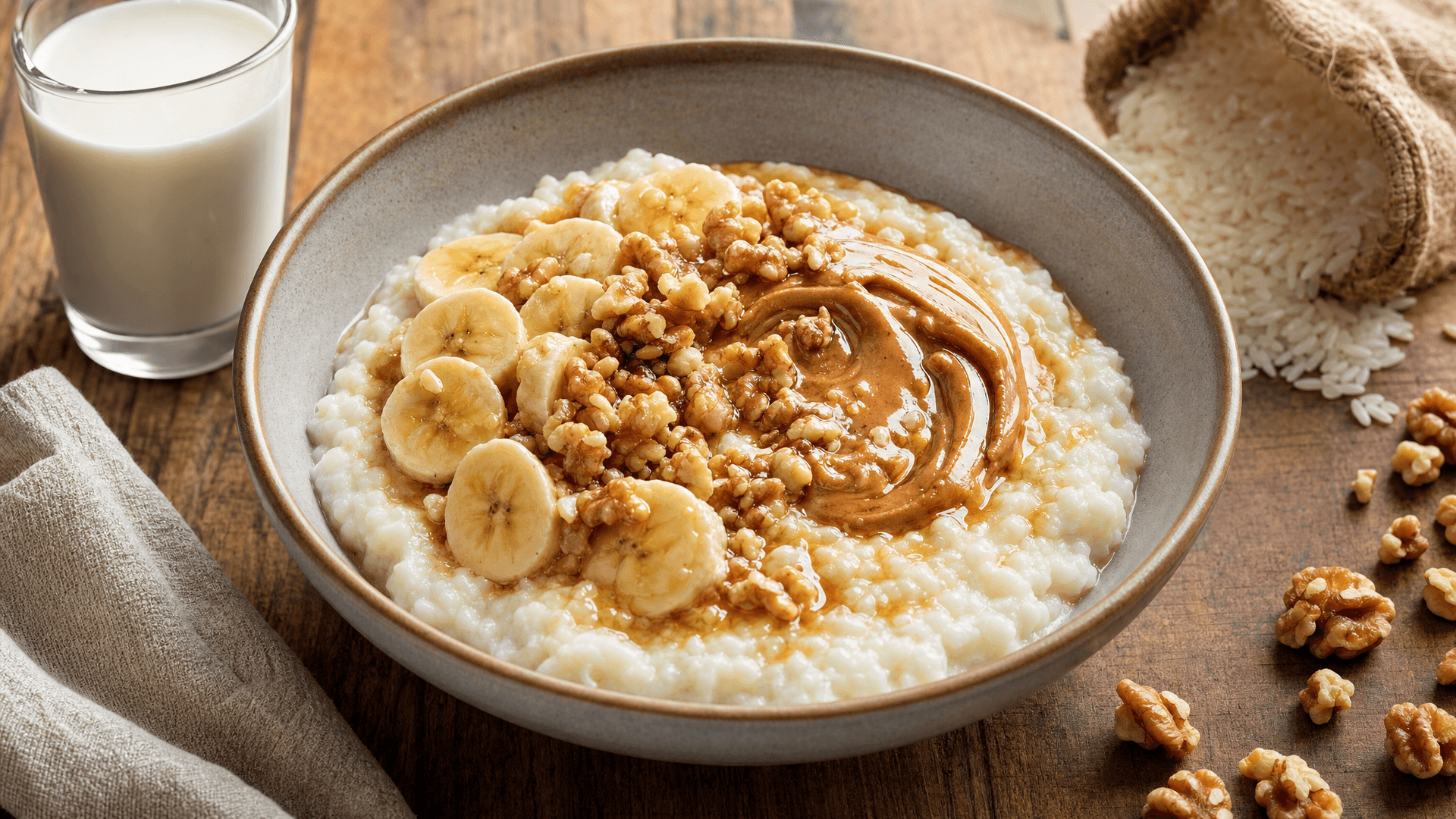
You've walked past it a hundred times. It's sitting on the bottom shelf of the cereal aisle in a plain cardboard box next to the Cream of Wheat, looking like something your grandmother ate in 1974.
Meanwhile you're at home force-feeding yourself a fourth bowl of oatmeal that sits in your stomach like wet cement, wondering why you're still not gaining weight.
Cream of rice is the single most underrated bulking food on the planet. Every competitive bodybuilder eats it. Almost no skinny guy trying to gain weight has ever touched it. It's dirt cheap, it digests in under an hour, it has basically zero fiber, and it doesn't make you feel full — which sounds like a criticism until you remember that feeling full is the exact thing killing your bulk.
This is the whole playbook: what it actually is, why the low-fiber profile matters more than the calorie count, what it costs compared to oats and white rice, how to build bowls from 600 to 1,200 calories, and how to make your own for a fraction of the branded price using a blender and a bag of white rice.
- Cream of rice is just finely ground white rice — same macros, way faster digestion
- It has under 1g of fiber per serving, so it empties from your stomach in 30-60 minutes
- A 1,000-calorie bowl costs around a dollar if you make it yourself
- Milk, peanut butter and honey turn a 360-calorie base into a 1,000-calorie meal
- It's the best pre-workout and post-workout carb for hardgainers because it doesn't sit heavy
- DIY version: blitz white rice in a blender for 60 seconds, done
- Use it as a second breakfast or a pre-bed meal, not a replacement for whole foods
What Cream of Rice Actually Is
Cream of rice is white rice that's been milled into a coarse flour. That's it. That's the whole product.
You cook it like porridge — dump it in water or milk, stir over heat for 60-90 seconds, and it thickens into a smooth, neutral-tasting cereal. No soaking, no 20-minute simmer, no rice cooker. It's faster than instant oats.
Here's what 3.5 oz of dry cream of rice gets you:
| Nutrient | Amount |
|---|---|
| Calories | 360 |
| Carbs | 80g |
| Protein | 6g |
| Fat | 1g |
| Fiber | under 1g |
Compare that to the same weight of dry oats: roughly 380 calories, but with 10g of fiber and a much slower digestion curve. Nearly identical calories. Completely different experience in your stomach.
That fiber gap is the entire point of this article.
They're basically the same thing at different grind sizes. Rice flour is powder-fine and turns gluey. Cream of rice is coarser — closer to semolina — which is why it cooks into a porridge texture instead of paste. If you're buying rice flour to save money, expect a slightly slimier result.
Why Low Fiber Is a Feature, Not a Bug
Every nutrition article you've ever read has told you fiber is good. For most people, it is. For a hardgainer trying to eat 3,800 calories a day, it's a tax.
Fiber does three things that work directly against you:
It slows gastric emptying. Food physically stays in your stomach longer. A high-fiber oatmeal bowl can take 2-3 hours to clear. Cream of rice clears in 30-60 minutes. That difference decides whether you're hungry for lunch at noon or still bloated at 2pm.
It increases satiety hormones. Fiber triggers stretch receptors and slows the release of ghrelin, the hormone that makes you want to eat. Great if you're cutting. Terrible if your entire problem is that you stop eating too early.
It adds bulk without adding calories. A cup of oat bran and a cup of cream of rice take up similar space in your stomach. One of them leaves room for more food an hour later.
This is the same logic behind every food on our list of high-calorie foods that don't fill you up — calorie density plus low satiety is the combination that actually moves the scale for skinny guys.
For a 140 lb guy at 5'10" trying to get to 165 lb, the bottleneck is almost never willpower. It's stomach volume and appetite recovery time. Cream of rice attacks both.
Don't take this as permission to eat zero fiber. You still want 25-35g a day from fruit, vegetables and whole grains for digestion and long-term health. Cream of rice is a tool for the meals where fullness is costing you calories — not a replacement for your whole diet.
The Cost Breakdown: Cream of Rice vs. Oats vs. Rice
Bulking is expensive. So let's talk about what these carbs actually cost per 1,000 calories — because cost per kilo is misleading when foods have different calorie densities.
| Carb source | Cost per 1,000 cal | Fiber per 1,000 cal | Time to digest |
|---|---|---|---|
| DIY cream of rice (blended white rice) | $0.55 | 3g | 30-45 min |
| Branded cream of rice | $2.40 | 3g | 30-45 min |
| Rolled oats (bulk bag) | $0.70 | 27g | 2-3 hrs |
| Instant oat packets | $3.80 | 22g | 1.5-2 hrs |
| Cooked white rice | $0.60 | 3g | 1-2 hrs |
| Brown rice | $0.95 | 9g | 2-3 hrs |
| Whole wheat pasta | $1.40 | 18g | 2-3 hrs |
Two things jump out.
First, branded cream of rice is a rip-off. You're paying around $3.60 per lb for ground-up white rice that costs $0.70 per lb in its whole form. The box is doing nothing except grinding.
Second, DIY cream of rice is the cheapest carb on the list while also being the fastest-digesting one. That's not a trade-off. That's just a better option that nobody talks about because there's no marketing budget behind a bag of rice.
If you want the full comparison of which carbs actually earn their place in a bulk, we broke it all down in our complete guide to the best carbs for bulking. Cream of rice ranks near the top for exactly these reasons.
The DIY Version: 60 Seconds and a Blender
This is the part that saves you real money. A 10 lb bag of white rice costs about seven bucks and makes roughly 16,000 calories of cream of rice. That's more than four days of a full bulk for the price of one protein bar.
How to make it
- Measure out 18 oz of dry white rice — long grain, jasmine, whatever's cheapest
- Dump it into a dry blender (a NutriBullet, a Vitamix, even a cheap $30 blender works)
- Blitz on high for 45-60 seconds
- Stop when it looks like coarse sand, not powder
- Store in an airtight container — it keeps as long as regular rice
That's the whole process. It takes less time than making a coffee.
Getting the texture right
The mistake everyone makes is over-blending. If you run it for two minutes you get rice flour, and rice flour cooks into wallpaper paste. You want a grind that still has visible grit — somewhere between sugar and cornmeal.
If your blender struggles, do it in two batches of 9 oz instead of one big load. Less volume means the blades actually reach everything.
How to cook it
Standard ratio is 1 part dry cream of rice to 3 parts liquid. So 2.8 oz dry gets 240ml of liquid.
- Whisk the dry rice into cold liquid before heating — this prevents lumps
- Bring to a simmer over medium heat, stirring constantly
- It thickens fast, usually 60-90 seconds
- Pull it off the heat the moment it coats the spoon, it keeps thickening as it cools
Microwave works too: same ratio, 90 seconds, stir, 45 more seconds.
Cook it with milk instead of water. Same effort, but 8 oz of whole milk adds 150 calories and 8g of protein for free. There is no reason to ever use water unless you're out of milk.
Building a Bowl: 600, 850, and 1,200 Calories
The base is nearly flavorless, which is the point — it takes on whatever you add. Here are three tiers depending on how much you need to hit.
The 600-Calorie Bowl (second breakfast)
| Ingredient | Calories | Protein |
|---|---|---|
| Cream of rice, 60g dry | 215 | 4g |
| Whole milk, 250ml | 155 | 8g |
| Whey protein, 1 scoop | 120 | 25g |
| Honey, 1 tbsp | 65 | 0g |
| Cinnamon | 0 | 0g |
| Total | 555 | 37g |
This is your "I already ate breakfast but I'm behind on calories" bowl. Takes three minutes. Sits light enough that you'll still eat a real lunch.
The 850-Calorie Bowl (pre-workout)
| Ingredient | Calories | Protein |
|---|---|---|
| Cream of rice, 80g dry | 290 | 5g |
| Whole milk, 300ml | 185 | 10g |
| Peanut butter, 1.5 tbsp | 140 | 6g |
| Honey, 1.5 tbsp | 95 | 0g |
| Banana, 1 medium | 105 | 1g |
| Whey protein, 1 scoop | 120 | 25g |
| Total | 935 | 47g |
Eat this 60-90 minutes before training. You'll be fueled without feeling like you swallowed a brick during squats.
The 1,200-Calorie Bowl (the heavy hitter)
| Ingredient | Calories | Protein |
|---|---|---|
| Cream of rice, 100g dry | 360 | 6g |
| Whole milk, 350ml | 215 | 12g |
| Peanut butter, 2 tbsp | 190 | 8g |
| Honey, 2 tbsp | 130 | 0g |
| Olive oil or MCT, 1 tbsp | 120 | 0g |
| Whey protein, 1 scoop | 120 | 25g |
| Raisins, ¼ cup | 110 | 1g |
| Total | 1,245 | 52g |
Yes, this is a lot of food. No, it won't feel like it. That's the entire reason cream of rice exists in a bulking diet.
Don't start at 1,200. If you've been eating 2,200 calories a day and you drop a 1,200-calorie bowl into your morning, you'll feel sick and skip lunch — net zero gain. Start at the 600 tier and add 100-150 calories per week.
Flavor Combos That Don't Get Old
The number one reason people quit cream of rice isn't the texture. It's boredom. The base tastes like nothing, so if you only ever add honey you'll hate it by day nine.
Rotate these:
Chocolate peanut butter — chocolate whey, 2 tbsp peanut butter, pinch of salt. Tastes like a melted Reese's.
Cinnamon roll — vanilla whey, 1 tbsp cinnamon, 1 tbsp brown sugar, splash of vanilla extract. Add cream cheese if you're feeling wild.
Strawberries and cream — vanilla whey, 3.5 oz frozen strawberries stirred in at the end, heavy cream drizzle.
Savory — skip the protein powder, cook in chicken broth, top with two fried eggs and hot sauce. Weird on paper, genuinely good.
Coffee caramel — brew the cream of rice in half milk, half strong coffee, then add caramel syrup and a scoop of vanilla whey.
Banana bread — mash a whole banana into the pot while cooking, add walnuts and nutmeg.
Add your protein powder after you pull the pot off the heat. Whey denatures and goes grainy above about 70°C, which ruins the texture. Let it cool for 30 seconds, then stir it in.
If you want more combination ideas, most of the toppings that work for oatmeal transfer directly — our 12 high-calorie oatmeal recipes are all convertible to cream of rice by swapping the base one-for-one.
When to Eat It: Timing Beats Everything
Cream of rice isn't magic. What makes it useful is where you slot it into your day.
Pre-workout, 60-90 minutes out
This is its best use. You want fast carbs available in your bloodstream when you start training, without food physically sitting in your stomach while you're under a bar.
A 2.8 oz dry serving with milk and honey gives you roughly 70-80g of fast carbs that are mostly cleared by the time you warm up. Try that with steel-cut oats and you'll be burping through your working sets.
Post-workout, within 30 minutes
Glycogen resynthesis is fastest in the window right after training, and high-glycemic carbs refill it quicker. Cream of rice plus whey is the cheapest possible version of the $60 post-workout recovery powders that are literally just dextrose and protein.
Second breakfast, mid-morning
If you eat breakfast at 7am and lunch at 12:30, that's five and a half hours where nothing's going in. A 2.1 oz bowl at 10am adds 600 calories and is fully cleared before lunch. This single habit is often the difference between a 0.25 lb weekly gain and a 0.75 lb one.
Pre-bed
Slower-digesting foods are usually recommended before sleep, but if you're struggling to hit your target, a cream of rice bowl with casein or Greek yogurt at 9pm is 700 easy calories that won't keep you awake feeling stuffed.
When NOT to eat it
Don't make it your only carb source. Don't eat it right before bed if you have reflux issues. And don't use it to replace meals that are already going down easily — it's for filling the gaps, not for swapping out food that's already working.
Cream of Rice vs. Oatmeal: The Honest Comparison
Oats aren't bad. They're arguably more nutritious — more protein, more micronutrients, beta-glucan for cholesterol. If you're a normal person eating normal amounts of food, eat oats.
But you're not a normal person. You're someone whose stomach gives out before your calorie target does.
| Factor | Cream of rice | Oatmeal |
|---|---|---|
| Calories per 100g dry | 360 | 380 |
| Protein per 100g dry | 6g | 13g |
| Fiber per 100g dry | under 1g | 10g |
| Digestion time | 30-60 min | 2-3 hrs |
| Fullness (1-10) | 3 | 8 |
| Cook time | 90 sec | 5-15 min |
| Cost per 1,000 cal (DIY) | $0.55 | $0.70 |
| Micronutrients | Low | Moderate |
The verdict: oats win on nutrition, cream of rice wins on volume. The right answer for most hardgainers is both — oats for your main breakfast where the extra protein and micronutrients matter, cream of rice for the extra meals you're squeezing in around it.
A 155 lb guy eating 3,600 calories doesn't need to pick a side. He needs both, in different slots.
Six Mistakes That Ruin It
1. Using water instead of milk. You're leaving 150-200 calories and 8-12g of protein on the table for zero effort. If you're dairy-free, use whole-fat oat milk or soy — not almond milk, which is basically flavored water at 30 calories a cup.
2. Over-blending the DIY version. Powder makes paste. Stop at coarse sand.
3. Adding protein powder to boiling liquid. Grainy, clumpy, gross. Off the heat first, always.
4. Not measuring the dry weight. Cream of rice expands massively when cooked, so a "bowl" tells you nothing. Weigh it dry. 2.8 oz looks like a small pile and becomes an enormous bowl.
5. Eating it plain and quitting after a week. Flavor fatigue is real. Build a rotation of at least four combos before you start.
6. Treating it as a whole-diet solution. Your protein still needs to come from meat, dairy, eggs and whey at 0.7-1.0g per lb of bodyweight. Cream of rice is a carb and calorie vehicle, nothing more.
If your bowl comes out lumpy, you added the dry rice to hot liquid. Always whisk it into cold liquid first, then apply heat. It's the same rule as making gravy.
How to Know It's Working
Add cream of rice for four weeks and track two things.
Weight. Step on the scale every morning, same conditions, and use the seven-day average. Daily numbers swing 2-4 lbs from water and food weight and mean nothing on their own. You're looking for 0.5-1 lb of gain per week. Faster than that and you're adding fat you'll regret.
Appetite recovery. This is the metric nobody tracks and it matters just as much. Are you hungry 2-3 hours after eating? If yes, the strategy is working. If you're still full four hours later, you've either added too much fat to the bowl or you're eating it too close to your other meals.
If the scale hasn't moved in three straight weeks, add 200 calories to your daily total. Usually the easiest place to add them is one more cream of rice bowl.
Where FuelTheGains Fits
The part nobody tells you about bulking is that the food isn't the hard bit. The hard bit is the logistics — knowing exactly how many calories you need, which meals to slot where, and what to eat on the day you've got 40 minutes between class and the gym.
That's where FuelTheGains comes in. It builds you a full meal plan around your actual numbers — your weight, your training days, your budget, your schedule — and tells you specifically when to use fast, low-satiety meals like a cream of rice bowl versus when you need something more substantial.
It's the difference between reading an article about cream of rice and actually having it appear in your Tuesday at 10am because that's where your calorie gap is. Have a look at fuelthegains.com if you're tired of guessing.
The Bottom Line
Cream of rice isn't exciting. It's a boring beige porridge made from the cheapest grain in the store, and it will do more for your bulk than any supplement you've ever bought.
It's fast, it's cheap, it doesn't fill you up, and you can make a month's supply in a blender in under a minute.
Buy a bag of white rice this week. Blitz 18 oz of it. Eat one 600-calorie bowl a day for four weeks and check the scale.
That's the whole experiment. It costs about three dollars and it works.